Introduction to Recombinant Human CD29/ITGB1 Protein
Recombinant Human CD29/ITGB1 Protein, also known as Integrin Beta 1, is a cell surface protein that plays a crucial role in cell adhesion and signaling. It is a member of the integrin family, which are transmembrane receptors that mediate interactions between cells and the extracellular matrix. CD29/ITGB1 is composed of two subunits, alpha and beta, and is expressed on a wide range of cell types, including leukocytes, endothelial cells, and fibroblasts.
Structure of Recombinant Human CD29/ITGB1 Protein
The recombinant form of CD29/ITGB1 is produced through genetic engineering techniques, where the gene encoding for the protein is inserted into a host cell, such as E. coli or mammalian cells, and expressed to produce large quantities of the protein. The resulting protein is then purified and characterized for use in various applications.
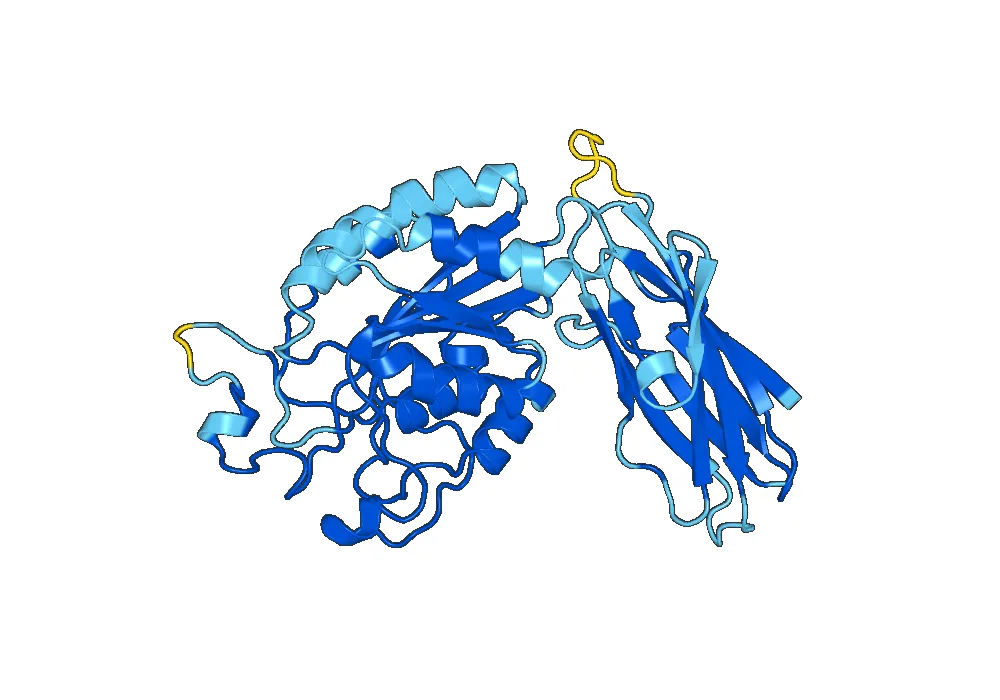
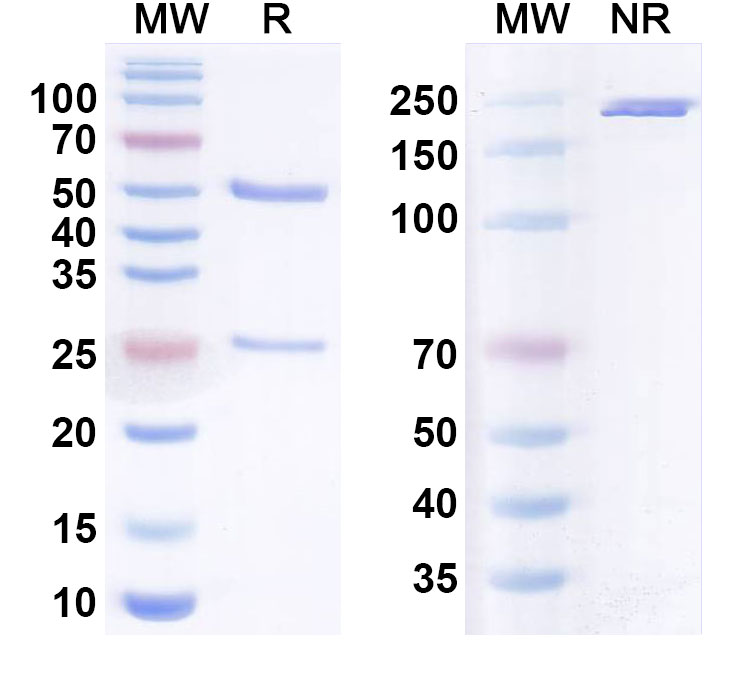
The CD29/ITGB1 protein has a complex structure, with the alpha and beta subunits each containing a large extracellular domain, a transmembrane domain, and a short cytoplasmic tail. The extracellular domains of the two subunits come together to form a heterodimer, which is responsible for binding to ligands on the cell surface and initiating signaling pathways.
Activity of Recombinant Human CD29/ITGB1 Protein
CD29/ITGB1 is a key player in cell adhesion, which is the process by which cells attach to and interact with other cells or the extracellular matrix. This protein is involved in both cell-cell and cell-matrix adhesion, and its activity is regulated by the binding of specific ligands, such as fibronectin and collagen.
Upon ligand binding, CD29/ITGB1 undergoes conformational changes that lead to the recruitment of intracellular signaling molecules, such as focal adhesion kinase (FAK) and Src family kinases. These signaling pathways then regulate various cellular processes, including cell proliferation, migration, and survival.
In addition to its role in cell adhesion, CD29/ITGB1 also plays a role in immune responses. It is expressed on leukocytes, where it mediates the attachment and migration of immune cells to sites of inflammation or infection. It is also involved in the activation of immune cells through interactions with other proteins on their surface.
Applications of Recombinant Human CD29/ITGB1 Protein
The availability of recombinant CD29/ITGB1 protein has enabled its use in various research and clinical applications. One of the major applications is in studying cell adhesion and migration, as the recombinant protein can be used to mimic the natural ligand binding and signaling processes.
Recombinant CD29/ITGB1 protein has also been used in drug discovery and development, as it is a potential target for therapeutic interventions in various diseases. For example, targeting CD29/ITGB1 has been explored as a potential treatment for cancer, as it plays a role in tumor growth and metastasis.
In addition, recombinant CD29/ITGB1 protein has been used in diagnostic assays to detect the presence of specific antibodies in patient samples. This is particularly useful in autoimmune diseases, where antibodies against CD29/ITGB1 have been identified as potential biomarkers.
Conclusion
In summary, Recombinant Human CD29/ITGB1 Protein is a crucial cell surface protein involved in cell adhesion and signaling. Its recombinant form has been extensively studied and used in various research and clinical applications, making it an important tool in understanding the role of this protein in health and disease.
Keywords: Recombinant protein, antigen, CD29/ITGB1, integrin, cell adhesion, signaling, ligand
There are no reviews yet.