Introduction
Pateclizumab Biosimilar, also known as Anti-LTA, TNFSF1 mAb – Research Grade, is a monoclonal antibody that targets the tumor necrosis factor (TNF) superfamily member 1A (TNFSF1A), also known as lymphotoxin-alpha (LTA). This biosimilar is a highly specific and potent therapeutic agent that has shown promising results in the treatment of various inflammatory and autoimmune diseases.
Structure
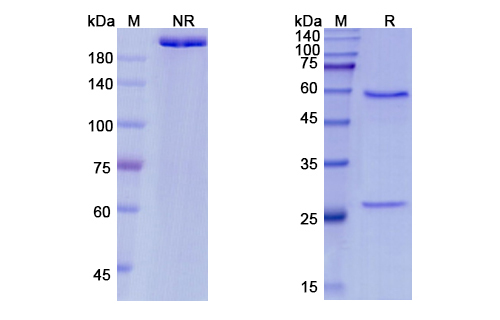
Pateclizumab Biosimilar is a recombinant humanized IgG1 monoclonal antibody. It is produced through genetic engineering techniques, where the variable regions of the antibody are derived from a mouse antibody, while the constant regions are of human origin. This structure allows for a high binding affinity and specificity towards its target, TNFSF1A.
Activity
Pateclizumab Biosimilar works by binding to TNFSF1A and inhibiting its activity. TNFSF1A is a pro-inflammatory cytokine that plays a critical role in the pathogenesis of various inflammatory and autoimmune diseases. By blocking its activity, Pateclizumab Biosimilar reduces the production of other pro-inflammatory cytokines, such as TNF-alpha and IL-1, and helps to restore the balance of the immune system.
Application
Pateclizumab Biosimilar has shown promising results in the treatment of various inflammatory and autoimmune diseases, including rheumatoid arthritis, psoriasis, and Crohn’s disease. It has also been studied in clinical trials for the treatment of multiple sclerosis and systemic lupus erythematosus.
Rheumatoid Arthritis
Rheumatoid arthritis (RA) is a chronic inflammatory disease that primarily affects the joints. It is caused by an abnormal immune response, where the body’s immune system attacks its own tissues, leading to joint inflammation and damage. Pateclizumab Biosimilar has been shown to significantly reduce the signs and symptoms of RA, such as joint pain, swelling, and stiffness, in patients who have failed to respond to conventional therapies.
Psoriasis
Psoriasis is a chronic autoimmune skin disease characterized by red, scaly patches on the skin. It is caused by an overactive immune response, which leads to the rapid growth of skin cells. Pateclizumab Biosimilar has been shown to improve the symptoms of psoriasis, such as skin lesions and itching, by inhibiting the activity of TNFSF1A and other pro-inflammatory cytokines.
Crohn’s Disease
Crohn’s disease is a chronic inflammatory bowel disease that affects the lining of the digestive tract. It is caused by an abnormal immune response, which leads to inflammation and damage in the digestive tract. Pateclizumab Biosimilar has been shown to reduce the signs and symptoms of Crohn’s disease, such as abdominal pain, diarrhea, and rectal bleeding, by targeting TNFSF1A and other pro-inflammatory cytokines.
Multiple Sclerosis
Multiple sclerosis (MS) is a chronic autoimmune disease that affects the central nervous system. It is caused by an abnormal immune response, which leads to inflammation and damage in the brain and spinal cord. Pateclizumab Biosimilar has been studied in clinical trials for the treatment of MS and has shown promising results in reducing disease activity and progression.
Systemic Lupus Erythematosus
Systemic lupus erythematosus (SLE) is a chronic autoimmune disease that can affect multiple organs, including the skin, joints, and kidneys. It is caused by an overactive immune response, which leads to inflammation and damage in various organs. Pateclizumab Biosimilar has been studied in clinical trials for the treatment of SLE and has shown promising results in reducing disease activity and improving symptoms.
Conclusion
In conclusion, Pateclizumab Biosimilar is a highly specific and potent monoclonal antibody that targets TNFSF1A, a key player in the pathogenesis of various inflammatory and autoimmune diseases. Its structure, activity, and application make it a promising therapeutic agent for the treatment of conditions such as rheumatoid arthritis, psoriasis, Crohn’s


There are no reviews yet.