Introduction to Faricimab ELISA Kit
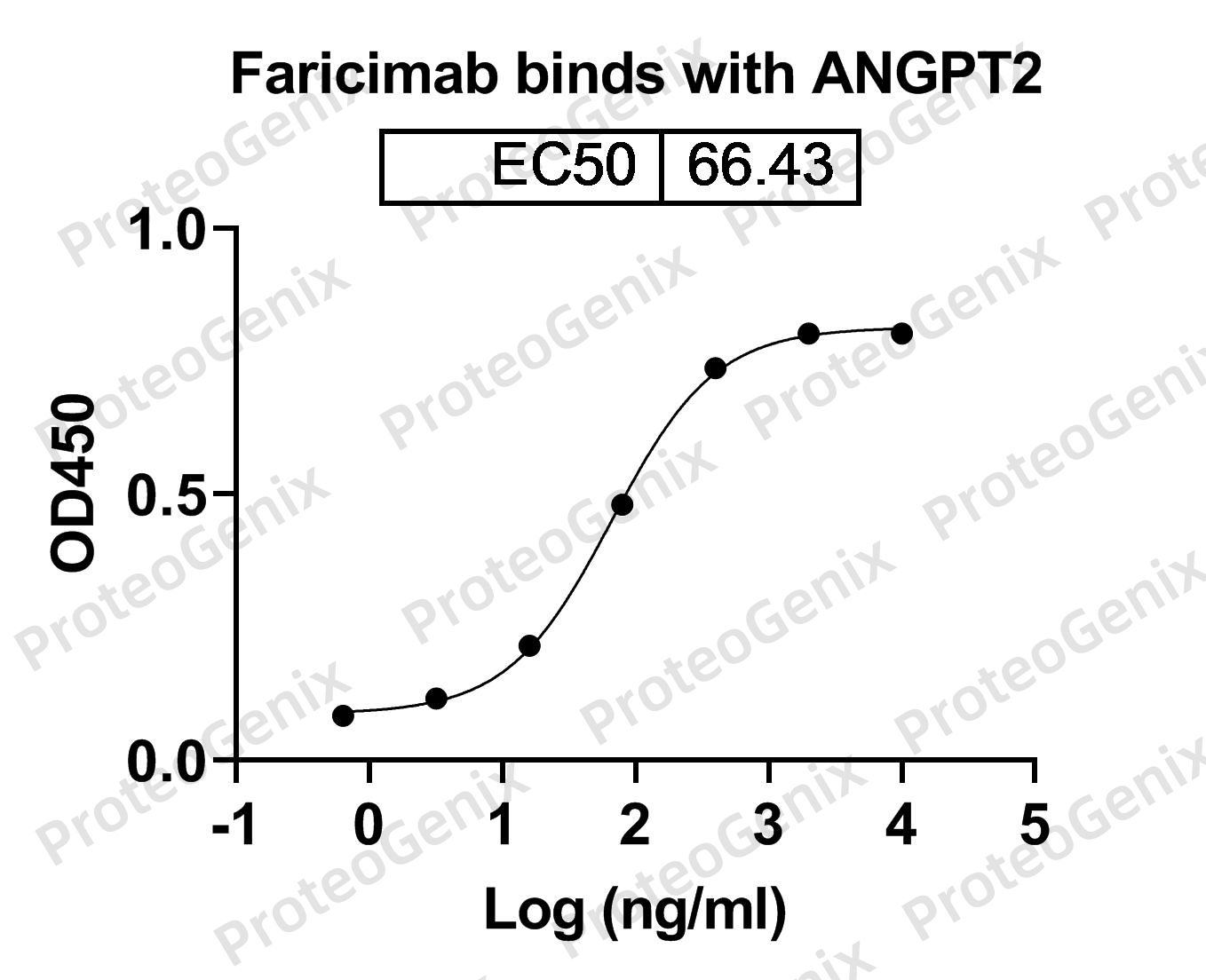
Faricimab is a novel bispecific antibody that has been developed as a potential therapeutic agent for various diseases. It is designed to simultaneously target two different pathways involved in the development of these diseases, making it a promising treatment option. To facilitate the detection and quantification of Faricimab in biological samples, an ELISA kit has been developed. In this article, we will discuss the structure, activity, and application of the Faricimab ELISA Kit.
Structure of Faricimab
Faricimab is a bispecific antibody that consists of two distinct antigen-binding domains, one targeting vascular endothelial growth factor A (VEGF-A) and the other targeting angiopoietin-2 (Ang-2). These two proteins play important roles in the development and progression of various diseases, including age-related macular degeneration (AMD) and diabetic macular edema (DME). Faricimab is a recombinant, humanized IgG1 antibody with a molecular weight of approximately 149 kDa.
The VEGF-A binding domain of Faricimab is derived from the therapeutic antibody ranibizumab, while the Ang-2 binding domain is derived from the therapeutic antibody faricimab. The two domains are connected by a flexible linker, allowing Faricimab to simultaneously bind to both targets. This unique structure of Faricimab allows for a more effective and targeted treatment approach.
Activity of Faricimab
The dual targeting activity of Faricimab is what sets it apart from other therapeutic antibodies. By binding to both VEGF-A and Ang-2, Faricimab is able to inhibit the formation of new blood vessels and reduce vascular leakage, which are key processes in the development of AMD and DME. This dual inhibition results in a more potent and sustained effect compared to single-target therapies.
Furthermore, Faricimab has been shown to have a longer half-life compared to other anti-VEGF therapies, allowing for less frequent dosing and potentially improving patient compliance. It has also been demonstrated to have a high binding affinity for both VEGF-A and Ang-2, further enhancing its therapeutic activity.
Application of Faricimab ELISA Kit
The Faricimab ELISA Kit is a valuable tool for researchers and clinicians in the development and monitoring of Faricimab therapy. It is a quantitative assay that uses a sandwich enzyme immunoassay principle to detect and measure Faricimab levels in various biological samples, such as serum, plasma, and vitreous fluid.
The Faricimab ELISA Kit is highly specific and sensitive, with a detection range of 0.1-10 ng/mL. It has been validated for use in both preclinical and clinical studies, and has been shown to have good accuracy and reproducibility. The use of this kit allows for the precise measurement of Faricimab levels, which can help in optimizing dosing regimens and monitoring treatment response.
The Faricimab ELISA Kit has also been used in pharmacokinetic studies to assess the absorption, distribution, metabolism, and excretion of Faricimab in the body. This information is crucial in understanding the pharmacological profile of Faricimab and its potential interactions with other drugs.
Conclusion
In summary, the Faricimab ELISA Kit is a valuable tool in the development and monitoring of Faricimab therapy. Its high specificity, sensitivity, and accuracy make it a reliable method for the detection and quantification of Faricimab in biological samples. The unique structure and dual targeting activity of Faricimab make it a promising therapeutic option for various diseases, and the Faricimab ELISA Kit plays a crucial role in its success.
Keywords: Faricimab, ELISA kit,

There are no reviews yet.