Semorinemab Biosimilar: A Promising Anti-MAPT mAb for Scientific Research Introduction
Semorinemab Biosimilar is a research grade monoclonal antibody (mAb) that specifically targets microtubule-associated protein tau (MAPT). It is a biosimilar version of the original Semorinemab, which is currently being developed as a potential therapeutic for Alzheimer’s disease. This scientific web content will provide a comprehensive description of Semorinemab Biosimilar, including its structure, activity, and potential applications in scientific research.
Structure of Semorinemab Biosimilar
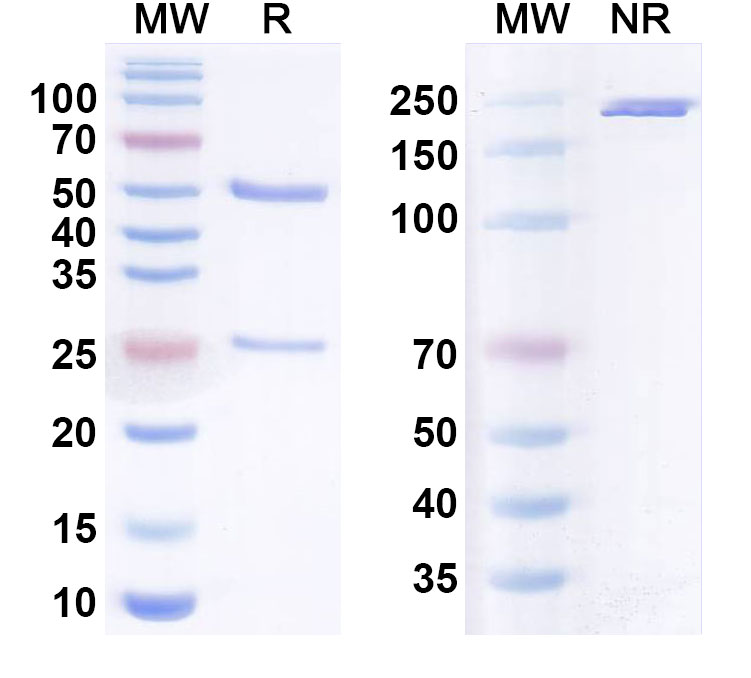
Semorinemab Biosimilar is a recombinant, humanized IgG1 monoclonal antibody. It is composed of two identical heavy chains and two identical light chains, each containing a variable region and a constant region. The variable regions of the heavy and light chains are responsible for binding to the target protein, MAPT.
The constant regions of Semorinemab Biosimilar are important for its effector functions, such as antibody-dependent cellular cytotoxicity and complement-dependent cytotoxicity. These functions play a crucial role in the antibody’s mechanism of action.
Activity of Semorinemab Biosimilar
Semorinemab Biosimilar specifically targets MAPT, a protein that is primarily found in the brain and is involved in the stabilization of microtubules. In Alzheimer’s disease, MAPT becomes abnormally phosphorylated, leading to the formation of neurofibrillary tangles, a hallmark of the disease.
Semorinemab Biosimilar binds to the phosphorylated form of MAPT, preventing its aggregation and promoting its clearance from the brain. This can potentially slow down the progression of Alzheimer’s disease by reducing the formation of neurofibrillary tangles.
Potential Applications in Scientific Research
Semorinemab Biosimilar has the potential to be a valuable tool for scientific research in the field of Alzheimer’s disease. Its ability to specifically target and bind to phosphorylated MAPT makes it a useful tool for studying the role of this protein in the disease.
Furthermore, Semorinemab Biosimilar can also be used in preclinical studies to evaluate its efficacy and safety as a potential therapeutic for Alzheimer’s disease. Its biosimilar nature also makes it a cost-effective alternative to the original Semorinemab, allowing for wider accessibility in research studies.
Conclusion
Semorinemab Biosimilar is a promising research grade monoclonal antibody that specifically targets MAPT. Its structure, activity, and potential applications make it a valuable tool for scientific research, particularly in the field of Alzheimer’s disease. Further studies are needed to fully understand its potential as a therapeutic for this devastating disease. With continued research and development, Semorinemab Biosimilar could potentially make a significant impact in the fight against Alzheimer’s disease.


There are no reviews yet.