Introduction
Rosmantuzumab Biosimilar, also known as Anti-RSPO3 mAb, is a research grade monoclonal antibody that has been developed for its potential therapeutic applications. This antibody specifically targets the RSPO3 protein, which plays a crucial role in the Wnt signaling pathway. In this article, we will discuss the structure, activity, and potential applications of Rosmantuzumab Biosimilar.
Structure of Rosmantuzumab Biosimilar
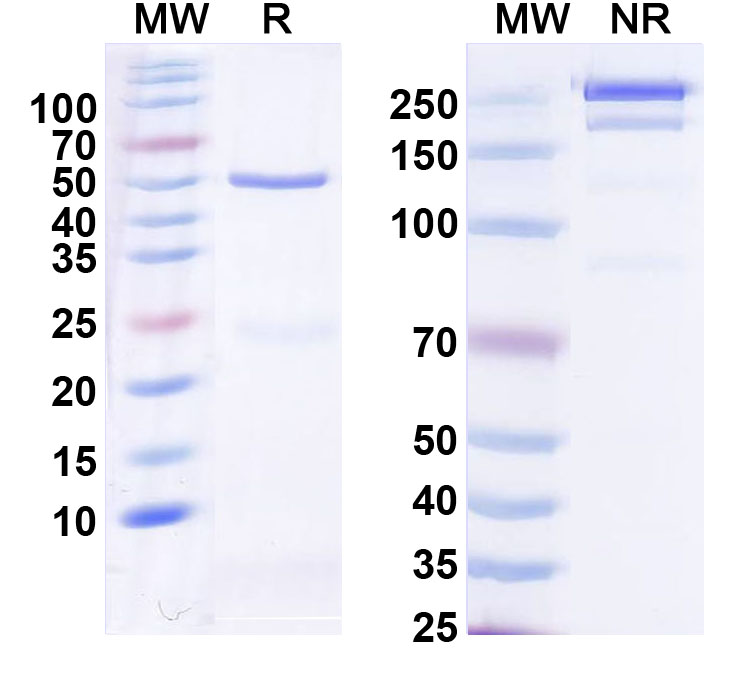
Rosmantuzumab Biosimilar is a recombinant humanized monoclonal antibody that has been engineered using hybridoma technology. It is composed of two heavy chains and two light chains, which are connected by disulfide bonds. The heavy chains consist of four constant regions (CH1, CH2, CH3, and CH4) and one variable region (VH), while the light chains consist of two constant regions (CL) and one variable region (VL). The variable regions of the antibody are responsible for binding to the target protein, RSPO3.
Activity of Rosmantuzumab Biosimilar
The main activity of Rosmantuzumab Biosimilar is to inhibit the activity of RSPO3 protein. RSPO3 is a secreted protein that belongs to the R-spondin family and acts as a ligand for the LGR4-6 receptors. This interaction between RSPO3 and its receptors leads to the activation of the Wnt signaling pathway, which plays a critical role in cell proliferation, differentiation, and survival. However, dysregulation of this pathway has been linked to the development and progression of various cancers.
By binding to RSPO3, Rosmantuzumab Biosimilar prevents its interaction with the LGR4-6 receptors, thereby inhibiting the Wnt signaling pathway. This inhibition can potentially lead to the suppression of cancer cell growth and proliferation, making Rosmantuzumab Biosimilar a promising therapeutic agent for cancer treatment.
Potential Applications of Rosmantuzumab Biosimilar
As mentioned earlier, the main therapeutic target of Rosmantuzumab Biosimilar is cancer. Preclinical studies have shown promising results in various cancer types, including colorectal, pancreatic, and ovarian cancer. In a study published in the journal
Cancer Cell
, Rosmantuzumab Biosimilar was found to inhibit tumor growth and improve survival in a mouse model of colorectal cancer.
Furthermore, Rosmantuzumab Biosimilar has also shown potential in combination therapy with other anti- cancer agents. In a study published in the
Journal of Clinical Investigation
, the combination of Rosmantuzumab Biosimilar and chemotherapy was found to be more effective in suppressing tumor growth compared to chemotherapy alone in a mouse model of ovarian cancer.
Besides
cancer, Rosmantuzumab Biosimilar has also been investigated for its potential in other diseases, such as osteoporosis and liver fibrosis. In a study published in the
Journal of Bone and Mineral Research
, Rosmantuzumab Biosimilar was found to improve bone density and prevent bone loss in a mouse model of osteoporosis.
Conclusion
Rosmantuzumab Biosimilar, also known as Anti-RSPO3 mAb, is a research grade monoclonal antibody that specifically targets the RSPO3 protein. Its main activity is to inhibit the Wnt signaling pathway by preventing the interaction between RSPO3 and its receptors. This antibody has shown promising results in preclinical studies for its potential in cancer treatment, and further clinical trials are needed to determine its efficacy and safety in humans. Additionally, Rosmantuzumab Biosimilar has also shown potential in other diseases, making it a versatile therapeutic agent with various potential applications.
There are no reviews yet.