Introduction
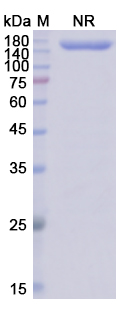
Epcoritamab Biosimilar is a novel monoclonal antibody (mAb) that targets three important proteins, namely CD3E, MS4A1, and CD20. This biosimilar is being developed as a potential treatment for various diseases, including autoimmune disorders, cancer, and inflammatory conditions. In this article, we will provide a detailed scientific description of Epcoritamab Biosimilar, including its structure, activity, and potential applications.
Structure of Epcoritamab Biosimilar
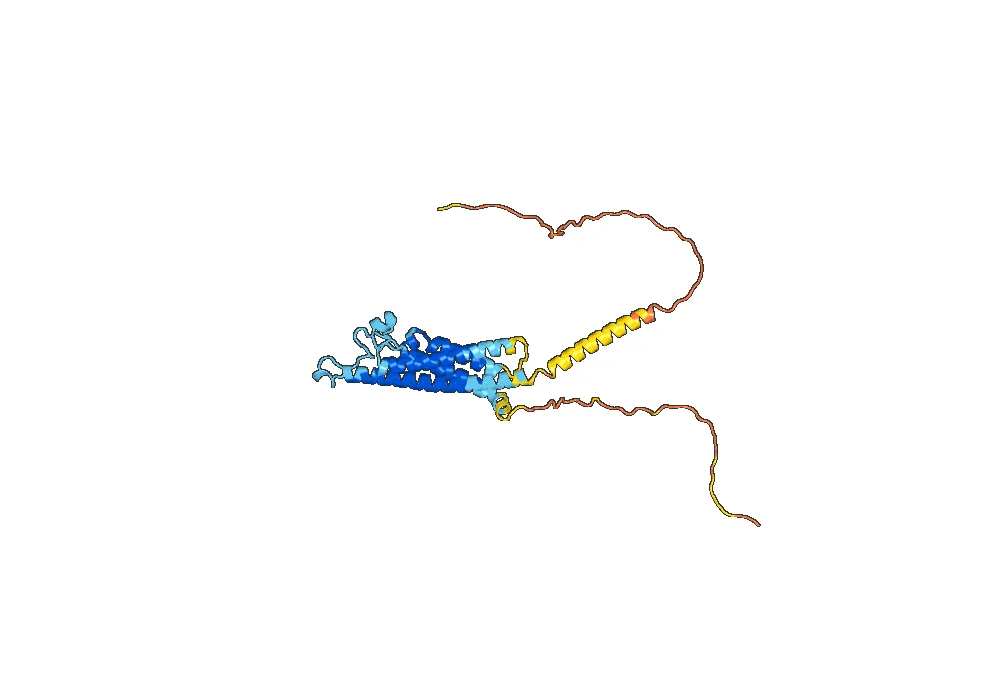
Epcoritamab Biosimilar is a chimeric monoclonal antibody, meaning it is composed of both human and non-human components. The antibody is made up of two parts – a constant region and a variable region. The constant region is derived from human antibodies, while the variable region is derived from non-human sources, such as mice or rats. This structure allows Epcoritamab Biosimilar to bind to its target proteins with high specificity and affinity.
The constant region of Epcoritamab Biosimilar is responsible for the effector functions of the antibody, such as complement-dependent cytotoxicity (CDC) and antibody-dependent cellular cytotoxicity (ADCC). These effector functions play a crucial role in the antibody’s ability to eliminate target cells.
Activity of Epcoritamab Biosimilar
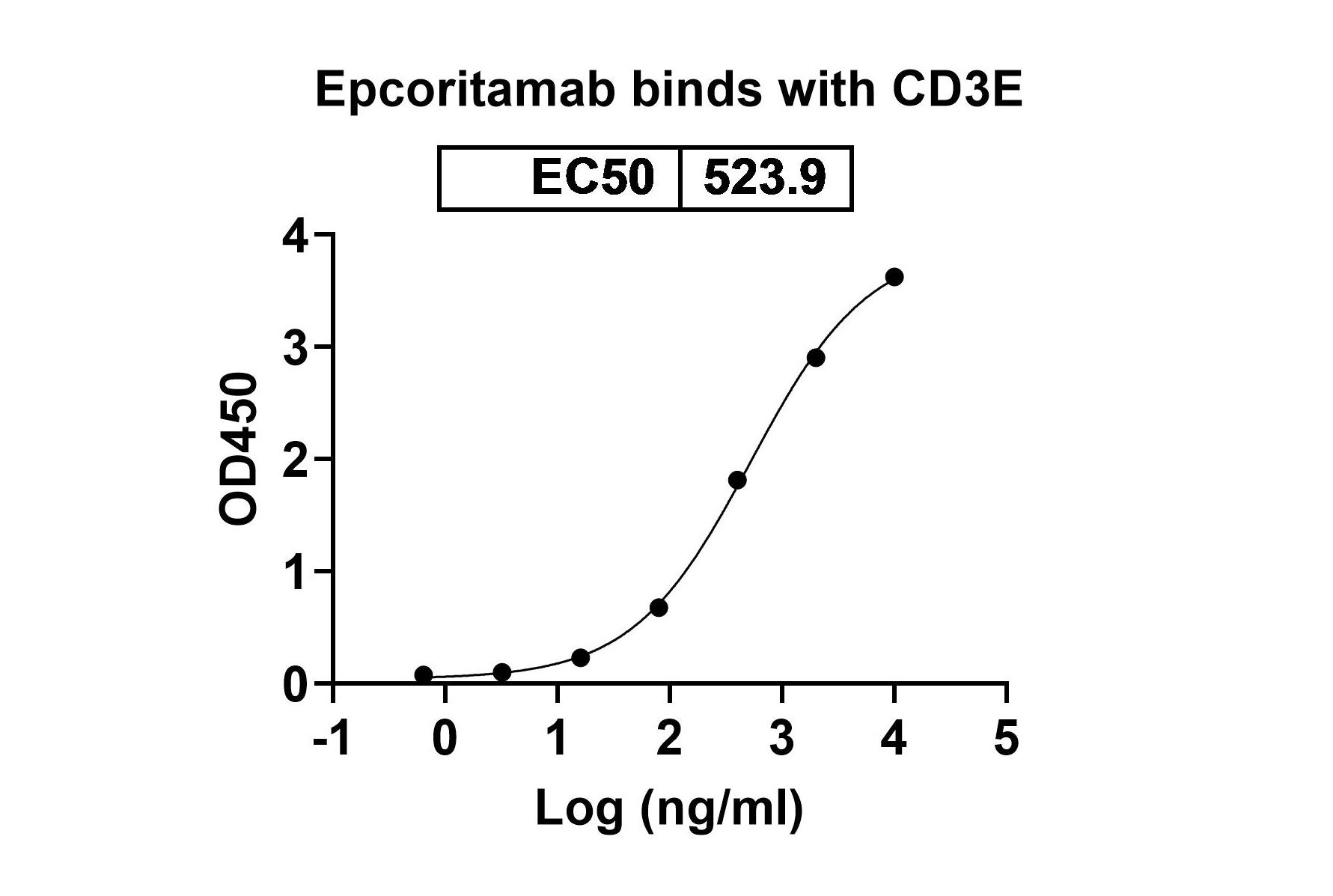
Epcoritamab Biosimilar targets three key proteins – CD3E, MS4A1, and CD20. CD3E is a protein that is found on the surface of T cells, a type of immune cell that plays a crucial role in the body’s immune response. MS4A1, also known as CD20, is a protein found on the surface of B cells, another type of immune cell involved in the immune response. CD20 is also expressed on the surface of certain cancer cells, making it an attractive therapeutic target.
Epcoritamab Biosimilar binds to CD3E and CD20 on the surface of T and B cells, respectively, leading to the activation of these cells. This activation triggers a cascade of events that ultimately results in the destruction of the target cells. Additionally, Epcoritamab Biosimilar also binds to MS4A1 on the surface of cancer cells, leading to their destruction.
Applications of Epcoritamab Biosimilar
Epcoritamab Biosimilar has several potential applications in the field of medicine. Its ability to target CD3E and CD20 makes it a promising candidate for the treatment of autoimmune disorders, such as rheumatoid arthritis and multiple sclerosis. By targeting these proteins, Epcoritamab Biosimilar can suppress the activity of T and B cells, which are responsible for the development of these disorders.
Furthermore, Epcoritamab Biosimilar has shown promising results in the treatment of various types of cancer. By targeting CD20 on the surface of cancer cells, Epcoritamab Biosimilar can induce their destruction, leading to tumor regression. It has shown particular efficacy in the treatment of B-cell malignancies, such as non-Hodgkin’s lymphoma and chronic lymphocytic leukemia.
In addition to its therapeutic applications, Epcoritamab Biosimilar also has potential uses in research and diagnostic settings. Its ability to specifically target CD3E, MS4A1, and CD20 makes it a valuable tool for studying the functions of these proteins and their role in various diseases.
Conclusion
In conclusion, Epcoritamab Biosimilar is a chimeric monoclonal antibody that targets CD3E, MS4A1, and CD20. Its unique structure and activity make it a promising candidate for the treatment of autoimmune disorders and various types of cancer. Additionally, its potential uses in research and diagnostics make it a valuable tool for further understanding the functions of these proteins. With ongoing research and development, Epcoritamab Biosimilar has the potential to improve the lives of patients suffering from these diseases.



There are no reviews yet.