It looks like you are visiting from outside the EU. Switch to the US version to see local pricing in USD and local shipping.

Switch to US ($)

Get 25% off your first bioreagent online order — use code: PROTEOSHOP25

Brand: ProteoGenix

Recombinant Human RPL17 Protein, N-His

Host species:
Escherichia coli (E.coli)
Origin species:
Human
Uniprot ID:
P18621
Molecular weight:
18.72 kDa

Original price was: €303.00.Current price is: €275.00.

100ug 9% OFF + 275 loyalty points
Thr12–Lys153
Size
  • In Stock
  • Free shipping in EU on orders > €500
  • Wide range of unique reagents
  • Fast worldwide delivery

Recombinant Human RPL17 Protein, N-His

Product name ARO-P11913-100
Uniprot ID P18621
Origin species Human
Expression system Prokaryotic expression
Raw Antigen Sequence TKSCKSRGSNLRVHFKNTRETAQAIKGMHIRKATKYLKDVTLQKQCVPFRRYNGGVGRCAQAKQWGWTQGRWPKKSAEFLLHMLKNAESNAELKGLDVDSLVIEHIQVNKAPKMRRRTYRAHGRINPYMSSPCHIEMILTEK
Molecular weight 18.72 kDa
Buffer Lyophilized from a solution in PBS pH 7.4, 0.02% NLS, 1mM EDTA, 4% Trehalose, 1% Mannitol.
Delivery condition Dry Ice
Delivery lead time in business days 3-5 days if in stock; 3-5 weeks if production needed
Storage condition 4°C for short term (1 week), -20°C or -80°C for long term (avoid freezing/thawing cycles; addition of 20-40% glycerol improves cryoprotection)
Brand ProteoGenix
Host species Escherichia coli (E.coli)
Fragment Type Thr12-Lys153
Aliases /Synonyms Large ribosomal subunit protein uL22, PD-1, 60S ribosomal protein L17, RPL17, 60S ribosomal protein L23
Reference ARO-P11913
Note For research use only.
Molecular Constructor
Thr12–Lys153
Product name ARO-P11913-1MG
Uniprot ID P18621
Origin species Human
Expression system Prokaryotic expression
Raw Antigen Sequence TKSCKSRGSNLRVHFKNTRETAQAIKGMHIRKATKYLKDVTLQKQCVPFRRYNGGVGRCAQAKQWGWTQGRWPKKSAEFLLHMLKNAESNAELKGLDVDSLVIEHIQVNKAPKMRRRTYRAHGRINPYMSSPCHIEMILTEK
Molecular weight 18.72 kDa
Buffer Lyophilized from a solution in PBS pH 7.4, 0.02% NLS, 1mM EDTA, 4% Trehalose, 1% Mannitol.
Delivery condition Dry Ice
Delivery lead time in business days 3-5 days if in stock; 3-5 weeks if production needed
Storage condition 4°C for short term (1 week), -20°C or -80°C for long term (avoid freezing/thawing cycles; addition of 20-40% glycerol improves cryoprotection)
Brand ProteoGenix
Host species Escherichia coli (E.coli)
Fragment Type Thr12-Lys153
Aliases /Synonyms Large ribosomal subunit protein uL22, PD-1, 60S ribosomal protein L17, RPL17, 60S ribosomal protein L23
Reference ARO-P11913
Note For research use only.
Molecular Constructor
Thr12–Lys153
Product name ARO-P11913-50
Uniprot ID P18621
Origin species Human
Expression system Prokaryotic expression
Raw Antigen Sequence TKSCKSRGSNLRVHFKNTRETAQAIKGMHIRKATKYLKDVTLQKQCVPFRRYNGGVGRCAQAKQWGWTQGRWPKKSAEFLLHMLKNAESNAELKGLDVDSLVIEHIQVNKAPKMRRRTYRAHGRINPYMSSPCHIEMILTEK
Molecular weight 18.72 kDa
Buffer Lyophilized from a solution in PBS pH 7.4, 0.02% NLS, 1mM EDTA, 4% Trehalose, 1% Mannitol.
Delivery condition Dry Ice
Delivery lead time in business days 3-5 days if in stock; 3-5 weeks if production needed
Storage condition 4°C for short term (1 week), -20°C or -80°C for long term (avoid freezing/thawing cycles; addition of 20-40% glycerol improves cryoprotection)
Brand ProteoGenix
Host species Escherichia coli (E.coli)
Fragment Type Thr12-Lys153
Aliases /Synonyms Large ribosomal subunit protein uL22, PD-1, 60S ribosomal protein L17, RPL17, 60S ribosomal protein L23
Reference ARO-P11913
Note For research use only.
Molecular Constructor
Thr12–Lys153

Introduction

The study of proteins is essential in understanding the molecular mechanisms of life. Proteins are responsible for various biological processes, including catalyzing reactions, transporting molecules, and providing structural support. Recombinant proteins, produced through genetic engineering techniques, have become valuable tools in both research and industrial applications. One such recombinant protein is the Recombinant Human RPL17 Protein, which has gained attention for its unique structure, diverse activities, and potential applications.

Structure of Recombinant Human RPL17 Protein

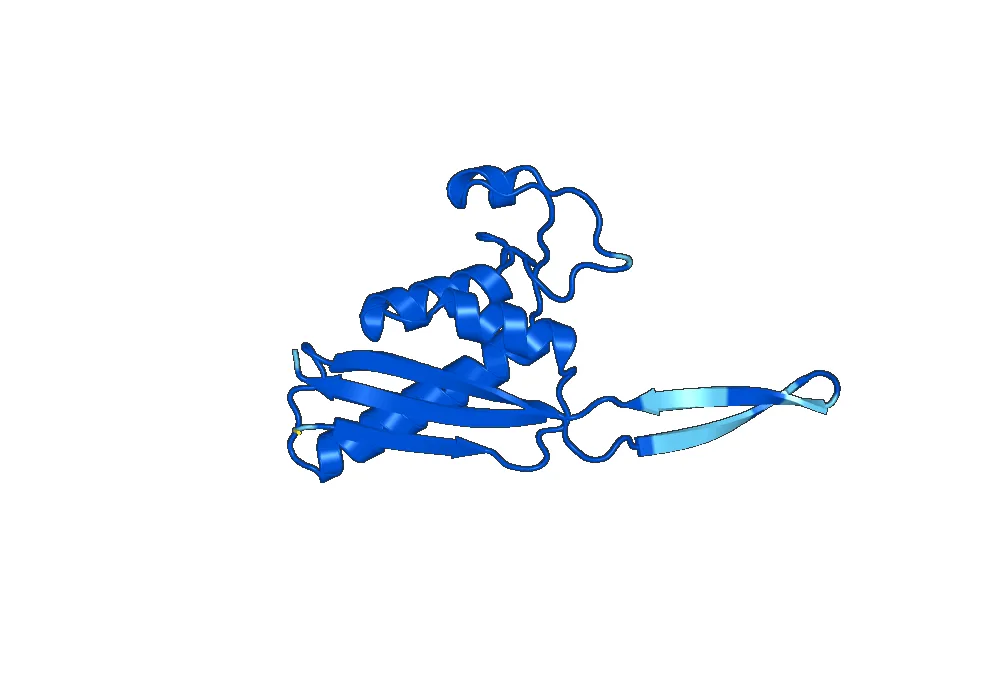
The Recombinant Human RPL17 Protein, also known as Ribosomal Protein L17, is a component of the 60S ribosomal subunit in eukaryotic cells. It is encoded by the RPL17 gene located on chromosome 22 in humans. The protein is composed of 157 amino acids with a molecular weight of approximately 18 kDa. It has a conserved primary structure, with a high degree of sequence similarity among different species. The crystal structure of the protein has been determined, revealing its unique three-dimensional shape.

Activity of Recombinant Human RPL17 Protein

The primary function of RPL17 is to participate in the translation process, where it helps in the assembly of the ribosome and facilitates the decoding of mRNA into proteins. It also plays a role in the regulation of gene expression and cellular growth. Recent studies have shown that RPL17 has additional activities, including DNA binding and RNA chaperone function. These activities have been linked to the protein’s ability to interact with various cellular components, such as DNA, RNA, and other proteins.

Applications of Recombinant Human RPL17 Protein

The unique structure and diverse activities of Recombinant Human RPL17 Protein make it a valuable tool in various applications. One of its main uses is in the production of recombinant proteins. RPL17 is essential for the proper functioning of the ribosome, and its absence can lead to defects in protein synthesis. Therefore, the addition of recombinant RPL17 can improve the efficiency and yield of protein production in heterologous expression systems.

Another potential application of RPL17 is in the development of diagnostic tools. The protein has been identified as a potential antigen in autoimmune diseases, such as systemic lupus erythematosus and rheumatoid arthritis. Antibodies against RPL17 have been detected in the serum of patients with these diseases, making it a potential biomarker for diagnosis.

Furthermore, RPL17 has been studied as a potential target for cancer therapy. It has been found to be overexpressed in certain types of cancer, and its knockdown has been shown to inhibit cancer cell growth. Recombinant RPL17 can be used in drug screening assays to identify potential inhibitors of its activity, which could lead to the development of new cancer treatments.

Conclusion

In conclusion, Recombinant Human RPL17 Protein is a versatile molecule with a unique structure and diverse activities. Its role in protein synthesis, gene expression, and potential applications in protein production, diagnostics, and cancer therapy make it a valuable tool in the field of biotechnology. Further research on this protein and its interactions with other cellular components may reveal even more potential applications, making it an exciting area of study in the scientific community.
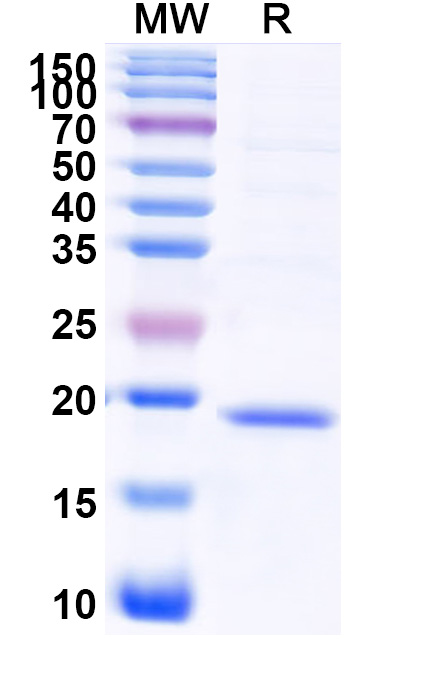
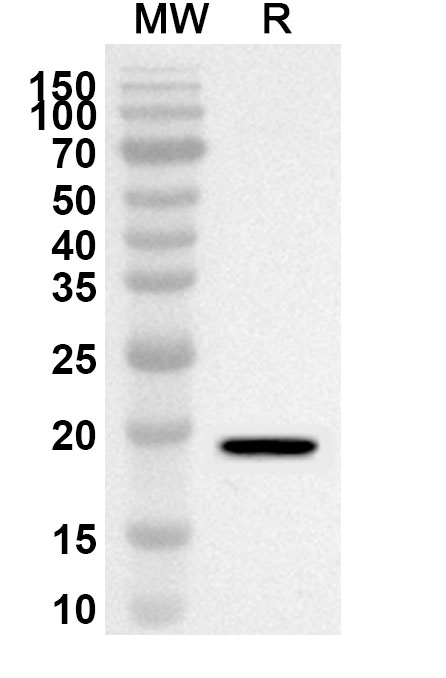
SDS-PAGE for Recombinant Human RPL17 Protein, N-His

SDS-PAGE for Recombinant Human RPL17 Protein, N-His

Recombinant Human RPL17 Protein, N-His, on SDS-PAGE. The gel was stained overnight with Coomassie Blue. The purity of the antibody is greater than 95%.

Recombinant Human RPL17 Protein, N-His

There are no reviews yet.

Be the first to review “Recombinant Human RPL17 Protein, N-His”

Your email address will not be published. Required fields are marked *

Related products

Recently viewed products

Loading recently viewed products…

Can’t find what you need?

Our catalog doesn’t cover everything — but our team does. Whether you need a custom antibody, a specific protein variant, or a bulk order, our scientists are here to help.

Contact Our Team Book a Call

Cart (0 Items)

Your cart is currently empty.

View Products