It looks like you are visiting from outside the EU. Switch to the US version to see local pricing in USD and local shipping.

Switch to US ($)

Get 25% off your first bioreagent online order — use code: PROTEOSHOP25

Immune checkpoint proteins

Immune checkpoints are molecules involved in modulating the immune response. They are essential in maintaining self-tolerance and prevent autoimmunity. They act as costimulatory signals in the interaction of antigen-MHC complexes with T cell receptor (TCR). Immune checkpoints are required for the activation of naïve T cells. Checkpoints proteins can be:

Immune checkpoints that inhibit the progression of immune response. Examples of checkpoint inhibitors include Programmed cell death protein 1 (PD1), cytotoxic T-lymphocyte-associated protein 4 (CTLA-4) and V-domain Ig-containing Suppressor of T cell Activation protein (VISTA).

Immune checkpoint proteins that stimulate immune progress. Examples of stimulatory checkpoints include Cluster of Differentiation 28 (CD28), Inducible T-cell costimulatory protein (ICOS), and Cluster of Differentiation 137 (CD137).
The extend and the duration of immune response depends on the balance between the inhibitory and stimulatory effect of immune checkpoints. They are essential to minimize collateral tissue damage. They are often over-expressed in tumor cells. As a result, blocking immune checkpoints has been considered as a potential approach for antitumor treatment and therapy.

Immune checkpoint are membrane proteins that are initially expressed in endoplasmic reticulum (ER). From ER these proteins are transported to Golgi apparatus where they undergo glycosylation. They are then transported to the cell surface via the secretory vesicles. Once at the cell membrane, these proteins are subject to internalization and recycling. Immune checkpoints cans also undergo ubiquitination-mediated protein degradation. These cellular processes determine the levels of immune checkpoints on the cell surface. The function of immune checkpoints depends on ligand-induced signaling. There are six main signaling mechanism based on ligand-checkpoint interaction.

Immune checkpoints have been essential in cancer immunotherapy. Cancer cells dysregulate immune checkpoint signaling which impairs the immune response. Immunotherapy is a form of cancer treatment that enables immune system to stop or slow the growth of cancer cells. Immunotherapy drugs that target immune checkpoint inhibitors work by blocking checkpoint proteins from binding with their partner proteins. This prevents the inhibitory signal from being sent which, in turn, enables T cells to kill cancer cells. CTLA-4 and PD1 checkpoint inhibitors have already been approved for cancer therapy with effective efficacy.

126 products
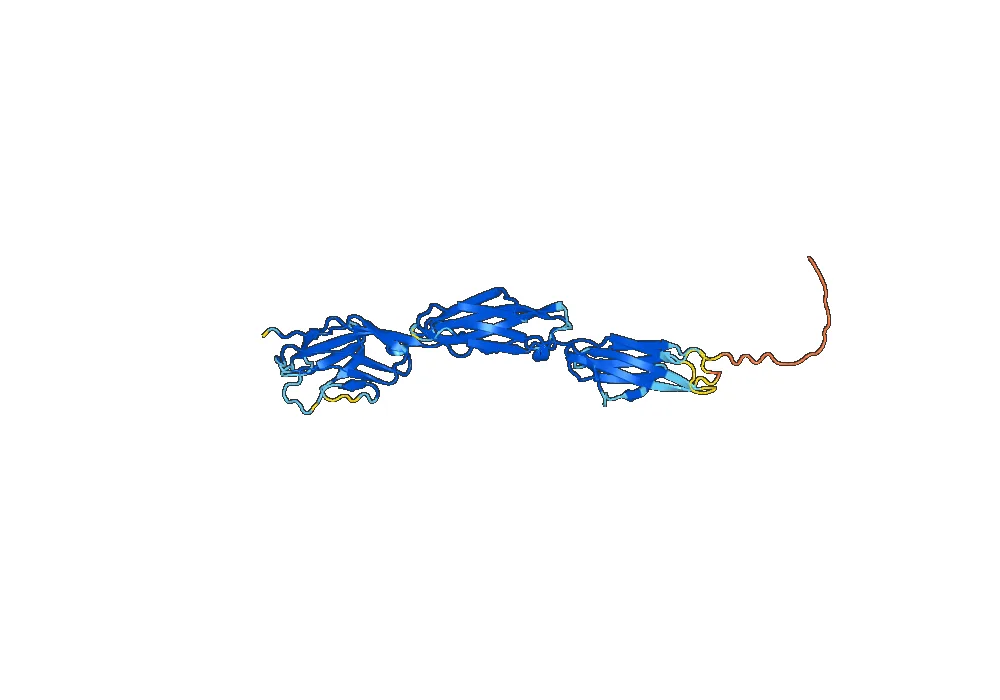
  • CD66a recombinant protein

    CD66a recombinant protein

    • PX-P5131-100
    Host species:
    Mammalian cells
    Origin species:
    Homo sapiens (Human)
    Brand:
    ProteoGenix
    Size:
    100ug
  • Vitamin K-dependent protein C(PROC)

    Vitamin K-dependent protein C(PROC)

    • PX-P4631-10
    Host species:
    Mammalian cells
    Origin species:
    Homo sapiens (Human)
    Brand:
    ProteoGenix
    Size:
    100ug | 50ug
  • CD70 antigen (CD70)

    CD70 antigen (CD70)

    • PX-P4642-10
    Host species:
    Mammalian cells
    Origin species:
    Homo sapiens (Human)
    Brand:
    ProteoGenix
    Size:
    100ug | 50ug
  • Cytosolic 5'-nucleotidase 1A (NT5C1A)

    Cytosolic 5'-nucleotidase 1A (NT5C1A)

    • PX-P4350-10
    Host species:
    Escherichia coli (E.coli)
    Origin species:
    Homo sapiens (Human)
    Brand:
    ProteoGenix
    Size:
    100ug | 50ug
  • SIRP alpha human recombinant protein (Fc-Tag)

    SIRP alpha human recombinant protein (Fc-Tag)

    • PX-P4900-10
    Host species:
    Mammalian cells
    Origin species:
    Homo sapiens (Human)
    Brand:
    ProteoGenix
    Size:
    100ug | 50ug
  • Human CD27 recombinant protein

    Human CD27 recombinant protein

    • PX-P5118
    Host species:
    Escherichia coli (E.coli)
    Origin species:
    Homo sapiens (Human)
    Brand:
    ProteoGenix
    Size:
    10 ug | 100 ug | 50ug | 100ug
  • Human CD30 recombinant protein

    Human CD30 recombinant protein

    • PX-P5119
    Host species:
    Mammalian cells
    Origin species:
    Homo sapiens (Human)
    Brand:
    ProteoGenix
    Size:
    10 ug | 100 ug | 50ug | 100ug
  • Human CD326 recombinant protein

    Human CD326 recombinant protein

    • PX-P5122
    Host species:
    Mammalian cells
    Origin species:
    Homo sapiens (Human)
    Brand:
    ProteoGenix
    Size:
    10 ug | 100 ug | 50ug | 100ug
  • Serum paraoxonase-lactonase 3(PON3)

    Serum paraoxonase-lactonase 3(PON3)

    • PX-P4784-10
    Host species:
    Escherichia coli (E.coli)
    Origin species:
    Homo sapiens (Human)
    Brand:
    ProteoGenix
    Size:
    100ug | 50ug
  • Trypsinogen

    Trypsinogen

    • PX-P4831-10
    Host species:
    Yeast
    Brand:
    ProteoGenix
    Size:
    100ug | 50ug
  • Tumor necrosis factor(TNF)

    Tumor necrosis factor(TNF)

    • PX-P4641-10
    Host species:
    Mammalian cells
    Brand:
    ProteoGenix
    Size:
    100ug | 50ug
  • ULP_PROTEASE domain-containing protein

    ULP_PROTEASE domain-containing protein

    • PX-P4494-10
    Host species:
    Escherichia coli (E.coli)
    Brand:
    ProteoGenix
    Size:
    100ug | 50ug

Need a quote or more information? Contact us!

    Cart (0 Items)

    Your cart is currently empty.

    View Products