It looks like you are visiting from outside the EU. Switch to the US version to see local pricing in USD and local shipping.

Switch to US ($)

Get 25% off your first bioreagent online order — use code: PROTEOSHOP25

Brand: ProteoGenix

Recombinant Human LTB/TNFC Protein, C-His

Host species:
Insect cells
Origin species:
Human
Uniprot ID:
Q06643
Molecular weight:
21.90 kDa

Original price was: €431.00.Current price is: €375.00.

100ug 13% OFF + 375 loyalty points
Gly86–Gly244
Size
  • In Stock
  • Free shipping in EU on orders > €500
  • Wide range of unique reagents
  • Fast worldwide delivery

Recombinant Human LTB/TNFC Protein, C-His

Product name ARO-P11331-100
Uniprot ID Q06643
Origin species Human
Expression system Eukaryotic expression
Raw Antigen Sequence GLPAAHLIGAPLKGQGLGWETTKEQAFLTSGTQFSDAEGLALPQDGLYYLYCLVGYRGRAPPGGGDPQGRSVTLRSSLYRAGGAYGPGTPELLLEGAETVTPVLDPARRQGYGPLWYTSVGFGGLVQLRRGERVYVNISHPDMVDFARGKTFFGAVMVG
Molecular weight 21.90 kDa
Buffer Lyophilized from a solution in PBS pH 7.4, 1mM EDTA, 4% Trehalose, 1% Mannitol.
Delivery condition Dry Ice
Delivery lead time in business days 3-5 days if in stock; 3-5 weeks if production needed
Storage condition 4°C for short term (1 week), -20°C or -80°C for long term (avoid freezing/thawing cycles; addition of 20-40% glycerol improves cryoprotection)
Brand ProteoGenix
Host species Insect cells
Fragment Type Gly86-Gly244
Aliases /Synonyms Lymphotoxin-beta, LT-beta, Tumor necrosis factor C, TNF-C, Tumor necrosis factor ligand superfamily member 3, LTB, TNFC, TNFSF3
Reference ARO-P11331
Note For research use only.
Molecular Constructor
Gly86–Gly244
Product name ARO-P11331-1MG
Uniprot ID Q06643
Origin species Human
Expression system Eukaryotic expression
Raw Antigen Sequence GLPAAHLIGAPLKGQGLGWETTKEQAFLTSGTQFSDAEGLALPQDGLYYLYCLVGYRGRAPPGGGDPQGRSVTLRSSLYRAGGAYGPGTPELLLEGAETVTPVLDPARRQGYGPLWYTSVGFGGLVQLRRGERVYVNISHPDMVDFARGKTFFGAVMVG
Molecular weight 21.90 kDa
Buffer Lyophilized from a solution in PBS pH 7.4, 1mM EDTA, 4% Trehalose, 1% Mannitol.
Delivery condition Dry Ice
Delivery lead time in business days 3-5 days if in stock; 3-5 weeks if production needed
Storage condition 4°C for short term (1 week), -20°C or -80°C for long term (avoid freezing/thawing cycles; addition of 20-40% glycerol improves cryoprotection)
Brand ProteoGenix
Host species Insect cells
Fragment Type Gly86-Gly244
Aliases /Synonyms Lymphotoxin-beta, LT-beta, Tumor necrosis factor C, TNF-C, Tumor necrosis factor ligand superfamily member 3, LTB, TNFC, TNFSF3
Reference ARO-P11331
Note For research use only.
Molecular Constructor
Gly86–Gly244
Product name ARO-P11331-50
Uniprot ID Q06643
Origin species Human
Expression system Eukaryotic expression
Raw Antigen Sequence GLPAAHLIGAPLKGQGLGWETTKEQAFLTSGTQFSDAEGLALPQDGLYYLYCLVGYRGRAPPGGGDPQGRSVTLRSSLYRAGGAYGPGTPELLLEGAETVTPVLDPARRQGYGPLWYTSVGFGGLVQLRRGERVYVNISHPDMVDFARGKTFFGAVMVG
Molecular weight 21.90 kDa
Buffer Lyophilized from a solution in PBS pH 7.4, 1mM EDTA, 4% Trehalose, 1% Mannitol.
Delivery condition Dry Ice
Delivery lead time in business days 3-5 days if in stock; 3-5 weeks if production needed
Storage condition 4°C for short term (1 week), -20°C or -80°C for long term (avoid freezing/thawing cycles; addition of 20-40% glycerol improves cryoprotection)
Brand ProteoGenix
Host species Insect cells
Fragment Type Gly86-Gly244
Aliases /Synonyms Lymphotoxin-beta, LT-beta, Tumor necrosis factor C, TNF-C, Tumor necrosis factor ligand superfamily member 3, LTB, TNFC, TNFSF3
Reference ARO-P11331
Note For research use only.
Molecular Constructor
Gly86–Gly244

Introduction

Recombinant Human LTB/TNFC Protein is a synthetic protein that is produced using recombinant DNA technology. It is a combination of two proteins, Lymphotoxin beta (LTB) and Tumor Necrosis Factor C (TNFC), which are both members of the tumor necrosis factor (TNF) family. This protein has been extensively studied and has shown promising results in various fields of research and medicine.

Structure of Recombinant Human LTB/TNFC Protein

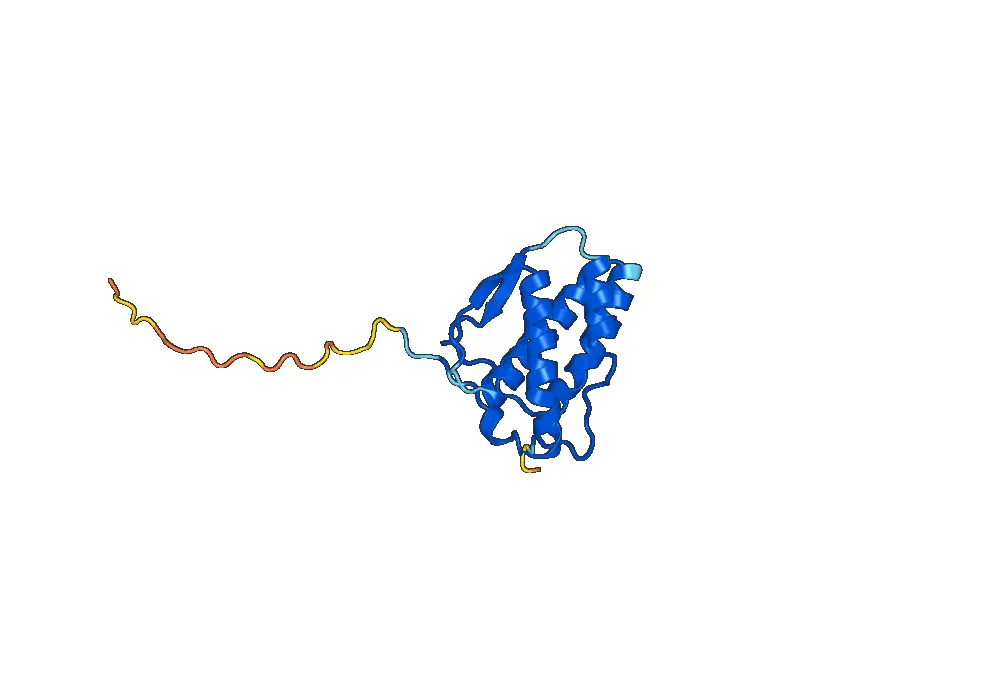
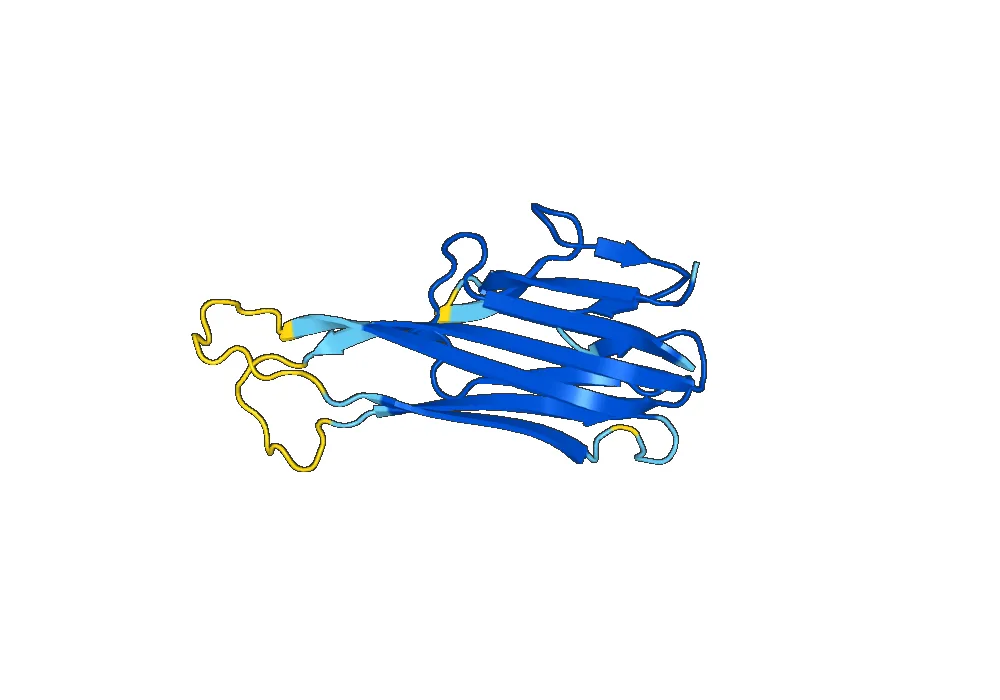
Recombinant Human LTB/TNFC Protein is a homotrimeric protein, meaning it is made up of three identical subunits. Each subunit consists of 205 amino acids and has a molecular weight of approximately 25 kDa. The protein has a characteristic trimeric structure, with each subunit forming a six-stranded beta-sheet surrounded by alpha-helices. This structure is similar to other members of the TNF family, such as TNF-alpha and TNF-beta.

Activity of Recombinant Human LTB/TNFC Protein

Recombinant Human LTB/TNFC Protein is a potent activator of immune responses. It acts by binding to its receptor, TNFRSF3, which is expressed on the surface of various immune cells, including T cells, B cells, and dendritic cells. This binding triggers a cascade of signaling events that ultimately lead to the activation of these immune cells.

One of the key activities of Recombinant Human LTB/TNFC Protein is its ability to induce the production of other cytokines, such as interleukin-6 (IL-6) and interleukin-8 (IL-8), which play important roles in inflammation and immune responses. It also promotes the proliferation and differentiation of immune cells, leading to an increased immune response.

Application of Recombinant Human LTB/TNFC Protein

Recombinant Human LTB/TNFC Protein has a wide range of applications in both research and medicine. Some of the most notable applications include:

1. Research

In research, Recombinant Human LTB/TNFC Protein is used as a tool to study the role of TNF family proteins in various biological processes. It is also used to investigate the mechanisms of immune responses and inflammatory diseases. The protein is often used in in vitro experiments to stimulate immune cells and observe their responses.

2. Vaccine Development

Recombinant Human LTB/TNFC Protein has shown promising results in vaccine development. It has been used as an adjuvant, a substance that enhances the immune response to a vaccine, in several studies. The protein has been found to increase the efficacy of vaccines against various pathogens, including influenza and HIV.

3. Treatment of Inflammatory Diseases

Inflammatory diseases, such as rheumatoid arthritis and inflammatory bowel disease, are characterized by an overactive immune response. Recombinant Human LTB/TNFC Protein has been investigated as a potential treatment for these diseases due to its ability to regulate the immune response. It has shown promising results in preclinical studies and is currently being evaluated in clinical trials.

4. Cancer Therapy

Recombinant Human LTB/TNFC Protein has also been studied as a potential cancer therapy. It has been found to induce cell death in certain types of cancer cells, making it a promising candidate for targeted cancer treatment. Additionally, the protein has been shown to enhance the anti-tumor activity of other cancer treatments, such as chemotherapy and radiation therapy.

Conclusion

In summary, Recombinant Human LTB/TNFC Protein is a synthetic protein with a trimeric structure and potent immune-stimulating activity. It has a wide range of applications in research and medicine, including vaccine development, treatment of inflammatory diseases, and cancer therapy. With ongoing research and clinical trials, this protein has the potential to significantly impact the fields of immunology and medicine.

Recombinant Human LTB/TNFC Protein, C-His

There are no reviews yet.

Be the first to review “Recombinant Human LTB/TNFC Protein, C-His”

Your email address will not be published. Required fields are marked *

Recently viewed products

Loading recently viewed products…

Can’t find what you need?

Our catalog doesn’t cover everything — but our team does. Whether you need a custom antibody, a specific protein variant, or a bulk order, our scientists are here to help.

Contact Our Team Book a Call

Cart (0 Items)

Your cart is currently empty.

View Products