Introduction
The Human ROR2/NTRKR2 HEK293T Stable Cell Line is a valuable tool for studying the structure, activity, and potential therapeutic applications of the ROR2/NTRKR2 protein. This cell line is derived from HEK293T cells, a commonly used human embryonic kidney cell line, and stably expresses the human ROR2/NTRKR2 protein. In this article, we will discuss the key features of this stable cell line and its potential uses in research.
Structure of ROR2/NTRKR2 Protein
ROR2 (Receptor Tyrosine Kinase-Like Orphan Receptor 2) and NTRKR2 (Neurotrophic Tyrosine Kinase Receptor 2) are two closely related proteins that belong to the receptor tyrosine kinase family. These proteins are transmembrane receptors, meaning they span the cell membrane and have a portion of their structure inside the cell and another portion outside the cell. The extracellular portion of ROR2/NTRKR2 contains several domains, including a cysteine-rich domain, a kringle domain, and a tyrosine kinase domain. The intracellular portion contains a tyrosine kinase domain, which is responsible for initiating signaling pathways upon binding to ligands.
Activity of ROR2/NTRKR2 Protein
The ROR2/NTRKR2 protein is involved in several important cellular processes, including cell proliferation, differentiation, and migration. It is also known to play a role in the development of various tissues and organs, including the skeletal, nervous, and cardiovascular systems. The activity of ROR2/NTRKR2 is primarily mediated through its interaction with Wnt proteins, which are key regulators of cell growth and differentiation. Upon binding to Wnt ligands, ROR2/NTRKR2 activates downstream signaling pathways, such as the Wnt/β-catenin pathway, which ultimately leads to changes in gene expression and cellular behavior.
Application of Human ROR2/NTRKR2 HEK293T Stable Cell Line
The stable expression of ROR2/NTRKR2 in HEK293T cells makes this cell line a valuable tool for studying the function and regulation of this protein. One of the key applications of this cell line is in the study of ROR2/NTRKR2-mediated signaling pathways. By manipulating the expression of ROR2/NTRKR2 or its ligands, researchers can investigate the effects on downstream signaling and cellular behavior. This can provide insights into the role of ROR2/NTRKR2 in various physiological and pathological processes.
Another potential application of this stable cell line is in drug discovery and development. ROR2/NTRKR2 has been identified as a potential therapeutic target for several diseases, including cancer, osteoporosis, and cardiovascular disease. The use of this cell line can aid in the identification and validation of compounds that modulate ROR2/NTRKR2 activity. Furthermore, the stable expression of ROR2/NTRKR2 in HEK293T cells allows for the development of high-throughput screening assays for drug discovery.
Flow Cytometry Analysis of ROR2/NTRKR2 Expression
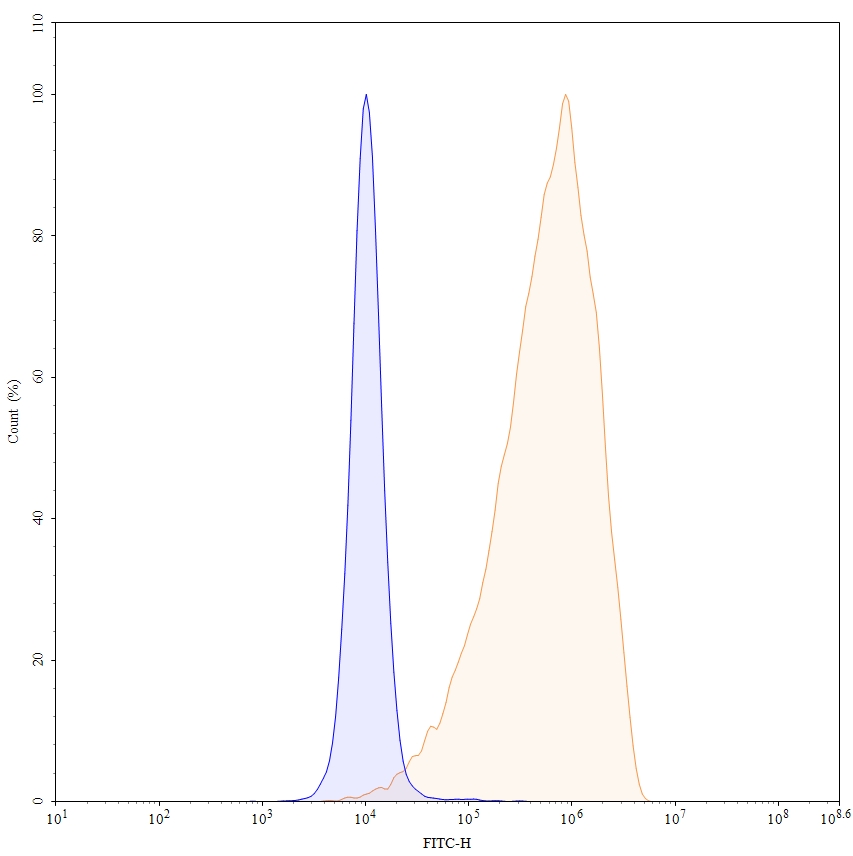
Flow cytometry is a powerful technique for analyzing the expression of cell surface proteins. The ROR2/NTRKR2 protein is predominantly expressed on the cell surface, making it an ideal target for flow cytometry analysis. The Human ROR2/NTRKR2 HEK293T Stable Cell Line can be used for flow cytometry analysis to quantify the expression of ROR2/NTRKR2 on the cell surface. This can be particularly useful in comparing the expression levels of ROR2/NTRKR2 in different cell lines or under different experimental conditions.
Conclusion
In summary, the Human ROR2/NTRKR2 HEK293T Stable Cell Line is a valuable tool for studying the structure, activity, and potential therapeutic applications of the ROR2/NTRKR2 protein.

There are no reviews yet.