Certolizumab Biosimilar: A Promising Anti-TNF-Alpha Monoclonal Antibody for Therapeutic Targeting
Certolizumab Biosimilar is a novel monoclonal antibody (mAb) that has gained significant attention in the field of immunotherapy due to its potential as a therapeutic agent for various inflammatory and autoimmune diseases. This biosimilar is a highly specific and potent inhibitor of tumor necrosis factor-alpha (TNF-α), a key pro-inflammatory cytokine involved in the pathogenesis of several chronic inflammatory disorders. In this article, we will delve into the structure, activity, and potential applications of Certolizumab Biosimilar as an anti-TNF-α mAb in research settings.
Structure of Certolizumab Biosimilar
Certolizumab Biosimilar is a recombinant, fully humanized IgG1 monoclonal antibody that is produced by a mammalian cell expression system. It is composed of two heavy chains and two light chains, each containing a variable and constant region. The variable region of Certolizumab Biosimilar specifically binds to TNF-α, while the constant region mediates effector functions such as antibody-dependent cellular cytotoxicity (ADCC) and complement-dependent cytotoxicity (CDC).
One unique feature of Certolizumab Biosimilar is the absence of the Fc region, which is responsible for effector functions in other mAbs. This is achieved by replacing the Fc region with a 40 kDa polyethylene glycol (PEG) molecule, resulting in a smaller molecular weight of 90 kDa compared to other anti-TNF-α mAbs. This modification not only enhances the half-life and stability of the antibody, but also reduces the risk of immunogenicity and potential adverse effects.
Activity of Certolizumab Biosimilar
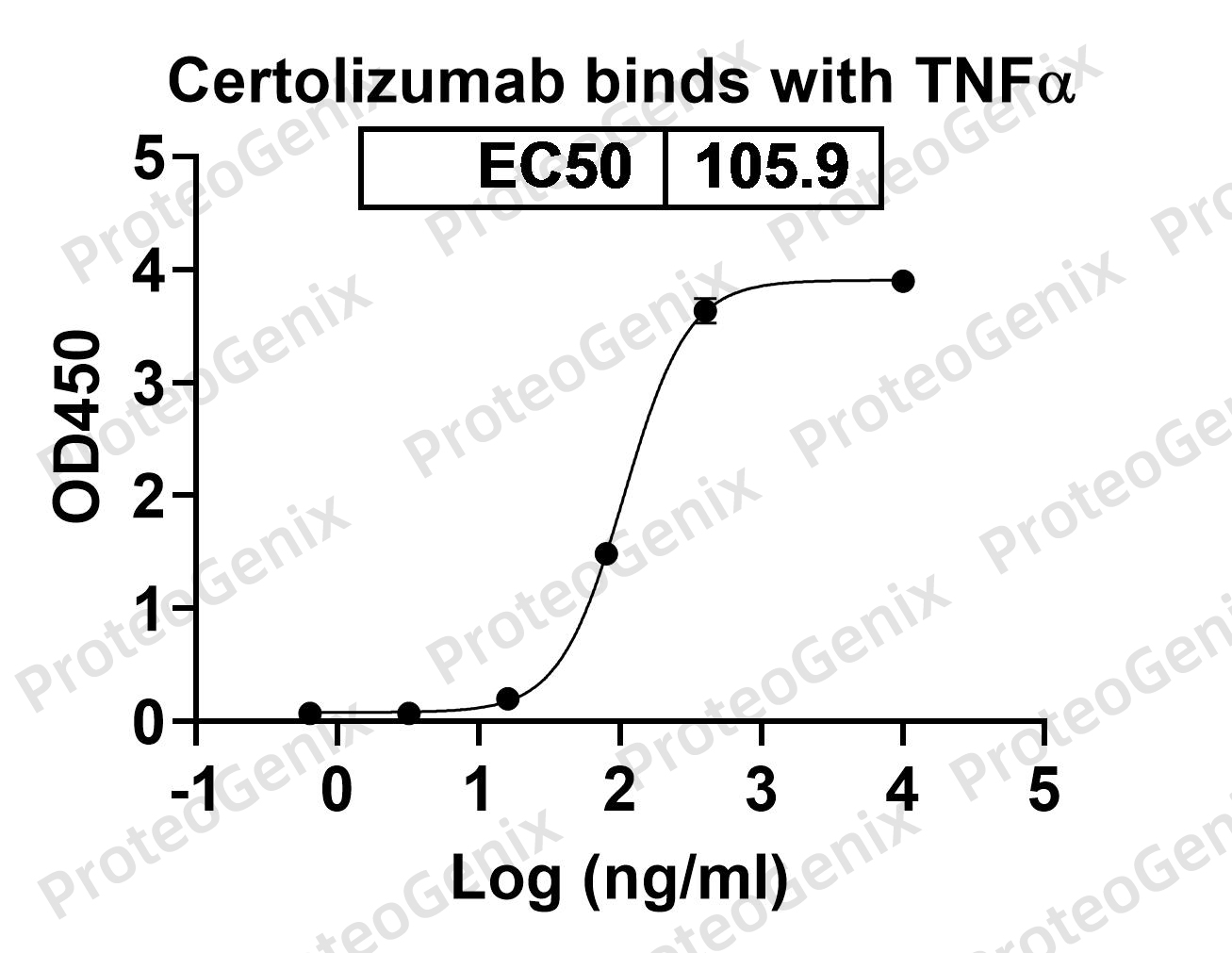
The main mechanism of action of Certolizumab Biosimilar is the neutralization of TNF-α, a pro-inflammatory cytokine that plays a crucial role in the pathogenesis of various diseases, including rheumatoid arthritis, psoriasis, Crohn’s disease, and ankylosing spondylitis. TNF-α is known to induce inflammation, tissue damage, and bone erosion by activating immune cells and promoting the production of other inflammatory cytokines. By binding to TNF-α, Certolizumab Biosimilar prevents its interaction with its receptors and inhibits downstream signaling pathways, thereby reducing inflammation and disease progression.
Moreover, the PEGylation of Certolizumab Biosimilar also contributes to its activity by prolonging its half-life and reducing its clearance from the body. This allows for a longer duration of action and potentially lower dosing frequency compared to other anti-TNF-α mAbs, making it a more convenient and cost-effective option for patients.
Applications of Certolizumab Biosimilar
Certolizumab Biosimilar has been extensively studied and has shown promising results in clinical trials for various inflammatory and autoimmune diseases. In particular, it has been approved for the treatment of rheumatoid arthritis, psoriatic arthritis, ankylosing spondylitis, and Crohn’s disease in several countries, including Europe and Japan. It is also being investigated for its potential in other indications such as ulcerative colitis, axial spondyloarthritis, and non-infectious uveitis.
In research settings, Certolizumab Biosimilar is widely used as a tool to study the role of TNF-α in disease pathogenesis and to evaluate the efficacy of anti-TNF-α therapies. Its unique structure and mechanism of action provide a valuable platform for developing new and improved anti-TNF-α mAbs with enhanced properties and reduced side effects.
Conclusion
In summary, Certolizumab Biosimilar is a promising anti-TNF-α monoclonal antibody with a unique



There are no reviews yet.