Anti-RBD (Omicron/B.1.1.529) Polyclonal Antibody
Biological Function:
The Anti-RBD (Omicron/B.1.1.529) Polyclonal Antibody is a highly specific and sensitive tool for detecting the Omicron variant of the SARS-CoV-2 virus. This antibody targets the receptor-binding domain (RBD) of the virus, which is responsible for binding to the host cell receptor and initiating infection.
Main Applications:
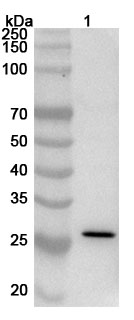
This antibody is primarily used for research purposes, specifically in the study of the Omicron variant of SARS-CoV-2. It can be used in various immunoassays, including ELISA, Western blot, and immunofluorescence, to detect the presence of the Omicron RBD protein.
Experimental Use Cases:
The Anti-RBD (Omicron/B.1.1.529) Polyclonal Antibody has been successfully used in experimental studies to understand the characteristics and behavior of the Omicron variant. It has been used to study the binding affinity of the Omicron RBD to the host cell receptor, as well as its ability to evade neutralizing antibodies. This antibody has also been used in vaccine development studies to assess the effectiveness of different vaccine candidates against the Omicron variant.
With its high specificity and sensitivity, this antibody is an essential tool for researchers studying the Omicron variant and its impact on the COVID-19 pandemic.
This Anti-RBD (Omicron/B.1.1.529) Polyclonal Antibody is specifically designed for research purposes and is highly specific and sensitive in detecting the Omicron variant of the SARS-CoV-2 virus. Its main applications include ELISA, Western blot, and immunofluorescence, making it a versatile tool for studying the Omicron RBD protein. This antibody has been successfully used in experimental studies to understand the characteristics and behavior of the Omicron variant and its potential impact on vaccine development.
Introduction:
Anti-RBD (Omicron/B.1.1.529) Polyclonal Antibody
Biological Function
The Anti-RBD (Omicron/B.1.1.529) Polyclonal Antibody is a highly specific and sensitive tool for detecting the Omicron variant of the SARS-CoV-2 virus. This antibody targets the receptor-binding domain (RBD) of the virus, which is responsible for binding to the host cell receptor and initiating infection.
Main Applications
This antibody is primarily used for research purposes, specifically in the study of the Omicron variant of SARS-CoV-2. It can be used in various immunoassays, including ELISA, Western blot, and immunofluorescence, to detect the presence of the Omicron RBD protein.
Experimental Use Cases
The Anti-RBD (Omicron/B.1.1.529) Polyclonal Antibody has been successfully used in experimental studies to understand the characteristics and behavior of the Omicron variant. It has been used to study the binding affinity of the Omicron RBD to the host cell receptor, as well as its ability to evade neutralizing antibodies. This antibody has also been used in vaccine development studies to assess the effectiveness of different vaccine candidates against the Omicron variant.
Conclusion
With its high specificity and sensitivity, the Anti-RBD (Omicron/B.1.1.529) Polyclonal Antibody is an essential tool for researchers studying the Omicron variant and its impact on the COVID-19 pandemic. Its versatile applications and successful use in experimental studies make it a valuable asset in understanding and combatting this emerging variant.

There are no reviews yet.