Introduction
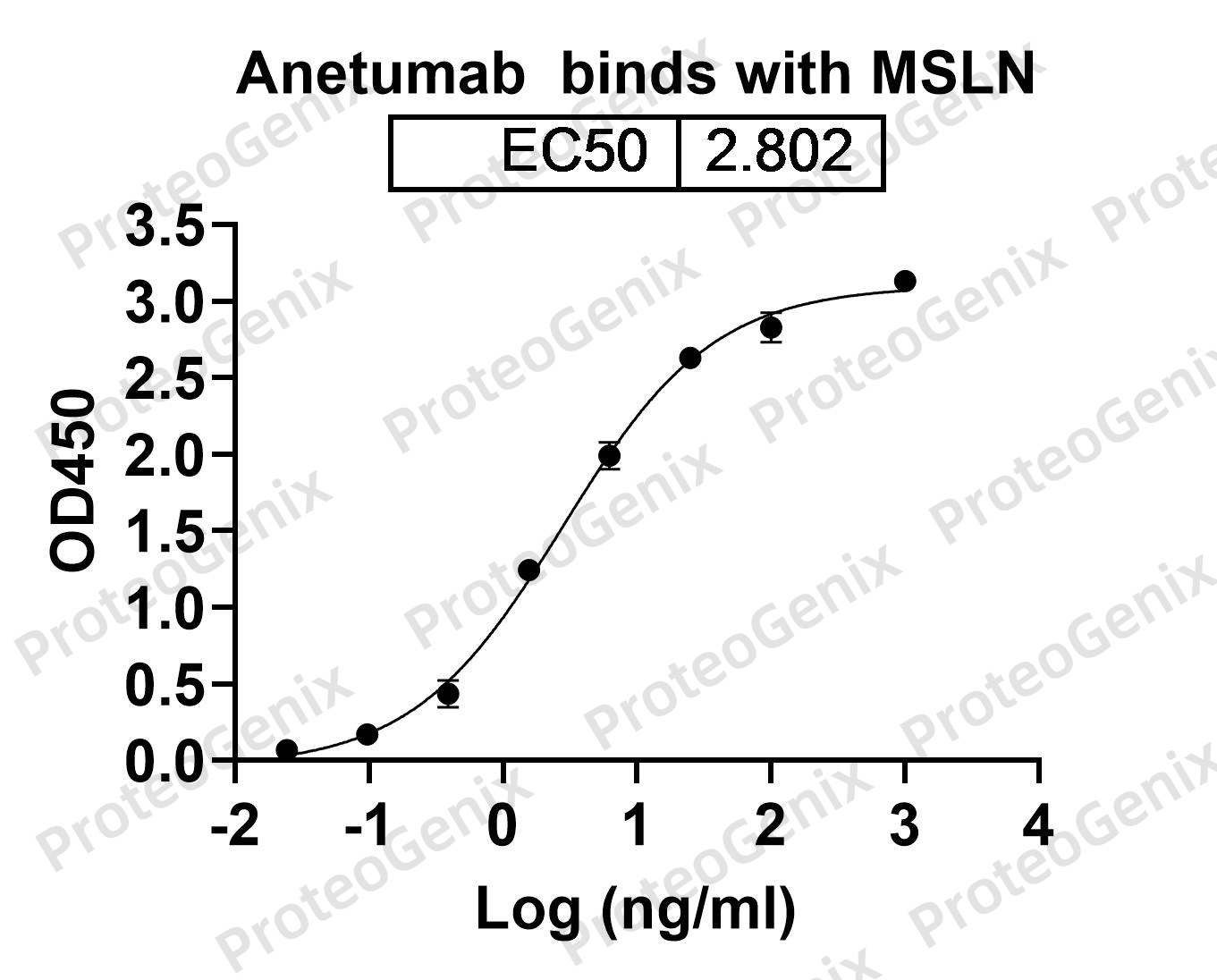
Anetumab is a monoclonal antibody that has been developed as a potential therapeutic agent for various types of cancer. It specifically targets the protein mesothelin, which is overexpressed in many types of cancer cells. The Anetumab ELISA Kit is a powerful tool that allows for the detection and quantification of Anetumab in biological samples. In this article, we will discuss the structure, activity, and application of the Anetumab ELISA Kit.
Structure of Anetumab
Anetumab is a fully human monoclonal antibody, meaning that it is derived from human cells rather than animal cells. This reduces the risk of immune reactions and increases its efficacy in humans. The antibody is composed of two heavy chains and two light chains, which are connected by disulfide bonds. The heavy chains consist of a constant region and a variable region, while the light chains only have a variable region. The variable regions are responsible for binding to the target protein, mesothelin.
Activity of Anetumab
Anetumab specifically binds to mesothelin, a protein that is highly expressed in various types of cancer cells, including mesothelioma, ovarian cancer, and pancreatic cancer. This binding leads to the inhibition of cancer cell growth and induces cell death through various mechanisms, including antibody-dependent cellular cytotoxicity (ADCC) and complement-dependent cytotoxicity (CDC). ADCC is a process in which immune cells, such as natural killer cells, recognize and kill cancer cells that are bound by Anetumab. CDC, on the other hand, involves the activation of the complement system, leading to the lysis of cancer cells.
Application of Anetumab ELISA Kit
The Anetumab ELISA Kit is a valuable tool for the detection and quantification of Anetumab in biological samples. It is commonly used in preclinical and clinical studies to monitor the levels of Anetumab in patients receiving treatment. This allows for the optimization of dosage and treatment regimens, as well as the evaluation of the efficacy of Anetumab in different types of cancer. The kit is also used to measure the pharmacokinetics of Anetumab, providing valuable information on its absorption, distribution, metabolism, and excretion in the body.
Detection of Anetumab in Serum Samples
One of the primary applications of the Anetumab ELISA Kit is the detection of Anetumab in serum samples. This is a crucial step in the development of Anetumab as a therapeutic agent, as it allows for the determination of the optimal dosage for patients. The kit uses a sandwich ELISA method, where Anetumab is captured by a specific antibody coated on the plate, and then detected by a second antibody conjugated with an enzyme. The amount of Anetumab present in the sample is directly proportional to the color intensity, which is measured using a spectrophotometer.
Quantification of Anetumab in Tissue Samples
In addition to serum samples, the Anetumab ELISA Kit can also be used to quantify Anetumab levels in tissue samples. This is particularly useful in preclinical studies, where the distribution of Anetumab in different organs and tissues can be evaluated. The kit allows for the measurement of Anetumab in a wide range of tissues, including tumors, liver, kidney, and spleen. This information is crucial in understanding the pharmacodynamics of Anetumab and its potential side effects.
Conclusion
In summary, the Anetumab ELISA Kit is a valuable tool for the detection and quantification of Anetumab in biological samples. It provides crucial information on the pharmacokinetics and pharmacodynamics of Anetumab, which is essential for the development and optimization of this potential therapeutic agent. With its high sensitivity and specificity, the Anetumab ELISA Kit is a crucial component in the

There are no reviews yet.