Introduction
Amostomig Biosimilar is a therapeutic antibody that targets the leukocyte surface antigen CD47 and programmed death-ligand 1 (PDL1). This biosimilar is a research grade antibody that has shown promising results in preclinical studies and has the potential to be used as a therapeutic agent for various diseases.
Structure of Amostomig Biosimilar
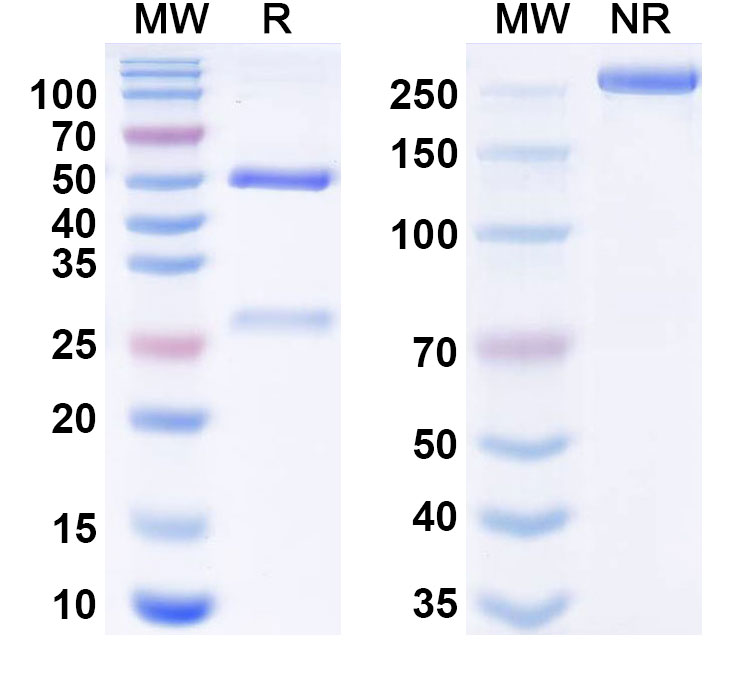
Amostomig Biosimilar is a monoclonal antibody that is designed to mimic the structure of the original antibody, which is used as a therapeutic agent. It is a recombinant antibody that is produced using advanced biotechnology techniques. The antibody consists of two heavy chains and two light chains, which are connected by disulfide bonds. The heavy chains are further divided into constant and variable regions, while the light chains have only one variable region. The variable regions are responsible for binding to the specific target, while the constant regions provide stability and effector functions.
Activity of Amostomig Biosimilar
The primary activity of Amostomig Biosimilar is to bind to the leukocyte surface antigen CD47 and PDL1. CD47 is a protein that is found on the surface of various cells, including cancer cells. It plays a crucial role in immune evasion by preventing the recognition and destruction of cancer cells by the immune system. PDL1 is another protein that is found on the surface of immune cells and is responsible for suppressing the immune response. By targeting both CD47 and PDL1, Amostomig Biosimilar can enhance the immune response against cancer cells and other diseases.
In addition to its primary activity, Amostomig Biosimilar also has effector functions that can contribute to its therapeutic effects. These include antibody-dependent cell-mediated cytotoxicity (ADCC) and complement-dependent cytotoxicity (CDC). These mechanisms involve the recruitment of immune cells and the activation of the complement system to destroy target cells.
Application of Amostomig Biosimilar
Amostomig Biosimilar has shown promising results in preclinical studies for various diseases, including cancer, autoimmune disorders, and infectious diseases. As a therapeutic antibody, it has the potential to be used as a targeted therapy for these diseases.
Cancer
The primary target of Amostomig Biosimilar is cancer, particularly solid tumors. By targeting CD47 and PDL1, it can enhance the immune response against cancer cells and inhibit their growth and spread. This antibody has shown promising results in preclinical studies for various types of cancer, including breast cancer, lung cancer, and leukemia.
Autoimmune Disorders
Autoimmune disorders occur when the immune system mistakenly attacks healthy cells and tissues. By targeting PDL1, Amostomig Biosimilar can suppress the immune response and reduce the symptoms of autoimmune disorders. It has shown potential in preclinical studies for diseases such as rheumatoid arthritis, multiple sclerosis, and lupus.
Infectious Diseases
Amostomig Biosimilar has also shown potential in the treatment of infectious diseases. By targeting CD47, it can enhance the immune response against pathogens and prevent their spread. This antibody has shown promising results in preclinical studies for diseases such as tuberculosis, malaria, and HIV.
Conclusion
Amostomig Biosimilar is a research grade therapeutic antibody that targets the leukocyte surface antigen CD47 and PDL1. Its structure, activity, and potential applications make it a promising candidate for the treatment of various diseases, particularly cancer. Further research and clinical trials are needed to fully evaluate the efficacy and safety of Amostomig Biosimilar, but it has the potential to be a valuable addition to the arsenal of therapeutic antibodies.
There are no reviews yet.