Introduction to Varokibart Biosimilar – Anti-IL5 mAb
Varokibart Biosimilar – Anti-IL5 mAb is a promising therapeutic antibody that has shown great potential in the treatment of various inflammatory diseases. This biosimilar is a monoclonal antibody (mAb) that targets the cytokine interleukin-5 (IL-5), a key mediator in the pathogenesis of inflammatory diseases. In this article, we will explore the structure, activity, and potential applications of Varokibart Biosimilar – Anti-IL5 mAb.
Structure of Varokibart Biosimilar – Anti-IL5 mAb
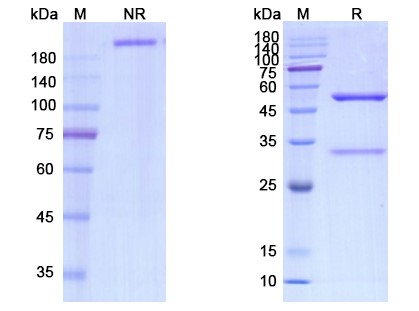
Varokibart Biosimilar – Anti-IL5 mAb is a biosimilar of the well-known anti-IL5 mAb, mepolizumab. It is a fully humanized IgG1 kappa monoclonal antibody with a molecular weight of approximately 150 kDa. The antibody is produced using recombinant DNA technology in Chinese hamster ovary (CHO) cells.
The antibody structure consists of two heavy chains and two light chains, each containing variable and constant regions. The variable regions of the heavy and light chains are responsible for binding to IL-5, while the constant regions are involved in effector functions such as complement activation and antibody-dependent cell-mediated cytotoxicity (ADCC).
Activity of Varokibart Biosimilar – Anti-IL5 mAb
Varokibart Biosimilar – Anti-IL5 mAb exerts its therapeutic effect by targeting and neutralizing IL-5, a cytokine that plays a crucial role in the development and maintenance of inflammatory diseases such as asthma, eosinophilic granulomatosis with polyangiitis (EGPA), and chronic rhinosinusitis with nasal polyps (CRSwNP).
IL-5 is primarily produced by Th2 cells and is responsible for the differentiation, activation, and survival of eosinophils, a type of white blood cell involved in allergic and inflammatory responses. Elevated levels of IL-5 have been linked to the pathogenesis of various inflammatory diseases, making it an attractive therapeutic target.
By binding to IL-5, Varokibart Biosimilar – Anti-IL5 mAb prevents the cytokine from interacting with its receptors on eosinophils, thereby inhibiting their activation and survival. This leads to a decrease in the number of eosinophils in the affected tissues, resulting in reduced inflammation and improved symptoms.
Potential Applications of Varokibart Biosimilar – Anti-IL5 mAb
Varokibart Biosimilar – Anti-IL5 mAb has shown promising results in clinical trials for the treatment of various inflammatory diseases. In patients with severe asthma, treatment with Varokibart Biosimilar – Anti-IL5 mAb has been shown to reduce the frequency of exacerbations and improve lung function, compared to placebo.
In addition, Varokibart Biosimilar – Anti-IL5 mAb has also shown efficacy in the treatment of EGPA and CRSwNP, two conditions characterized by elevated levels of IL-5 and eosinophilic inflammation. In clinical trials, treatment with Varokibart Biosimilar – Anti-IL5 mAb has led to a significant reduction in disease activity and improved quality of life in patients with these conditions.
Furthermore, Varokibart Biosimilar – Anti-IL5 mAb has also been investigated for its potential in other IL-5 driven diseases such as atopic dermatitis and hypereosinophilic syndrome, with promising results.
Conclusion
In summary, Varokibart Biosimilar – Anti-IL5 mAb is a promising therapeutic antibody that targets IL-5, a key mediator in the pathogenesis of various inflammatory diseases. Its unique structure and mechanism of action make it a potential treatment option for patients with severe asthma, EGPA, CRSwNP, and other IL-5 driven diseases. Further research and clinical trials are needed to fully explore the potential of Varokibart Biosimilar – Anti-IL5 mAb in the treatment of these conditions.


There are no reviews yet.