Introduction to Recombinant Mouse FGFR2 Protein
Recombinant Mouse FGFR2 Protein is a genetically engineered form of the Fibroblast Growth Factor Receptor 2 (FGFR2) protein, which plays a crucial role in cell growth, differentiation, and development. This recombinant protein is produced in a laboratory setting using advanced molecular biology techniques, and has a wide range of applications in both basic research and clinical settings.
Structure of Recombinant Mouse FGFR2 Protein
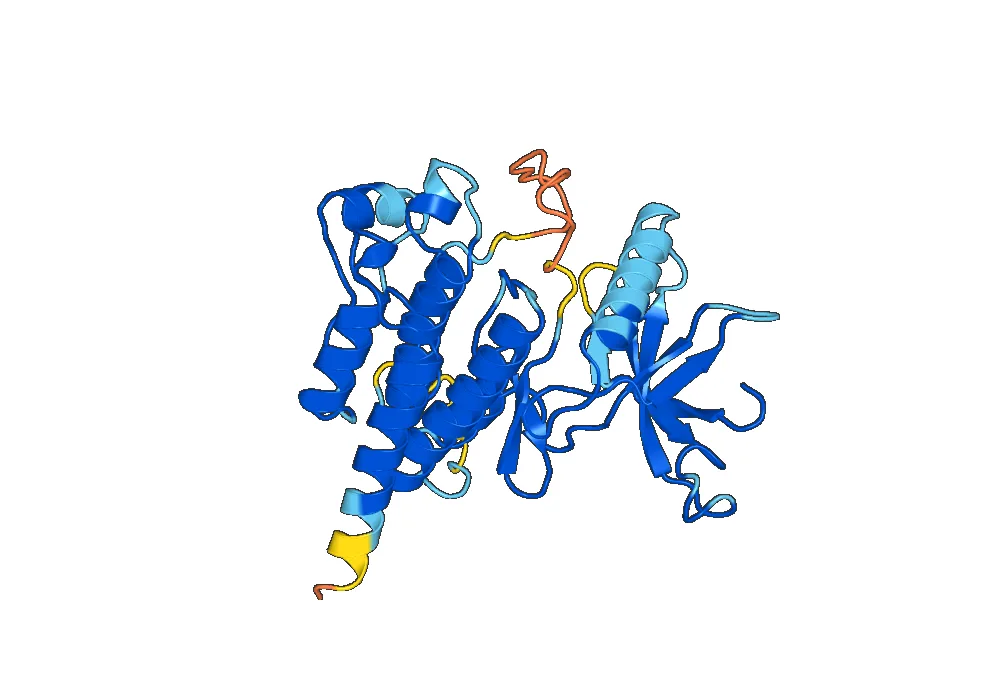
The Recombinant Mouse FGFR2 Protein is a type I transmembrane protein that belongs to the FGFR family. It is composed of an extracellular domain, a transmembrane domain, and an intracellular domain. The extracellular domain contains three immunoglobulin-like domains (Ig-like domains), which are responsible for binding to the Fibroblast Growth Factor (FGF) ligands. The transmembrane domain anchors the protein to the cell membrane, while the intracellular domain contains the tyrosine kinase domain, which is responsible for the activation of downstream signaling pathways.
Activity of Recombinant Mouse FGFR2 Protein
The primary function of Recombinant Mouse FGFR2 Protein is to act as a receptor for FGF ligands. Upon binding to FGF, the extracellular domain of FGFR2 undergoes conformational changes, leading to dimerization of the receptor. This dimerization activates the tyrosine kinase domain, resulting in the phosphorylation of tyrosine residues on the intracellular domain. These phosphorylated tyrosine residues serve as docking sites for various signaling molecules, leading to the activation of multiple downstream signaling pathways, such as the MAPK and PI3K/Akt pathways.
The activation of these signaling pathways by Recombinant Mouse FGFR2 Protein has been shown to regulate a wide range of cellular processes, including cell proliferation, differentiation, migration, and survival. Additionally, FGFR2 signaling has also been implicated in tissue regeneration and wound healing.
Applications of Recombinant Mouse FGFR2 Protein
Recombinant Mouse FGFR2 Protein has a variety of applications in both basic research and clinical settings. In basic research, it is used as a tool to study the function and regulation of FGFR2 signaling. This protein can be used to activate or inhibit FGFR2 signaling in cell culture or animal models, allowing researchers to investigate its role in different cellular processes.
In the clinical setting, Recombinant Mouse FGFR2 Protein has been used in the development of new therapeutic strategies for diseases associated with dysregulated FGFR2 signaling. For example, FGFR2 mutations have been linked to various types of cancer, including breast, lung, and gastric cancer. Recombinant Mouse FGFR2 Protein can be used to study the effects of these mutations and develop targeted therapies to block or inhibit the aberrant FGFR2 signaling in cancer cells.
Furthermore, Recombinant Mouse FGFR2 Protein has also been explored as a potential therapy for tissue regeneration and wound healing. Studies have shown that FGF signaling, mediated by FGFR2, plays a critical role in tissue repair and regeneration. Recombinant Mouse FGFR2 Protein can be used to enhance FGF signaling and promote tissue regeneration in various disease models, such as diabetic wounds and cardiovascular diseases.
Conclusion
Recombinant Mouse FGFR2 Protein is a valuable tool for studying the function and regulation of FGFR2 signaling. Its structure, activity, and multiple applications make it an essential protein in both basic research and clinical settings. With ongoing research and advancements in molecular biology techniques, Recombinant Mouse FGFR2 Protein is expected to continue playing a crucial role in understanding and treating diseases associated with dysregulated FGFR2 signaling.

There are no reviews yet.