Introduction
Recombinant Human MAD1L1 Protein, also known as Mitotic Arrest Deficient 1 Like 1, is a highly conserved protein that plays a crucial role in cell cycle regulation. It is a key component of the spindle assembly checkpoint, which ensures proper chromosome alignment during cell division. This protein is encoded by the MAD1L1 gene and is expressed in various tissues and cell types.
Structure
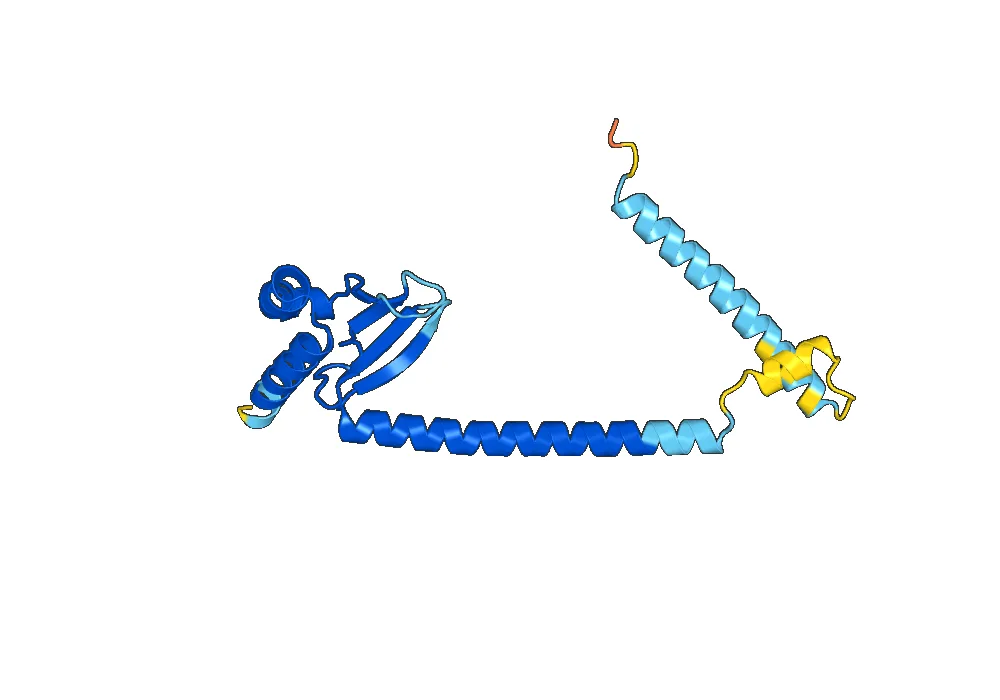
The recombinant form of MAD1L1 Protein is produced through genetic engineering techniques, using recombinant DNA technology. It is a 718 amino acid protein with a molecular weight of approximately 80 kDa. The protein consists of multiple domains, including a MAD1 domain, a MAD2-binding domain, and a C-terminal coiled-coil domain. These domains are essential for the proper functioning of the protein in the cell cycle.
Activity
Recombinant Human MAD1L1 Protein plays a crucial role in the spindle assembly checkpoint, which is a surveillance mechanism that ensures proper chromosome alignment and prevents cells from progressing through mitosis if there are any errors or defects in the chromosomes. During the early stages of mitosis, MAD1L1 binds to the kinetochore, a protein complex that attaches to the chromosomes, and recruits other checkpoint proteins, such as MAD2 and BUBR1. This leads to the formation of the mitotic checkpoint complex (MCC), which inhibits the activity of the anaphase-promoting complex (APC/C), a protein complex responsible for initiating anaphase, the final stage of mitosis.
Application
Recombinant Human MAD1L1 Protein has various applications in both research and clinical settings. It is commonly used as an antigen in studies related to cell cycle regulation and mitosis. The recombinant protein can be used to generate specific antibodies for the detection and study of MAD1L1 in various tissues and cell types. It can also be used in biochemical assays to investigate the interaction between MAD1L1 and other checkpoint proteins, such as MAD2 and BUBR1.
In addition, recombinant MAD1L1 Protein has potential therapeutic applications in cancer treatment. As MAD1L1 is a key component of the spindle assembly checkpoint, its dysregulation has been linked to various types of cancer, including breast, lung, and colon cancer. Therefore, targeting MAD1L1 with recombinant protein or small molecule inhibitors could potentially disrupt the spindle assembly checkpoint and induce cell death in cancer cells.
Conclusion
In summary, Recombinant Human MAD1L1 Protein is a crucial component of the spindle assembly checkpoint, involved in maintaining the proper functioning of the cell cycle. Its recombinant form has various applications in research and has potential therapeutic implications in cancer treatment. With further studies and advancements in recombinant protein technology, the use of MAD1L1 in both basic and clinical research is expected to continue to expand.
There are no reviews yet.