Structure of Recombinant Human IDH2
Recombinant Human IDH2 (Isocitrate Dehydrogenase 2) is a protein that plays a crucial role in cellular metabolism. It is a member of the isocitrate dehydrogenase family and is encoded by the IDH2 gene. This gene is located on chromosome 15 in humans and is composed of 11 exons. The protein is composed of 452 amino acids and has a molecular weight of approximately 49 kDa.
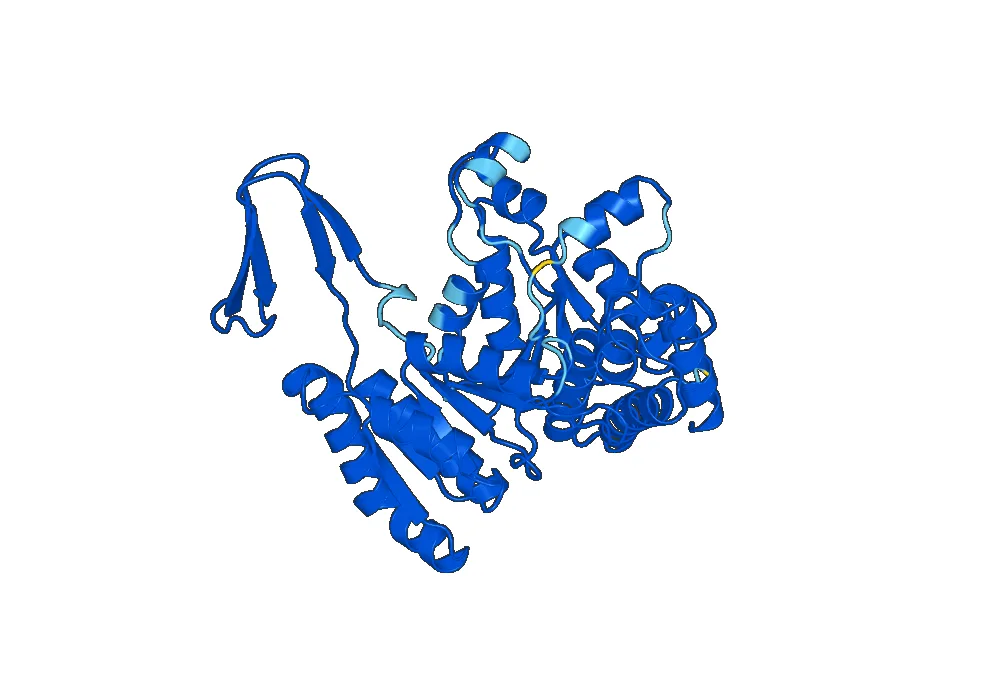
IDH2 is a homodimer, meaning it is composed of two identical subunits. Each subunit consists of three domains: the N-terminal domain, the catalytic domain, and the C-terminal domain. The N-terminal domain is responsible for binding to the substrate, while the catalytic domain contains the active site where the conversion of isocitrate to alpha-ketoglutarate takes place. The C-terminal domain is involved in the regulation of the enzyme activity.
The crystal structure of recombinant human IDH2 has been determined and shows a similar overall structure to other isocitrate dehydrogenase enzymes. The active site contains a conserved arginine residue that is essential for the catalytic activity of the enzyme. Mutations in this residue have been linked to various diseases, including cancer.
Activity of Recombinant Human IDH2
The main function of IDH2 is to catalyze the oxidative decarboxylation of isocitrate to alpha-ketoglutarate in the tricarboxylic acid (TCA) cycle. This reaction produces NADPH, which is an important cofactor for many cellular processes, including the synthesis of fatty acids and nucleic acids.
IDH2 is also involved in the regulation of cellular redox balance. It can produce NADPH in response to oxidative stress, which helps to protect cells from damage caused by reactive oxygen species. In addition, IDH2 has been shown to play a role in the regulation of cellular metabolism and cell growth.
Application of Recombinant Human IDH2
Recombinant Human IDH2 has a wide range of applications in both research and clinical settings. It is commonly used as a recombinant protein in biochemical and biophysical studies to understand its structure and function. The recombinant protein can be produced in various expression systems, such as bacteria, yeast, and mammalian cells, to obtain large quantities for experimental purposes.
In cancer research, IDH2 has gained significant attention due to its involvement in the development of certain types of cancer. Mutations in the IDH2 gene have been found in various cancers, including acute myeloid leukemia, glioma, and cholangiocarcinoma. These mutations result in the production of a mutant IDH2 protein with altered enzymatic activity, leading to the accumulation of an oncometabolite, 2-hydroxyglutarate, which promotes tumorigenesis. Recombinant Human IDH2 is used in studies to better understand the role of IDH2 mutations in cancer development and to develop potential therapeutic strategies.
In addition, IDH2 has potential applications in the development of diagnostic tools for cancer. The detection of IDH2 mutations in patient samples, such as blood or tissue, can serve as a biomarker for certain types of cancer. Recombinant Human IDH2 can be used to develop specific antibodies for the detection of IDH2 mutations, which can aid in the early diagnosis and treatment of cancer.
Overall, Recombinant Human IDH2 is a vital protein with important roles in cellular metabolism, redox balance, and cancer development. Its structure and activity have been extensively studied, and its potential applications in research and clinical settings continue to expand. Further research on IDH2 and its mutations may lead to new insights into disease mechanisms and the development of targeted therapies.


There are no reviews yet.