Introduction to Recombinant Human AFG3L2 Protein
Recombinant human AFG3L2 protein is a highly conserved mitochondrial metallopeptidase that plays a crucial role in protein quality control and mitochondrial homeostasis. It belongs to the AAA+ (ATPases associated with various cellular activities) family of proteins and is involved in the degradation of misfolded or damaged proteins in the mitochondria. AFG3L2 is an essential component of the mitochondrial protease complex, along with its paralog AFG3L1, and is known to be involved in the pathogenesis of neurodegenerative diseases such as spinocerebellar ataxia type 28 and hereditary spastic paraplegia 7.
Structure of Recombinant Human AFG3L2 Protein
The recombinant human AFG3L2 protein is a 70 kDa protein consisting of 675 amino acids. It contains two functional domains, an N-terminal mitochondrial targeting sequence and a C-terminal AAA+ domain. The N-terminal targeting sequence is responsible for the transport of AFG3L2 into the mitochondria, where it is processed to its mature form. The AAA+ domain is responsible for the ATPase activity of AFG3L2, which is essential for its function as a protease.
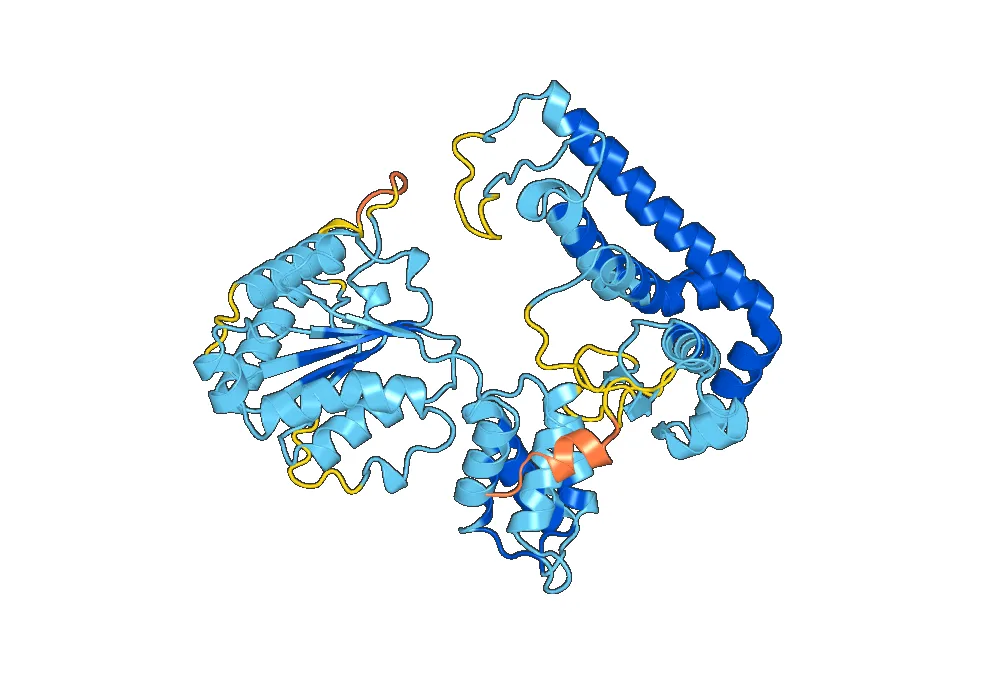
The crystal structure of AFG3L2 has been solved, revealing a hexameric ring structure with a central pore. Each monomer consists of a large and a small subdomain, which together form the ATPase active site. The hexameric structure is believed to be essential for the efficient degradation of misfolded or damaged proteins in the mitochondria.
Activity of Recombinant Human AFG3L2 Protein
The main activity of recombinant human AFG3L2 protein is its role as a mitochondrial protease. It is responsible for the degradation of misfolded or damaged proteins in the mitochondria, which is crucial for maintaining mitochondrial homeostasis. AFG3L2 works in conjunction with its paralog AFG3L1, forming a hetero-oligomeric complex that has been shown to have a higher proteolytic activity compared to the individual proteins alone.
The ATPase activity of AFG3L2 is essential for its protease function. It uses the energy from ATP hydrolysis to unfold and translocate misfolded or damaged proteins into the central pore of the hexameric ring, where they are then degraded by the proteolytic activity of AFG3L2. This process is known as the unfoldase mechanism and is crucial for maintaining the quality control of mitochondrial proteins.
Application of Recombinant Human AFG3L2 Protein
The recombinant human AFG3L2 protein has various applications in the field of neurodegenerative diseases. It has been shown to be involved in the pathogenesis of spinocerebellar ataxia type 28 and hereditary spastic paraplegia 7, both of which are neurodegenerative disorders characterized by the degeneration of neurons in the cerebellum and spinal cord, respectively.
Studies have also shown that mutations in the AFG3L2 gene can lead to the accumulation of misfolded proteins in the mitochondria, which can contribute to the development of these neurodegenerative diseases. Therefore, recombinant human AFG3L2 protein can be used as a tool for studying the role of AFG3L2 in these diseases and for developing potential therapeutic strategies.
Additionally, recombinant human AFG3L2 protein has potential applications in the biotechnology industry. Its ability to degrade misfolded or damaged proteins in the mitochondria can be harnessed for the production of recombinant proteins in mammalian cells. This can improve the yield and quality of recombinant proteins, which is essential for various biotechnological

There are no reviews yet.