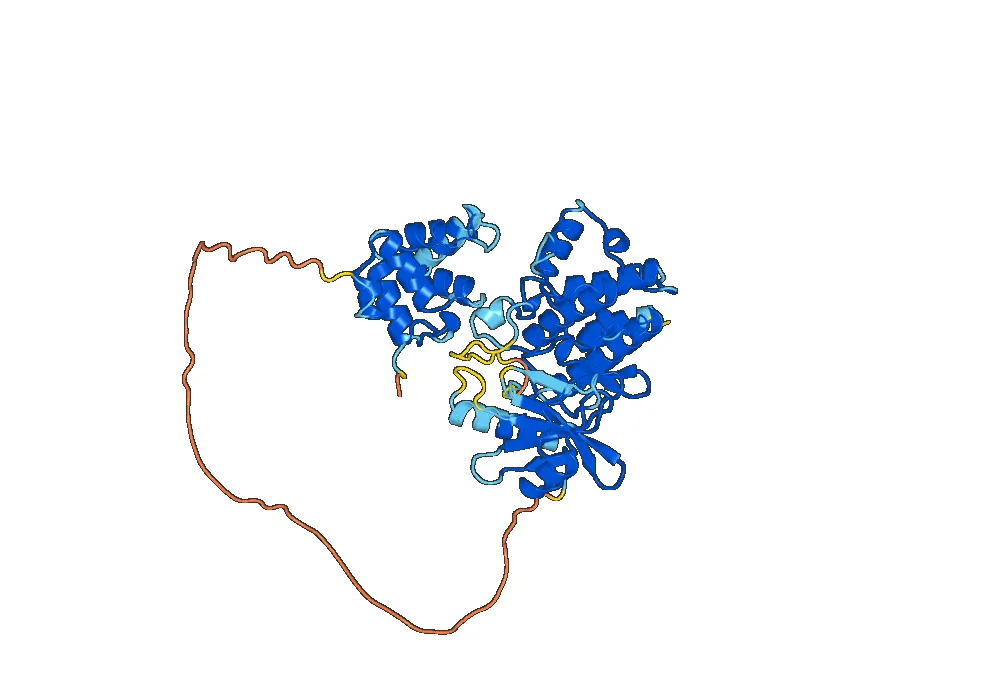
Recombinant Caenorhabditis elegans HECD-1 protein is a highly conserved protein that plays a crucial role in the innate immune response of the model organism Caenorhabditis elegans. It is a 391 amino acid protein with a molecular weight of approximately 44 kDa. The protein is composed of three domains: an N-terminal signal peptide, a central helical domain, and a C-terminal domain. These domains are responsible for the protein’s structure, activity, and function.
Signal peptide
The N-terminal signal peptide of Recombinant Caenorhabditis elegans HECD-1 protein is responsible for targeting the protein to the secretory pathway. This signal peptide is cleaved off during the protein’s maturation process, resulting in the mature form of the protein. The signal peptide also contains a conserved cysteine residue, which is crucial for the protein’s proper folding and stability.
Helical domain
The central helical domain of Recombinant Caenorhabditis elegans HECD-1 protein is the largest and most conserved domain. It is composed of 11 alpha-helices, which are arranged in a coiled-coil fashion. This domain is responsible for the protein’s oligomerization, which is essential for its activity. The helical domain also contains a conserved histidine residue, which is critical for the protein’s binding to its ligand.
C-terminal domain
The C-terminal domain of Recombinant Caenorhabditis elegans HECD-1 protein is the smallest domain and is highly variable among different species. It contains a conserved proline-rich region, which is responsible for the protein’s interaction with other proteins in the immune response pathway. This domain also contains a conserved glutamic acid residue, which is crucial for the protein’s enzymatic activity.
Activity of Recombinant Caenorhabditis elegans HECD-1 Protein
Recombinant Caenorhabditis elegans HECD-1 protein is a potent antimicrobial protein that is secreted by the nematode’s epidermal cells in response to infection. It functions as a pattern recognition receptor, recognizing and binding to microbial antigens on the surface of pathogens. This binding triggers a signaling cascade that leads to the activation of the innate immune response and the production of antimicrobial peptides.
The helical domain of Recombinant Caenorhabditis elegans HECD-1 protein is responsible for its oligomerization, which is essential for its activity. Oligomerization allows the protein to form a stable complex with its ligand, leading to the activation of downstream signaling pathways. The C-terminal domain of the protein also plays a crucial role in its activity by interacting with other proteins in the immune response pathway.
Recombinant Caenorhabditis elegans HECD-1 protein has been shown to have broad-spectrum antimicrobial activity against both Gram-positive and Gram-negative bacteria, as well as fungi. It is also active against drug-resistant strains of bacteria, making it a promising candidate for the development of new antimicrobial agents.
Application of Recombinant Caenorhabditis elegans HECD-1 Protein
The antimicrobial activity of Recombinant Caenorhabditis elegans HECD-1 protein makes it a potential therapeutic agent for the treatment of bacterial and fungal infections. Its broad-spectrum activity and ability to target drug-resistant strains make it a promising alternative to traditional antibiotics.
In addition to its therapeutic potential, Recombinant Caenorhabditis elegans HECD-1 protein also has applications in the field of biotechnology. Its ability to recognize and bind to specific antigens makes it a useful tool for the detection and purification of microbial contaminants in food and pharmaceutical products. It can also be used




There are no reviews yet.