Introduction
Imalumab is a novel human monoclonal antibody that has shown promising results in the treatment of various inflammatory and autoimmune diseases. It specifically targets the cytokine interleukin-1 alpha (IL-1α), which plays a crucial role in the regulation of immune responses and inflammation. The Imalumab ELISA Kit is a highly sensitive and specific assay designed for the quantitative detection of Imalumab in biological samples, making it an essential tool for monitoring Imalumab therapy and conducting clinical research.
Structure of Imalumab
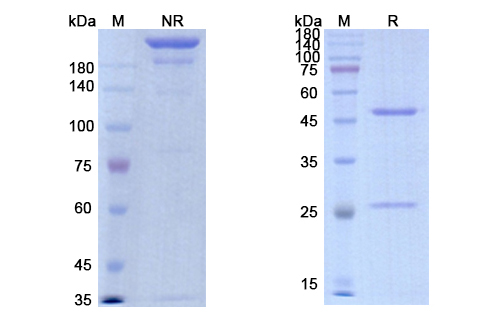
Imalumab is a fully human IgG1 monoclonal antibody, meaning it is derived from human cells and has a high affinity for its target antigen. It is composed of two heavy chains and two light chains, each containing variable and constant regions. The variable regions of Imalumab bind specifically to the IL-1α cytokine, while the constant regions determine its effector functions, such as binding to Fc receptors and activating complement pathways.
Mechanism of Action
Imalumab works by binding to IL-1α and preventing its interaction with its receptor, thus inhibiting downstream signaling pathways that lead to inflammation. IL-1α is a pro-inflammatory cytokine that is involved in various diseases, including rheumatoid arthritis, psoriasis, and gout. By blocking its activity, Imalumab reduces the production of other inflammatory mediators and helps to control the immune response.
Application of Imalumab ELISA Kit
The Imalumab ELISA Kit is a valuable tool for monitoring Imalumab levels in patient samples, providing crucial information for optimizing dosing and assessing treatment efficacy. It is also used in preclinical and clinical studies to measure Imalumab pharmacokinetics and pharmacodynamics, as well as to investigate the correlation between Imalumab levels and disease progression.
Quantitative Detection of Imalumab
The Imalumab ELISA Kit utilizes a sandwich enzyme-linked immunosorbent assay (ELISA) format, where the Imalumab antibody is immobilized on a microplate and serves as the capture antibody. The sample, along with a known amount of Imalumab standard, is added to the plate, and any Imalumab present in the sample will bind to the capture antibody. A second Imalumab antibody, conjugated to an enzyme, is then added, followed by a substrate that produces a color change in the presence of the enzyme. The intensity of the color is directly proportional to the amount of Imalumab present in the sample, which can be quantified using a spectrophotometer.
High Sensitivity and Specificity
The Imalumab ELISA Kit has a high sensitivity, with a lower limit of detection of 0.1 ng/mL, making it suitable for detecting low levels of Imalumab in biological samples. It also has a high specificity, with minimal cross-reactivity to other human IgG antibodies, ensuring accurate and reliable results.
Wide Range of Sample Types
The Imalumab ELISA Kit is compatible with various sample types, including serum, plasma, and cell culture supernatant, providing flexibility for different research needs. It also has a wide dynamic range of 0.5-50 ng/mL, allowing for the detection of both therapeutic and endogenous levels of Imalumab.
Conclusion
The Imalumab ELISA Kit is a valuable tool for the quantitative detection of Imalumab, a novel human monoclonal antibody targeting IL-1α. Its high sensitivity and specificity, along with its compatibility with various sample types, make it an essential tool for monitoring Imalumab therapy and conducting clinical research. With the growing interest in Imalumab as a potential treatment for inflammatory and



There are no reviews yet.