The Anti-CCT5 Polyclonal Antibody is a highly specific and reliable tool for studying the role of CCT5 in various biological processes. This antibody is produced using state-of-the-art technology and has been extensively validated for its specificity and sensitivity.
Biological Function:
CCT5, also known as TCP1-beta, is a subunit of the chaperonin-containing TCP1 complex. This complex is responsible for folding newly synthesized proteins and assisting in protein assembly and transport. CCT5 specifically plays a crucial role in the folding of actin and tubulin, which are essential for cell structure and movement.
Main Applications:
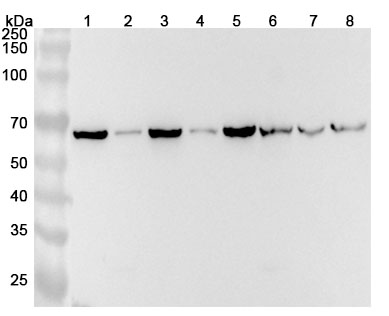
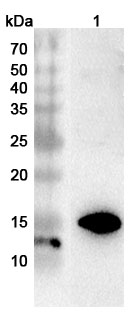
The Anti-CCT5 Polyclonal Antibody is suitable for a wide range of applications, including Western blotting, immunohistochemistry, and immunofluorescence. It can be used to study the expression and localization of CCT5 in different cell types and tissues. Additionally, this antibody is also useful for investigating the effect of CCT5 on protein folding and assembly.
Experimental Use Cases:
In a recent study, the Anti-CCT5 Polyclonal Antibody was used to investigate the role of CCT5 in the regulation of cell migration. The results showed that inhibition of CCT5 expression led to a significant decrease in cell migration, suggesting its crucial role in this process. Furthermore, this antibody has also been used in research on neurodegenerative diseases, where CCT5 is believed to play a role in protein misfolding and aggregation.
With its high specificity and sensitivity, the Anti-CCT5 Polyclonal Antibody is an essential tool for researchers studying the function of CCT5 in various biological processes. Its applications in multiple experimental techniques make it a versatile and valuable addition to any laboratory. Order now and advance your research with confidence.
Keywords: Anti-CCT5 Polyclonal Antibody, biological function, TCP1-beta, chaperonin-containing TCP1 complex, protein folding, actin, tubulin, cell structure, cell movement, Western blotting, immunohistochemistry, immunofluorescence, cell migration, neurodegenerative diseases, protein misfolding, protein aggregation.


There are no reviews yet.