Title: Understanding the Structure and Function of Urabrelimab Biosimilar – Anti-CD47 mAb
Introduction:
Urabrelimab Biosimilar, also known as Anti-CD47 monoclonal antibody (mAb), is a promising therapeutic agent that has gained attention in the field of cancer research. It is a biosimilar version of the original Urabrelimab, which is a fully humanized IgG1 monoclonal antibody. In this article, we will delve into the structure, activity, and application of Urabrelimab Biosimilar as a potential therapeutic target for cancer treatment.
Structure of Urabrelimab Biosimilar:
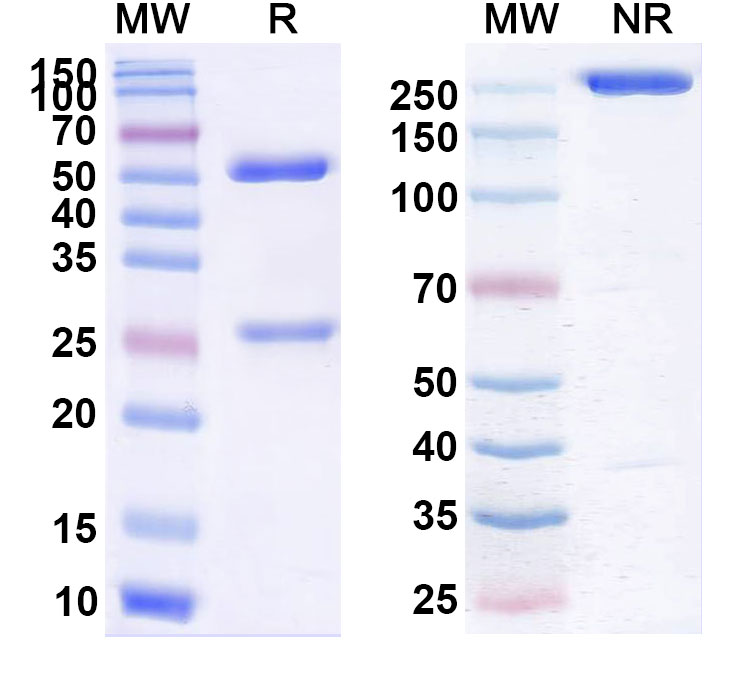
Urabrelimab Biosimilar is a recombinant monoclonal antibody that is produced in Chinese hamster ovary (CHO) cells. It is composed of two heavy chains and two light chains, each containing a variable region and a constant region. The variable region is responsible for binding to its target, CD47, while the constant region determines its effector functions. Urabrelimab Biosimilar has a molecular weight of approximately 150 kDa and a half-life of around 21 days.
Activity of Urabrelimab Biosimilar:
The main target of Urabrelimab Biosimilar is CD47, a transmembrane protein that is overexpressed in various types of cancer cells. CD47 is known to interact with signal regulatory protein alpha (SIRPα) on immune cells, leading to the inhibition of phagocytosis, a process by which immune cells engulf and destroy cancer cells. By binding to CD47, Urabrelimab Biosimilar blocks the interaction between CD47 and SIRPα, thereby promoting phagocytosis and enhancing the body’s immune response against cancer cells.
Application of Urabrelimab Biosimilar:
Urabrelimab Biosimilar has shown promising results in preclinical studies, demonstrating its potential as a therapeutic target for cancer treatment. It has been shown to inhibit tumor growth and metastasis in various types of cancer, including leukemia, lymphoma, and solid tumors such as breast, ovarian, and colorectal cancer. It has also been found to enhance the effects of other cancer therapies, such as chemotherapy and radiation therapy.
In addition, Urabrelimab Biosimilar has a favorable safety profile, with no significant adverse effects reported in clinical trials. This makes it a promising candidate for combination therapy with other cancer treatments. Currently, Urabrelimab Biosimilar is in phase I clinical trials for the treatment of acute myeloid leukemia (AML) and solid tumors.
Future Directions:
The potential of Urabrelimab Biosimilar as a therapeutic target extends beyond cancer treatment. CD47 is also involved in autoimmune diseases and inflammatory disorders, making Urabrelimab Biosimilar a potential candidate for the treatment of these conditions. Furthermore, the biosimilar version of Urabrelimab may offer a more cost-effective option for patients, making it more accessible for those in need.
Conclusion:
Urabrelimab Biosimilar, a biosimilar version of the original Urabrelimab, is a promising therapeutic agent that targets CD47, a protein overexpressed in cancer cells. By blocking the interaction between CD47 and SIRPα, Urabrelimab Biosimilar enhances the body’s immune response against cancer cells. Its favorable safety profile and potential for combination therapy make it a promising candidate for cancer treatment. Further research and clinical trials are needed to fully understand the potential of Urabrelimab Biosimilar in the fight against cancer and other diseases.




There are no reviews yet.