Introduction to Begelomab:
Begelomab, also known as BI-655064, is a research grade monoclonal antibody that is currently in development as a potential therapeutic agent for various autoimmune diseases. It is being developed by Boehringer Ingelheim, a German pharmaceutical company, and has shown promising results in preclinical studies.
Structure of Begelomab:
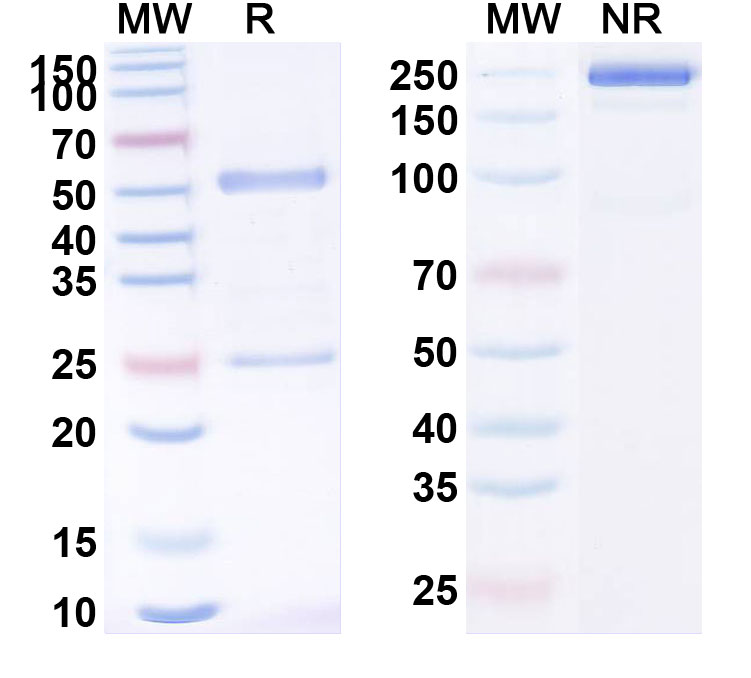
Begelomab is a humanized monoclonal antibody, meaning that it is derived from human cells and has been modified to have a lower immunogenicity compared to fully murine antibodies. It is composed of two heavy chains and two light chains, with a molecular weight of approximately 150 kDa. The antibody has a Y-shaped structure, with the two heavy chains forming the arms and the two light chains forming the stem.
Mechanism of Action:
Begelomab targets a protein called IL-23, which is a cytokine involved in the inflammation process in autoimmune diseases. IL-23 is known to play a key role in the development and progression of autoimmune diseases such as psoriasis, rheumatoid arthritis, and inflammatory bowel disease. Begelomab binds to the p19 subunit of IL-23, preventing it from binding to its receptor and signaling the production of pro-inflammatory cytokines.
Clinical Applications:
Begelomab is currently being studied as a potential treatment for various autoimmune diseases, particularly those that are mediated by IL-23. These include psoriasis, rheumatoid arthritis, psoriatic arthritis, and inflammatory bowel disease. In preclinical studies, Begelomab has shown efficacy in reducing inflammation and improving disease symptoms in animal models of these diseases.
Psoriasis:
Psoriasis is a chronic autoimmune disease that affects the skin, causing red, scaly patches to appear. It is believed to be caused by an overactive immune system, and IL-23 has been identified as a key player in the disease process. In a phase 2 clinical trial, Begelomab showed promising results in reducing the severity of psoriasis symptoms and improving quality of life in patients.
Rheumatoid Arthritis:
Rheumatoid arthritis is a chronic inflammatory disease that affects the joints, causing pain, stiffness, and swelling. IL-23 has been found to be involved in the pathogenesis of rheumatoid arthritis, and Begelomab has shown efficacy in reducing inflammation and joint damage in animal models of the disease. Clinical trials are currently ongoing to evaluate the safety and efficacy of Begelomab in patients with rheumatoid arthritis.
Psoriatic Arthritis:
Psoriatic arthritis is a type of inflammatory arthritis that affects people with psoriasis. It is characterized by joint pain, stiffness, and swelling, and can lead to permanent joint damage if left untreated. In preclinical studies, Begelomab has shown promising results in reducing inflammation and improving joint symptoms in animal models of psoriatic arthritis.
Inflammatory Bowel Disease:
Inflammatory bowel disease (IBD) is a group of chronic inflammatory disorders that affect the digestive tract, including Crohn’s disease and ulcerative colitis. IL-23 has been identified as a key cytokine involved in the pathogenesis of IBD, and Begelomab has shown efficacy in reducing inflammation and improving disease symptoms in animal models. Clinical trials are currently underway to evaluate the safety and efficacy of Begelomab in patients with IBD.
Conclusion:
Begelomab is a promising research grade monoclonal antibody that targets IL-23, a key cytokine involved in the pathogenesis of various autoimmune diseases. It has shown efficacy in preclinical studies and is currently being evaluated in clinical trials as a potential treatment for psoriasis, rheumatoid arthritis, psoriatic arthritis, and inflammatory bowel disease. If successful, Begelomab could provide a new treatment option for patients with these debilitating conditions.

There are no reviews yet.