Introduction
Recombinant Mouse Ifna15 Protein, also known as Interferon alpha-15, is a type I interferon protein that plays a crucial role in the innate immune response against viral infections. This protein is produced through recombinant DNA technology, allowing for large-scale production and purification for various research and therapeutic applications. In this article, we will explore the structure, activity, and applications of Recombinant Mouse Ifna15 Protein.
Structure of Recombinant Mouse Ifna15 Protein
Recombinant Mouse Ifna15 Protein is a 20 kDa protein consisting of 166 amino acids. It belongs to the type I interferon family and shares a high degree of sequence homology with other interferon alpha proteins. The primary structure of Ifna15 protein contains a signal peptide at the N-terminus, followed by a conserved cysteine-rich domain and a highly variable C-terminal region. The cysteine residues in the conserved domain are important for the formation of disulfide bonds, which contribute to the stability and activity of the protein.
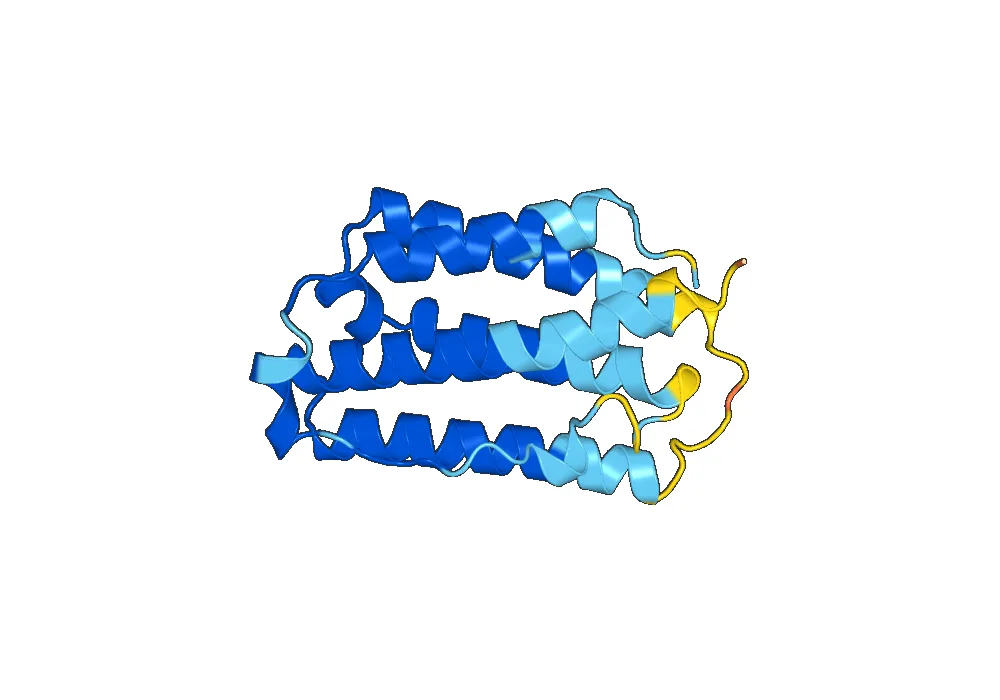
The three-dimensional structure of Recombinant Mouse Ifna15 Protein has been determined through X-ray crystallography. It adopts a compact globular conformation, with the conserved cysteine-rich domain forming a four-helix bundle and the C-terminal region extending outwards. This structure is similar to other type I interferons and is essential for its biological activity.
Activity of Recombinant Mouse Ifna15 Protein
Recombinant Mouse Ifna15 Protein exerts its activity through binding to the interferon alpha receptor (IFNAR), a heterodimeric receptor complex consisting of IFNAR1 and IFNAR2 subunits. Upon binding, the receptor activates the Janus kinase/signal transducer and activator of transcription (JAK/STAT) signaling pathway, leading to the transcription of interferon-stimulated genes (ISGs).
The main function of Recombinant Mouse Ifna15 Protein is to induce an antiviral state in cells, making them resistant to viral infection. It also has immunomodulatory effects, such as enhancing the activity of natural killer cells and promoting the differentiation of T cells. Additionally, Ifna15 protein has been shown to have anti-proliferative and pro-apoptotic effects on certain cancer cells, making it a potential candidate for cancer therapy.
Applications of Recombinant Mouse Ifna15 Protein
Recombinant Mouse Ifna15 Protein has a wide range of applications in both research and therapeutic settings. In research, it is commonly used as a positive control in experiments studying the interferon signaling pathway and its effects on immune cells. It is also used to induce an antiviral state in cells for the study of viral infections.
Therapeutically, Recombinant Mouse Ifna15 Protein has been investigated as a potential treatment for viral infections, such as hepatitis B and C, and various types of cancer. It has also been studied for its potential in treating autoimmune diseases, such as multiple sclerosis and lupus. Clinical trials have shown promising results, with some patients showing improved outcomes after treatment with Recombinant Mouse Ifna15 Protein.
Conclusion
In summary, Recombinant Mouse Ifna15 Protein is a type I interferon with a conserved structure and important biological activity. Its ability to induce an antiviral state and modulate the immune response makes it a valuable tool in research and a potential therapeutic agent for various diseases. Continued research on this protein will further enhance our understanding of its structure and activity, leading to the development of novel treatments for a range of conditions.

There are no reviews yet.