It looks like you are visiting from outside the EU. Switch to the US version to see local pricing in USD and local shipping.

Switch to US ($)

Get 25% off your first bioreagent online order — use code: PROTEOSHOP25

Brand: ProteoGenix

Recombinant Human VTI1A Protein, N-His

Host species:
Escherichia coli (E.coli)
Origin species:
Human
Uniprot ID:
Q96AJ9
Molecular weight:
24.59 kDa

Original price was: €336.00.Current price is: €275.00.

100ug 18% OFF + 275 loyalty points
Met1–Arg192
Size
  • In Stock
  • Free shipping in EU on orders > €500
  • Wide range of unique reagents
  • Fast worldwide delivery

Recombinant Human VTI1A Protein, N-His

Product name ARO-P11597-100
Uniprot ID Q96AJ9
Origin species Human
Expression system Prokaryotic expression
Raw Antigen Sequence MSSDFEGYEQDFAVLTAEITSKIARVPRLPPDEKKQMVANVEKQLEEAKELLEQMDLEVREIPPQSRGMYSNRMRSYKQEMGKLETDFKRSRIAYSDEVRNELLGDDGNSSENQRAHLLDNTERLERSSRRLEAGYQIAVETEQIGQEMLENLSHDREKIQRARERLRETDANLGKSSRILTGMLRRIIQNR
Molecular weight 24.59 kDa
Buffer Lyophilized from a solution in PBS pH 7.4, 0.02% NLS, 1mM EDTA, 4% Trehalose, 1% Mannitol.
Delivery condition Dry Ice
Delivery lead time in business days 3-5 days if in stock; 3-5 weeks if production needed
Storage condition 4°C for short term (1 week), -20°C or -80°C for long term (avoid freezing/thawing cycles; addition of 20-40% glycerol improves cryoprotection)
Brand ProteoGenix
Host species Escherichia coli (E.coli)
Fragment Type Met1-Arg192
Aliases /Synonyms Vesicle transport v-SNARE protein Vti1-like 2, Vti1-rp2, VTI1A, Vesicle transport through interaction with t-SNAREs homolog 1A
Reference ARO-P11597
Note For research use only.
Molecular Constructor
Met1–Arg192
Product name ARO-P11597-1MG
Uniprot ID Q96AJ9
Origin species Human
Expression system Prokaryotic expression
Raw Antigen Sequence MSSDFEGYEQDFAVLTAEITSKIARVPRLPPDEKKQMVANVEKQLEEAKELLEQMDLEVREIPPQSRGMYSNRMRSYKQEMGKLETDFKRSRIAYSDEVRNELLGDDGNSSENQRAHLLDNTERLERSSRRLEAGYQIAVETEQIGQEMLENLSHDREKIQRARERLRETDANLGKSSRILTGMLRRIIQNR
Molecular weight 24.59 kDa
Buffer Lyophilized from a solution in PBS pH 7.4, 0.02% NLS, 1mM EDTA, 4% Trehalose, 1% Mannitol.
Delivery condition Dry Ice
Delivery lead time in business days 3-5 days if in stock; 3-5 weeks if production needed
Storage condition 4°C for short term (1 week), -20°C or -80°C for long term (avoid freezing/thawing cycles; addition of 20-40% glycerol improves cryoprotection)
Brand ProteoGenix
Host species Escherichia coli (E.coli)
Fragment Type Met1-Arg192
Aliases /Synonyms Vesicle transport v-SNARE protein Vti1-like 2, Vti1-rp2, VTI1A, Vesicle transport through interaction with t-SNAREs homolog 1A
Reference ARO-P11597
Note For research use only.
Molecular Constructor
Met1–Arg192
Product name ARO-P11597-50
Uniprot ID Q96AJ9
Origin species Human
Expression system Prokaryotic expression
Raw Antigen Sequence MSSDFEGYEQDFAVLTAEITSKIARVPRLPPDEKKQMVANVEKQLEEAKELLEQMDLEVREIPPQSRGMYSNRMRSYKQEMGKLETDFKRSRIAYSDEVRNELLGDDGNSSENQRAHLLDNTERLERSSRRLEAGYQIAVETEQIGQEMLENLSHDREKIQRARERLRETDANLGKSSRILTGMLRRIIQNR
Molecular weight 24.59 kDa
Buffer Lyophilized from a solution in PBS pH 7.4, 0.02% NLS, 1mM EDTA, 4% Trehalose, 1% Mannitol.
Delivery condition Dry Ice
Delivery lead time in business days 3-5 days if in stock; 3-5 weeks if production needed
Storage condition 4°C for short term (1 week), -20°C or -80°C for long term (avoid freezing/thawing cycles; addition of 20-40% glycerol improves cryoprotection)
Brand ProteoGenix
Host species Escherichia coli (E.coli)
Fragment Type Met1-Arg192
Aliases /Synonyms Vesicle transport v-SNARE protein Vti1-like 2, Vti1-rp2, VTI1A, Vesicle transport through interaction with t-SNAREs homolog 1A
Reference ARO-P11597
Note For research use only.
Molecular Constructor
Met1–Arg192

Introduction to Recombinant Human VTI1A Protein

Recombinant Human VTI1A Protein is a type of recombinant protein that plays a crucial role in various cellular processes. It is a membrane protein that belongs to the SNARE (soluble N-ethylmaleimide-sensitive factor attachment protein receptor) family and is involved in vesicle trafficking and fusion. This protein is encoded by the VTI1A gene and is expressed in various tissues, including the brain, heart, and skeletal muscle.

Structure of Recombinant Human VTI1A Protein

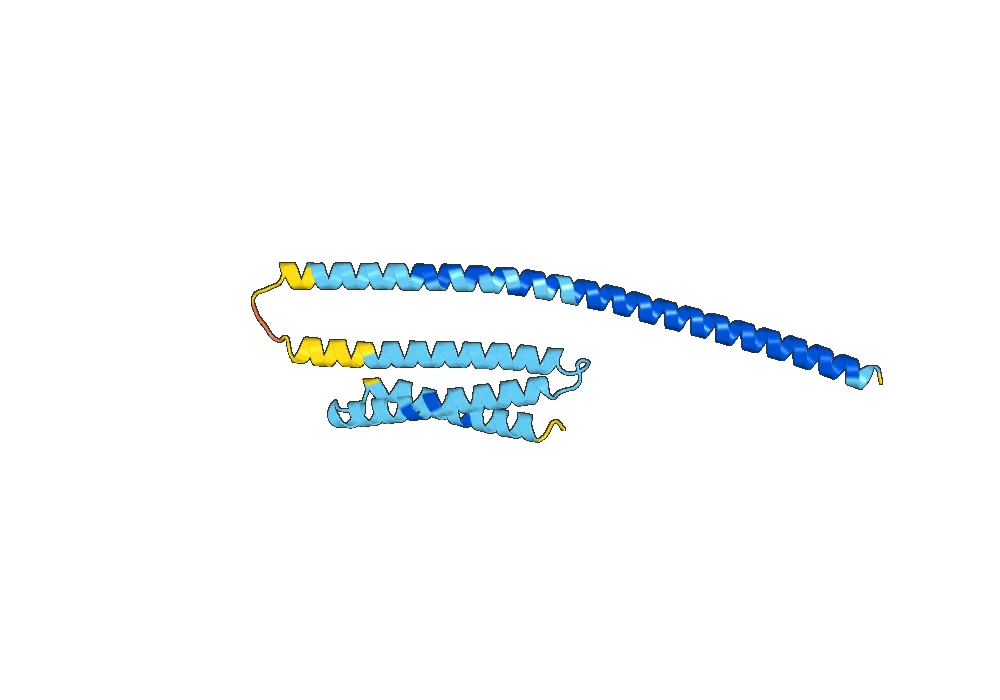
The recombinant form of VTI1A protein is a 23 kDa protein with a molecular weight of 204 amino acids. It contains a single transmembrane domain and is composed of three domains: the N-terminal domain, the central coiled-coil domain, and the C-terminal domain. The N-terminal domain is responsible for binding to other SNARE proteins, while the central coiled-coil domain is involved in protein-protein interactions. The C-terminal domain is responsible for membrane anchoring and fusion activity.

Recombinant Human VTI1A Protein also contains a conserved SNARE motif, which is essential for its function in vesicle fusion. This motif is composed of a glutamine residue followed by a hydrophobic amino acid and a leucine residue. The SNARE motif is responsible for the specific interaction between VTI1A and other SNARE proteins, leading to the formation of a stable SNARE complex.

Activity of Recombinant Human VTI1A Protein

The main function of Recombinant Human VTI1A Protein is to regulate vesicle trafficking and fusion in various cellular processes. It is involved in the transport of vesicles from the endoplasmic reticulum (ER) to the Golgi apparatus, as well as from the trans-Golgi network to the plasma membrane. This protein is also essential for the fusion of vesicles with the lysosomes, which is crucial for the degradation of cellular waste and recycling of cellular components.

Recombinant Human VTI1A Protein interacts with other SNARE proteins, such as SNAP25 and Syntaxin, to form a SNARE complex. This complex is responsible for bringing the vesicle and target membrane close together, facilitating the fusion of the two membranes. This fusion process is essential for the delivery of cargo molecules, such as proteins and lipids, to their specific destinations within the cell.

In addition to its role in vesicle fusion, Recombinant Human VTI1A Protein has also been implicated in other cellular processes, such as autophagy and cytokinesis. Autophagy is a process in which damaged or unnecessary cellular components are degraded, while cytokinesis is the final stage of cell division. Both of these processes require the proper functioning of vesicle trafficking and fusion, which is regulated by VTI1A.

Application of Recombinant Human VTI1A Protein

Recombinant Human VTI1A Protein has a wide range of applications in both research and medical fields. Its role in vesicle trafficking and fusion makes it a crucial protein for studying various cellular processes. It can be used to investigate the mechanisms underlying autophagy, cytokinesis, and other cellular processes that involve vesicle fusion. This protein can also be used to study the interactions between SNARE proteins and their role in membrane fusion.

In the medical field, Recombinant Human VTI1A Protein has potential applications in the treatment of diseases associated with defects in vesicle trafficking and fusion. For example, mutations in the VTI1A gene have been linked to a rare genetic disorder called Hermansky-Pudlak syndrome, which is characterized by abnormal vesicle trafficking in various tissues. Recombinant VTI1A protein can be used to study the underlying mechanisms of this disorder and potentially develop targeted therapies.

Conclusion
Recombinant Human VTI1A Protein, N-His

There are no reviews yet.

Be the first to review “Recombinant Human VTI1A Protein, N-His”

Your email address will not be published. Required fields are marked *

Related products

Recently viewed products

Loading recently viewed products…

Can’t find what you need?

Our catalog doesn’t cover everything — but our team does. Whether you need a custom antibody, a specific protein variant, or a bulk order, our scientists are here to help.

Contact Our Team Book a Call

Cart (0 Items)

Your cart is currently empty.

View Products