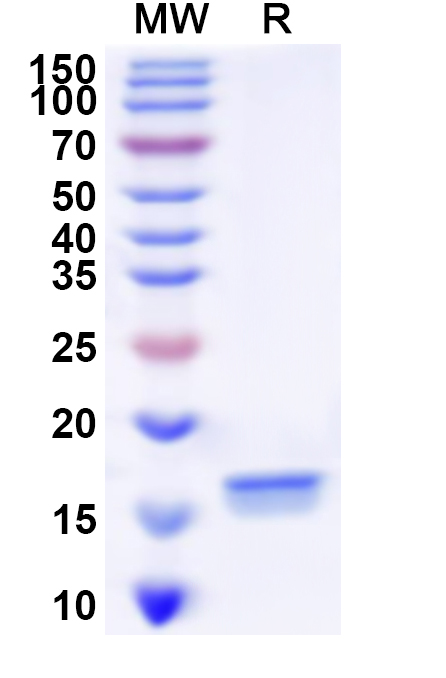
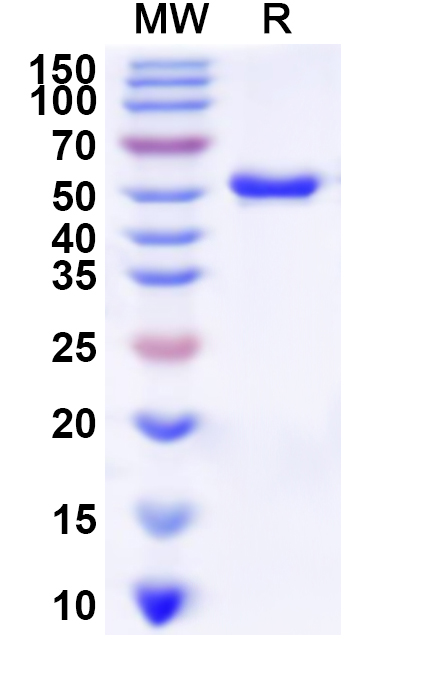
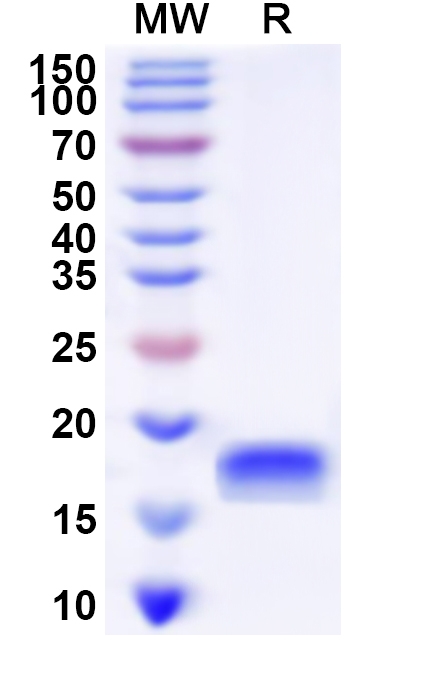
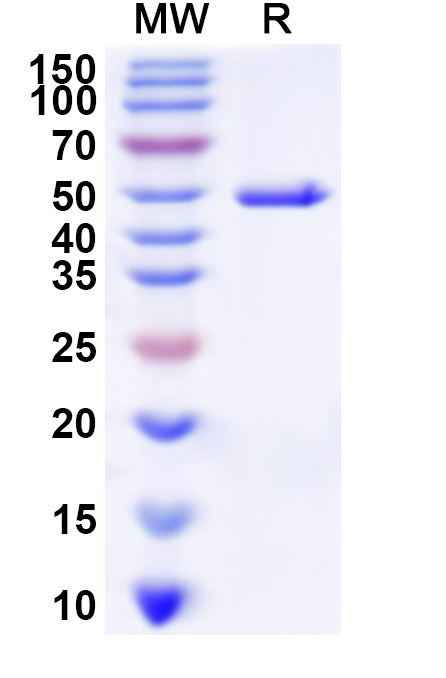
It looks like you are visiting from outside the EU. Switch to the US version to see local pricing in USD and local shipping.

Switch to US ($)

Get 25% off your first bioreagent online order — use code: PROTEOSHOP25

Brand: ProteoGenix

Recombinant Human GSE1 Protein, N-His-SUMO & C-Strep

Host species:
Escherichia coli (E.coli)
Origin species:
Human
Uniprot ID:
Q14687
Molecular weight:
22.45 kDa

Original price was: €305.00.Current price is: €275.00.

100ug 10% OFF + 275 loyalty points
Gly754–Ser826
Size
  • In Stock
  • Free shipping in EU on orders > €500
  • Wide range of unique reagents
  • Fast worldwide delivery

Recombinant Human GSE1 Protein, N-His-SUMO & C-Strep

Product name ARO-P11772-100
Uniprot ID Q14687
Origin species Human
Expression system Prokaryotic expression
Raw Antigen Sequence GYYYDLDDSYDESDEEEVRAHLRCVAEQPPLKLDTSSEKLEFLQLFGLTTQQQKEELVAQKRRKRRRMLRERS
Molecular weight 22.45 kDa
Buffer Lyophilized from a solution in PBS pH 7.4, 0.02% NLS, 1mM EDTA, 4% Trehalose, 1% Mannitol.
Delivery condition Dry Ice
Delivery lead time in business days 3-5 days if in stock; 3-5 weeks if production needed
Storage condition 4°C for short term (1 week), -20°C or -80°C for long term (avoid freezing/thawing cycles; addition of 20-40% glycerol improves cryoprotection)
Brand ProteoGenix
Host species Escherichia coli (E.coli)
Fragment Type Gly754-Ser826
Aliases /Synonyms KIAA0182, GSE1, Genetic suppressor element 1
Reference ARO-P11772
Note For research use only.
Molecular Constructor
Gly754–Ser826
Product name ARO-P11772-1MG
Uniprot ID Q14687
Origin species Human
Expression system Prokaryotic expression
Raw Antigen Sequence GYYYDLDDSYDESDEEEVRAHLRCVAEQPPLKLDTSSEKLEFLQLFGLTTQQQKEELVAQKRRKRRRMLRERS
Molecular weight 22.45 kDa
Buffer Lyophilized from a solution in PBS pH 7.4, 0.02% NLS, 1mM EDTA, 4% Trehalose, 1% Mannitol.
Delivery condition Dry Ice
Delivery lead time in business days 3-5 days if in stock; 3-5 weeks if production needed
Storage condition 4°C for short term (1 week), -20°C or -80°C for long term (avoid freezing/thawing cycles; addition of 20-40% glycerol improves cryoprotection)
Brand ProteoGenix
Host species Escherichia coli (E.coli)
Fragment Type Gly754-Ser826
Aliases /Synonyms KIAA0182, GSE1, Genetic suppressor element 1
Reference ARO-P11772
Note For research use only.
Molecular Constructor
Gly754–Ser826
Product name ARO-P11772-50
Uniprot ID Q14687
Origin species Human
Expression system Prokaryotic expression
Raw Antigen Sequence GYYYDLDDSYDESDEEEVRAHLRCVAEQPPLKLDTSSEKLEFLQLFGLTTQQQKEELVAQKRRKRRRMLRERS
Molecular weight 22.45 kDa
Buffer Lyophilized from a solution in PBS pH 7.4, 0.02% NLS, 1mM EDTA, 4% Trehalose, 1% Mannitol.
Delivery condition Dry Ice
Delivery lead time in business days 3-5 days if in stock; 3-5 weeks if production needed
Storage condition 4°C for short term (1 week), -20°C or -80°C for long term (avoid freezing/thawing cycles; addition of 20-40% glycerol improves cryoprotection)
Brand ProteoGenix
Host species Escherichia coli (E.coli)
Fragment Type Gly754-Ser826
Aliases /Synonyms KIAA0182, GSE1, Genetic suppressor element 1
Reference ARO-P11772
Note For research use only.
Molecular Constructor
Gly754–Ser826

Introduction

Recombinant proteins have become an indispensable tool in various fields of research, including biotechnology, medicine, and diagnostics. One such protein is the Recombinant Human GSE1 Protein, which has gained significant interest due to its unique structure, activity, and potential applications. In this article, we will delve into the details of this protein and explore its various aspects.

Structure of Recombinant Human GSE1 Protein

The Recombinant Human GSE1 Protein, also known as GTPase Stimulating Factor E1, is a 63 kDa protein consisting of 553 amino acids. It is encoded by the GSE1 gene located on human chromosome 22q13.2. The protein contains a conserved N-terminal domain, a central domain, and a C-terminal domain. The N-terminal domain is responsible for the interaction with other proteins, while the central domain contains a GTPase-activating protein (GAP) domain, which is essential for its activity.

Activity of Recombinant Human GSE1 Protein

The main function of the Recombinant Human GSE1 Protein is to regulate the activity of small GTPases, specifically the Rho family of GTPases. These GTPases are key players in various cellular processes, including cell growth, differentiation, and migration. The GAP domain of GSE1 binds to the active form of Rho GTPases and stimulates its GTPase activity, leading to the hydrolysis of GTP to GDP. This results in the inactivation of Rho GTPases, thereby regulating their downstream signaling pathways.

Moreover, studies have shown that Recombinant Human GSE1 Protein also has a role in the regulation of actin cytoskeleton dynamics. It has been reported that GSE1 interacts with actin-binding proteins, such as profilin and cofilin, and modulates their activities. This further highlights the crucial role of this protein in cell motility and cytoskeletal organization.

Applications of Recombinant Human GSE1 Protein

The unique structure and activity of Recombinant Human GSE1 Protein make it a promising candidate for various applications. One of the potential applications of this protein is in cancer research. It has been observed that GSE1 is overexpressed in various types of cancer, and its overexpression is associated with tumor growth and metastasis. Therefore, targeting GSE1 using recombinant protein inhibitors could have therapeutic potential in cancer treatment.

Furthermore, Recombinant Human GSE1 Protein has also been implicated in neurological disorders. Studies have shown that GSE1 is involved in neuronal development and synaptic plasticity. Mutations in the GSE1 gene have been linked to neurodevelopmental disorders, such as intellectual disability and autism spectrum disorders. Thus, recombinant GSE1 protein could be used as a tool to study the underlying mechanisms of these disorders and potentially develop targeted therapies.

In addition, the ability of Recombinant Human GSE1 Protein to regulate actin dynamics makes it a potential candidate in tissue engineering and regenerative medicine. It has been reported that GSE1 plays a role in the formation of new blood vessels, which is crucial for tissue repair and regeneration. Therefore, recombinant GSE1 protein could be used to enhance tissue regeneration and wound healing.

Conclusion

In conclusion, Recombinant Human GSE1 Protein is a multifaceted protein with a unique structure and activity. Its role in regulating small GTPases and actin dynamics makes it a promising candidate for various applications, including cancer treatment, neurological disorders, and tissue engineering. Further research on this protein could lead to a better understanding of its functions and potential therapeutic uses.
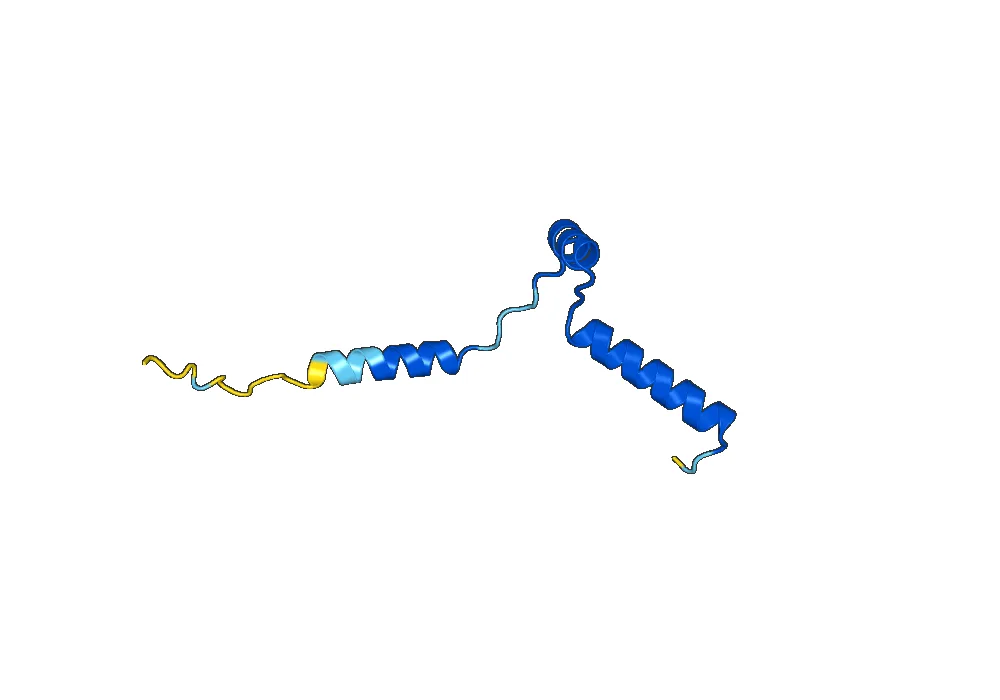
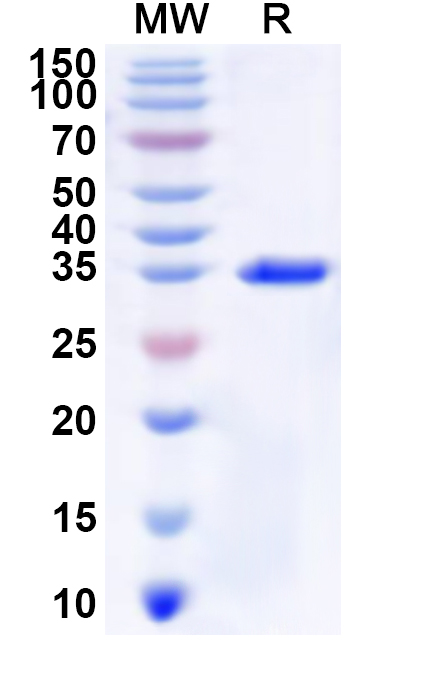
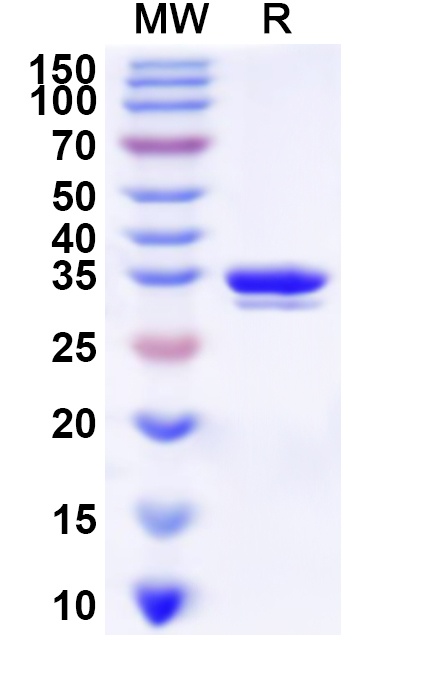
Recombinant Human GSE1 Protein, N-His-SUMO & C-Strep

There are no reviews yet.

Be the first to review “Recombinant Human GSE1 Protein, N-His-SUMO & C-Strep”

Your email address will not be published. Required fields are marked *

Related products

Recently viewed products

Loading recently viewed products…

Can’t find what you need?

Our catalog doesn’t cover everything — but our team does. Whether you need a custom antibody, a specific protein variant, or a bulk order, our scientists are here to help.

Contact Our Team Book a Call

Cart (0 Items)

Your cart is currently empty.

View Products