Introduction
Recombinant Human F8/Coagulation factor VIII Protein, N-His is a highly important therapeutic target in the treatment of hemophilia A, a genetic bleeding disorder caused by a deficiency in factor VIII. This protein is essential for blood clotting and its deficiency can lead to severe bleeding episodes. In this article, we will provide a scientific description of the structure, activity, and application of Recombinant Human F8/Coagulation factor VIII Protein, N-His.
Structure of Recombinant Human F8/Coagulation factor VIII Protein, N-His
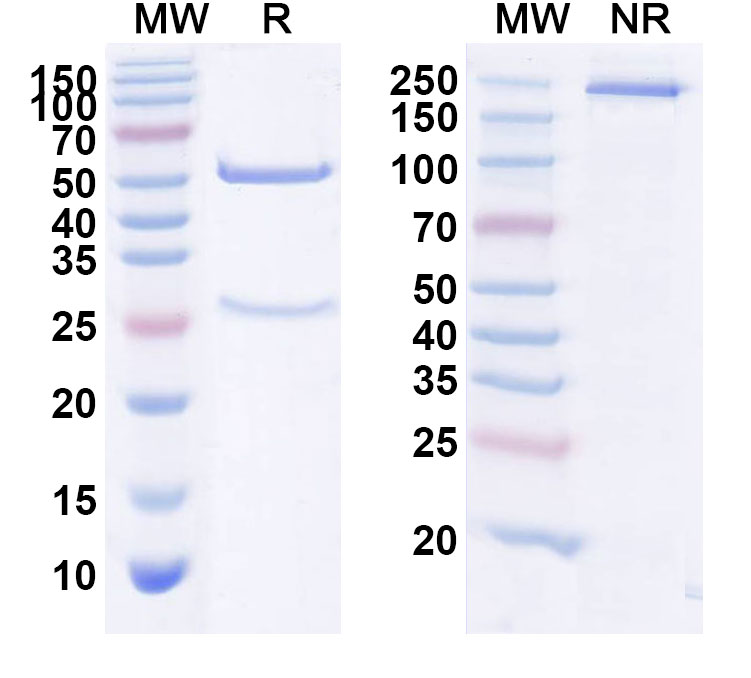
Recombinant Human F8/Coagulation factor VIII Protein, N-His is a glycoprotein with a molecular weight of approximately 330 kDa. It is composed of 2332 amino acids and has a complex structure consisting of multiple domains and subunits. The protein is encoded by the F8 gene located on the X chromosome and is primarily produced in the liver.
The structure of Recombinant Human F8/Coagulation factor VIII Protein, N-His is divided into six domains, A1-A2-B-A3-C1-C2. The A domains are responsible for binding to von Willebrand factor (vWF), a protein that helps stabilize factor VIII in the blood. The B domain is a flexible linker region that connects the A and C domains. The C domains are responsible for binding to phospholipids and activating factor X, an essential step in the blood clotting process. The N-terminal region of the protein contains a histidine (His) tag, which is used for purification and detection purposes.
Activity of Recombinant Human F8/Coagulation factor VIII Protein, N-His
The primary function of Recombinant Human F8/Coagulation factor VIII Protein, N-His is to act as a co-factor in the blood clotting cascade. When a blood vessel is damaged, factor VIII is activated and helps to form a stable blood clot. This is achieved through its interaction with vWF and phospholipids, which leads to the activation of factor X. Deficiency in factor VIII activity results in impaired blood clotting, leading to prolonged bleeding and increased risk of hemorrhage.
Recombinant Human F8/Coagulation factor VIII Protein, N-His is also involved in other physiological processes, such as angiogenesis and cell signaling. Studies have shown that factor VIII plays a role in promoting the growth of new blood vessels, which is important for wound healing and tissue repair. It has also been implicated in regulating the activity of certain growth factors and cytokines, indicating its potential role in cell signaling pathways.
Application of Recombinant Human F8/Coagulation factor VIII Protein, N-His
Recombinant Human F8/Coagulation factor VIII Protein, N-His is primarily used as a therapeutic agent for the treatment of hemophilia A. The protein is produced using recombinant DNA technology and is identical to the natural form of factor VIII found in the body. It is administered intravenously to patients with hemophilia A to replace the missing or defective factor VIII, thereby restoring the blood clotting process and preventing bleeding episodes.
Besides its therapeutic use, Recombinant Human F8/Coagulation factor VIII Protein, N-His also has research applications. Scientists use this protein to study the structure and function of factor VIII and its role in blood clotting. It is also used in the development and testing of new treatments for hemophilia A and other bleeding disorders.
Conclusion
Recombinant Human F8/Coagulation factor VIII Protein, N-His is a crucial therapeutic target in the treatment of hemophilia A. Its complex structure and multiple functions make it a highly versatile protein with both therapeutic and research applications.

There are no reviews yet.