Introduction
Human VSIG4/CRIg is a transmembrane glycoprotein that belongs to the immunoglobulin superfamily. It is also known as complement receptor of the Ig superfamily (CRIg) and is primarily expressed on macrophages and dendritic cells. VSIG4/CRIg is involved in the regulation of immune response and plays a crucial role in the pathogenesis of various diseases. In this article, we will discuss the structure, activity, and applications of the Human VSIG4/CRIg HEK293T Stable Cell Line.
Structure of Human VSIG4/CRIg
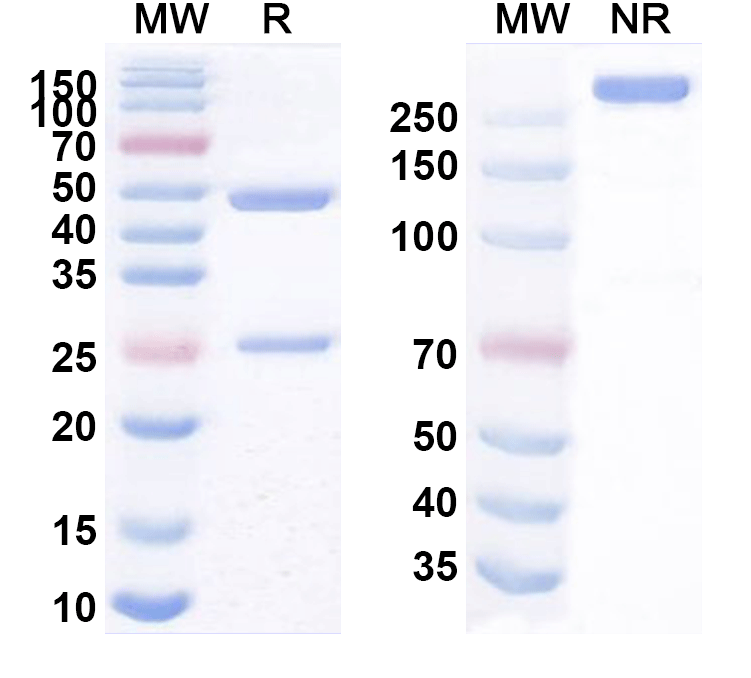
The Human VSIG4/CRIg protein is composed of 349 amino acids and has a molecular weight of approximately 40 kDa. It consists of an extracellular domain, a transmembrane domain, and a cytoplasmic domain. The extracellular domain contains two Ig-like domains, with the N-terminal domain being responsible for ligand binding. The transmembrane domain anchors the protein to the cell membrane, while the cytoplasmic domain is involved in signal transduction.
Activity of Human VSIG4/CRIg
Human VSIG4/CRIg is a complement receptor that binds to the complement component C3b and its cleavage product, iC3b. This binding inhibits the activation of the complement cascade and prevents the formation of the membrane attack complex. Additionally, VSIG4/CRIg also plays a role in the phagocytosis of opsonized pathogens and apoptotic cells by macrophages and dendritic cells. It also regulates the production of pro-inflammatory cytokines, such as TNF-α and IL-6, by modulating the activity of Toll-like receptors.
Applications of Human VSIG4/CRIg HEK293T Stable Cell Line
The Human VSIG4/CRIg HEK293T Stable Cell Line is a valuable tool for studying the structure and function of VSIG4/CRIg in various biological processes. Here are some of its specific applications:
1. Flow Cytometry Analysis
The Human VSIG4/CRIg HEK293T Stable Cell Line can be used for flow cytometry analysis to study the expression of VSIG4/CRIg on the cell surface. This technique allows for the identification and quantification of VSIG4/CRIg-expressing cells, providing valuable insights into the role of VSIG4/CRIg in different cell types and disease states.
2. Therapeutic Target for Immune Disorders
Due to its role in regulating immune response, VSIG4/CRIg has emerged as a potential therapeutic target for various immune disorders. The Human VSIG4/CRIg HEK293T Stable Cell Line can be used to screen and identify compounds that can modulate the activity of VSIG4/CRIg, leading to the development of novel therapies for diseases such as autoimmune disorders, allergies, and cancer.
3. Drug Discovery
The Human VSIG4/CRIg HEK293T Stable Cell Line can also be used for drug discovery and development. By using this cell line, researchers can study the effect of potential drug candidates on VSIG4/CRIg activity, providing valuable information for the development of new drugs targeting the complement system.
4. Vaccine Development
VSIG4/CRIg has been shown to play a critical role in the immune response to bacterial and viral infections. The Human VSIG4/CRIg HEK293T Stable Cell Line can be used to study the interaction between VSIG4/CRIg and pathogens, providing insights into the development of new vaccines targeting these pathogens.
Conclusion
In conclusion, the Human VSIG4/CRIg HEK293T Stable Cell Line is a valuable tool for studying the structure, activity, and applications of VSIG4/CRIg. Its use in flow cytometry analysis, as a therapeutic target, for drug discovery, and vaccine development makes it an essential resource for researchers in the field of immunology and drug development.

There are no reviews yet.