Introduction to Enfortumab ELISA Kit
Enfortumab ELISA Kit is a highly sensitive and specific assay designed for the detection and quantification of Enfortumab, a novel antibody therapy targeting Nectin-4, a cell adhesion molecule overexpressed in many solid tumors. This advanced ELISA kit is a valuable tool for researchers and clinicians to study the structure, activity, and application of Enfortumab in various cancer types.
Structure of Enfortumab
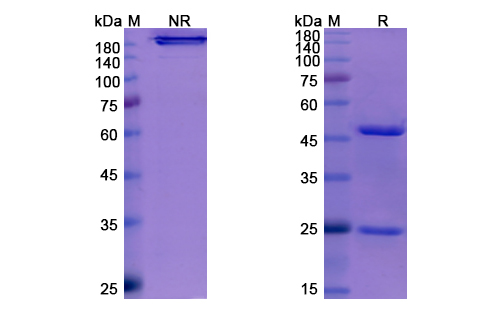
Enfortumab is a humanized monoclonal antibody consisting of two heavy chains and two light chains. The heavy chains are composed of four constant domains (CH1, CH2, CH3, and CH4) and one variable domain (VH), while the light chains consist of one constant domain (CL) and one variable domain (VL). The variable domains of both heavy and light chains are responsible for binding to the Nectin-4 protein.
Activity of Enfortumab
Enfortumab acts as an immune checkpoint inhibitor by blocking the interaction between Nectin-4 and its receptor, leading to the activation of immune cells and subsequent destruction of tumor cells. This antibody also induces antibody-dependent cellular cytotoxicity (ADCC) and complement-dependent cytotoxicity (CDC) to eliminate cancer cells. In addition, Enfortumab has been shown to inhibit tumor growth and metastasis in preclinical studies.
Application of Enfortumab ELISA Kit
The Enfortumab ELISA Kit is a valuable tool for researchers and clinicians to study the pharmacokinetics and pharmacodynamics of Enfortumab in various cancer types. It can also be used to monitor the levels of Enfortumab in patient serum or plasma, which can provide valuable information for dose optimization and treatment response evaluation. Additionally, this ELISA kit can be used to measure the levels of Nectin-4 in tumor tissue, which can help in patient selection for Enfortumab therapy.
Advantages of Enfortumab ELISA Kit
The Enfortumab ELISA Kit offers several advantages over other methods of Enfortumab detection. Firstly, it provides high sensitivity and specificity, allowing for accurate quantification of Enfortumab even at low levels. Secondly, it is a cost-effective and time-efficient assay, making it suitable for high-throughput screening. Thirdly, it can be used with various sample types, including serum, plasma, and tissue lysates, making it a versatile tool for Enfortumab research.
Conclusion
In summary, Enfortumab ELISA Kit is a highly sensitive and specific assay designed for the detection and quantification of Enfortumab, a novel antibody therapy targeting Nectin-4. Its advanced technology and multiple applications make it a valuable tool for researchers and clinicians to study the structure, activity, and application of Enfortumab in various cancer types. With the increasing use of Enfortumab in clinical practice, this ELISA kit will continue to play a crucial role in monitoring treatment response and optimizing Enfortumab therapy for cancer patients.

There are no reviews yet.