Anti-Human MAP1S Polyclonal Antibody: A Versatile Tool for Cellular Research
Introduction:
The Anti-Human MAP1S Polyclonal Antibody is a highly specific and sensitive tool for studying the role of MAP1S in various cellular processes. This antibody is designed to target the human MAP1S protein, which plays a crucial role in microtubule organization and cell division. With its superior performance and wide range of applications, this antibody is a valuable addition to any biotech laboratory.
Biological Function:
MAP1S, also known as microtubule-associated protein 1S, is a cytoskeleton-associated protein that regulates microtubule dynamics and stability. It is involved in various cellular processes such as cell division, intracellular transport, and cell signaling. MAP1S also plays a role in the development and function of the nervous system. The Anti-Human MAP1S Polyclonal Antibody specifically binds to MAP1S, enabling researchers to study its function in detail.
Main Applications:
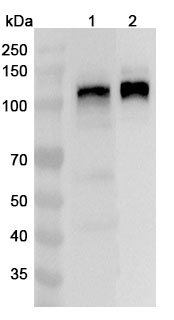
The Anti-Human MAP1S Polyclonal Antibody is a valuable tool for a wide range of applications in cellular research. It can be used for immunofluorescence, western blotting, and immunohistochemistry to detect and quantify MAP1S expression in different cell types and tissues. This antibody is also suitable for co-immunoprecipitation studies to identify MAP1S interacting proteins. Additionally, it can be used for flow cytometry to analyze the expression of MAP1S in different cell populations.
Experimental Use Cases:
The Anti-Human MAP1S Polyclonal Antibody has been extensively tested and validated for its performance in various experimental settings. In a recent study, this antibody was used to investigate the role of MAP1S in the regulation of cell division. The results showed that MAP1S depletion led to defects in mitotic spindle formation and chromosome segregation, highlighting its importance in cell division processes. In another study, this antibody was used to study the role of MAP1S in neuronal development and showed its crucial role in axon growth and branching.
Conclusion:
In conclusion, the Anti-Human MAP1S Polyclonal Antibody is a reliable and versatile tool for studying the function of MAP1S in different cellular processes. Its high specificity and sensitivity, along with its wide range of applications, make it an essential addition to any biotech laboratory. With its proven performance in various experimental settings, this antibody is a valuable asset for researchers aiming to unravel the complex functions of MAP1S in cellular biology.
Keywords: Anti-Human MAP1S Polyclonal Antibody, microtubule-associated protein 1S, cellular research, microtubule dynamics, cell division, immunofluorescence, western blotting, immunohistochemistry, co-immunoprecipitation, flow cytometry, mitotic spindle formation, chromosome segregation, neuronal development, axon growth, branching.


There are no reviews yet.