Introduction
Alacizumab Biosimilar is a monoclonal antibody that targets the vascular endothelial growth factor receptor 2 (VEGFR2), also known as CD309. This biosimilar is a research grade version of the original therapeutic antibody, and is used in various research studies to investigate the role of VEGFR2 in different disease conditions.
Structure of Alacizumab Biosimilar
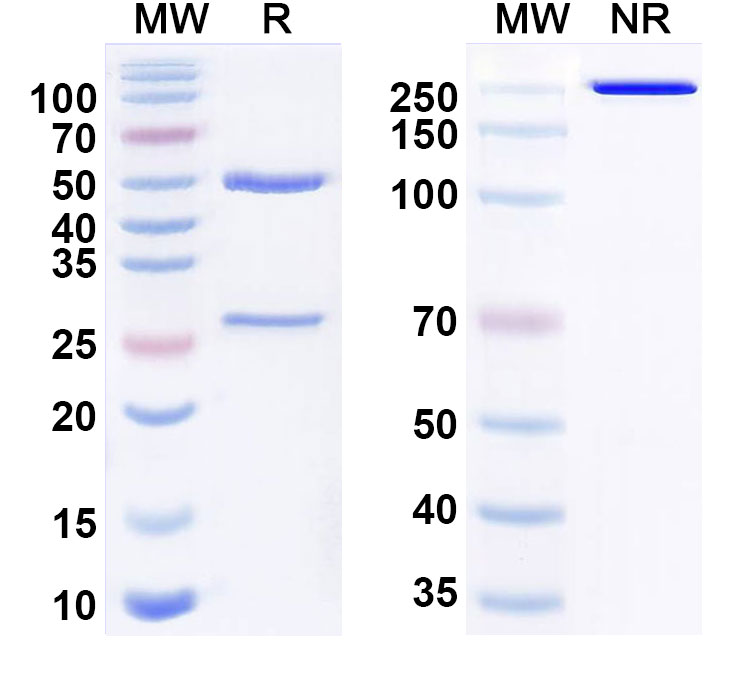
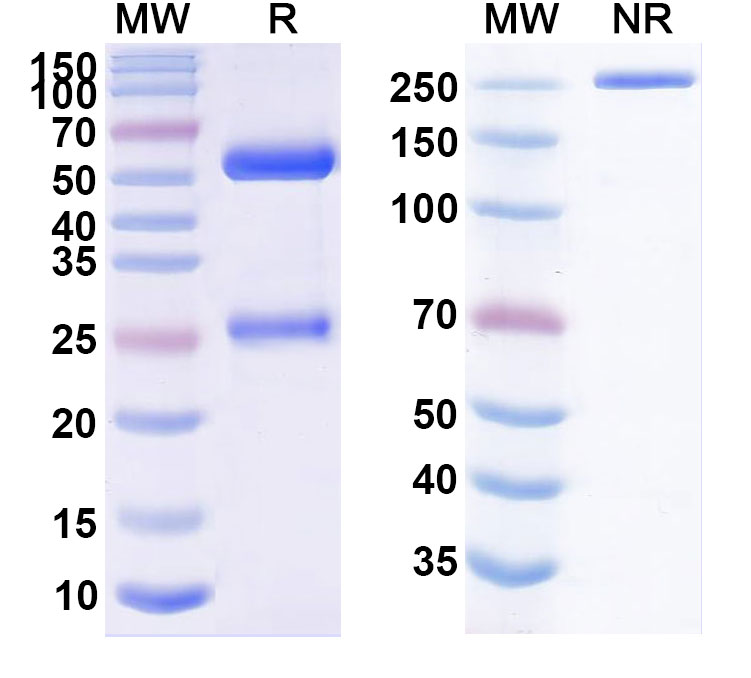
Alacizumab Biosimilar is a recombinant humanized monoclonal antibody, meaning it is produced through genetic engineering techniques to resemble the human immune system. It is composed of two heavy chains and two light chains, each with a unique amino acid sequence. The heavy chains are further divided into four constant regions (Fc) and one variable region (VH), while the light chains consist of one constant region (CL) and one variable region (VL).
The variable regions of Alacizumab Biosimilar are responsible for binding to the extracellular domain of VEGFR2, specifically targeting the ligand-binding site. This binding inhibits the activity of VEGFR2, preventing the binding of its natural ligands and subsequent downstream signaling pathways.
Activity of Alacizumab Biosimilar
Alacizumab Biosimilar has a high affinity for VEGFR2, with a dissociation constant (Kd) of approximately 1 nM. This means that it has a strong binding ability to its target, making it an effective inhibitor of VEGFR2 activity.
VEGFR2 is a key receptor involved in angiogenesis, the process of forming new blood vessels. It is also involved in vascular permeability, which is the ability of blood vessels to allow substances to pass through their walls. In pathological conditions such as cancer, VEGFR2 is overexpressed, leading to excessive angiogenesis and increased vascular permeability. Alacizumab Biosimilar blocks the activity of VEGFR2, thereby inhibiting angiogenesis and reducing vascular permeability.
Application of Alacizumab Biosimilar
The primary application of Alacizumab Biosimilar is in research studies investigating the role of VEGFR2 in various disease conditions. As mentioned earlier, VEGFR2 is overexpressed in cancer, making it a potential therapeutic target for anti- cancer treatments. Alacizumab Biosimilar can be used in pre-clinical studies to evaluate its efficacy in inhibiting tumor growth and metastasis.
In addition to cancer, VEGFR2 is also involved in other diseases such as age-related macular degeneration (AMD) and diabetic retinopathy. Both of these conditions are characterized by excessive angiogenesis in the retina. Alacizumab Biosimilar has shown promising results in pre-clinical studies for the treatment of AMD and diabetic retinopathy by inhibiting VEGFR2 activity and reducing angiogenesis.
Furthermore, Alacizumab Biosimilar has also been used in research studies investigating the role of VEGFR2 in cardiovascular diseases, such as atherosclerosis and ischemic heart disease. By inhibiting VEGFR2, it has been shown to reduce plaque formation and improve blood flow in animal models of these diseases.
Conclusion
In summary, Alacizumab Biosimilar is a recombinant humanized monoclonal antibody that targets VEGFR2. It has a high affinity for its target and effectively inhibits VEGFR2 activity, making it a valuable tool for research studies investigating the role of VEGFR2 in various disease conditions. Its potential applications include cancer, AMD, diabetic retinopathy, and cardiovascular diseases. Further research and clinical trials are needed to fully understand the therapeutic potential of Alacizumab Biosimilar in these diseases.



There are no reviews yet.