Introduction
Veltuzumab Biosimilar, also known as Anti-CD20 receptors mAb, is a research grade monoclonal antibody that specifically targets CD20 receptors. This biosimilar is a highly effective therapeutic agent for the treatment of various diseases, including B-cell malignancies and autoimmune disorders. In this article, we will discuss the structure, activity, and application of Veltuzumab Biosimilar in detail.
Structure of Veltuzumab Biosimilar
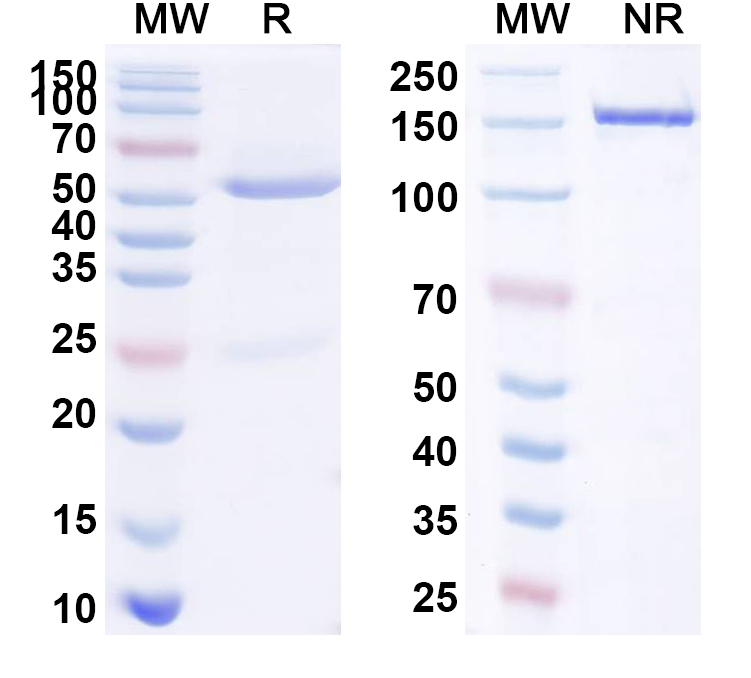
Veltuzumab Biosimilar is a recombinant humanized monoclonal antibody that is produced by recombinant DNA technology. It is composed of two identical heavy chains and two identical light chains, each with a molecular weight of approximately 150 kDa. The heavy chains are made up of four constant domains (CH1, CH2, CH3, and CH4) and one variable domain (VH), while the light chains consist of two constant domains (CL and CL1) and one variable domain (VL). The variable domains of both heavy and light chains are responsible for binding to the CD20 receptors.
Activity of Veltuzumab Biosimilar
Veltuzumab Biosimilar specifically targets CD20 receptors, which are found on the surface of B-cells. Upon binding to these receptors, Veltuzumab Biosimilar induces various mechanisms that lead to the destruction of B-cells. These mechanisms include complement-dependent cytotoxicity (CDC), antibody-dependent cellular cytotoxicity (ADCC), and apoptosis. CDC is initiated by the binding of Veltuzumab Biosimilar to the CD20 receptors, which triggers the activation of the complement system. This results in the formation of a membrane attack complex (MAC) that leads to the lysis of B-cells. ADCC occurs when Veltuzumab Biosimilar binds to CD20 receptors on B-cells, which then activates natural killer (NK) cells to destroy the B-cells. Finally, apoptosis is induced by the binding of Veltuzumab Biosimilar to the CD20 receptors, which triggers a signaling cascade that leads to the programmed cell death of B-cells.
Application of Veltuzumab Biosimilar
Veltuzumab Biosimilar has been approved for the treatment of various diseases, including B-cell malignancies and autoimmune disorders. In B-cell malignancies, such as non-Hodgkin’s lymphoma, chronic lymphocytic leukemia, and Waldenström macroglobulinemia, Veltuzumab Biosimilar is used as a first-line or second-line treatment. It has shown significant efficacy in inducing remission and improving overall survival in patients with these malignancies. In autoimmune disorders, such as rheumatoid arthritis, Veltuzumab Biosimilar has been shown to reduce disease activity and improve clinical symptoms. It is also being investigated for the treatment of other autoimmune disorders, such as systemic lupus erythematosus and multiple sclerosis.
Conclusion
In summary, Veltuzumab Biosimilar is a highly effective therapeutic agent for the treatment of B-cell malignancies and autoimmune disorders. Its structure, composed of two identical heavy chains and two identical light chains, allows for specific binding to CD20 receptors. Its activity, which includes CDC, ADCC, and apoptosis, leads to the destruction of B-cells. Veltuzumab Biosimilar has been approved for the treatment of various diseases and is being investigated for potential use in other indications. Its efficacy and safety profile make it a promising therapeutic option for patients with B-cell malignancies and autoimmune disorders.


There are no reviews yet.