Introduction to Teprotumumab ELISA Kit
Teprotumumab is a monoclonal antibody that has recently been approved by the US Food and Drug Administration (FDA) for the treatment of thyroid eye disease (TED). This condition, also known as Graves’ orbitopathy, is an autoimmune disorder that affects the eyes and is associated with an overactive thyroid gland. Teprotumumab is a promising therapeutic target for TED, and its activity can be measured using an ELISA kit.
Structure of Teprotumumab
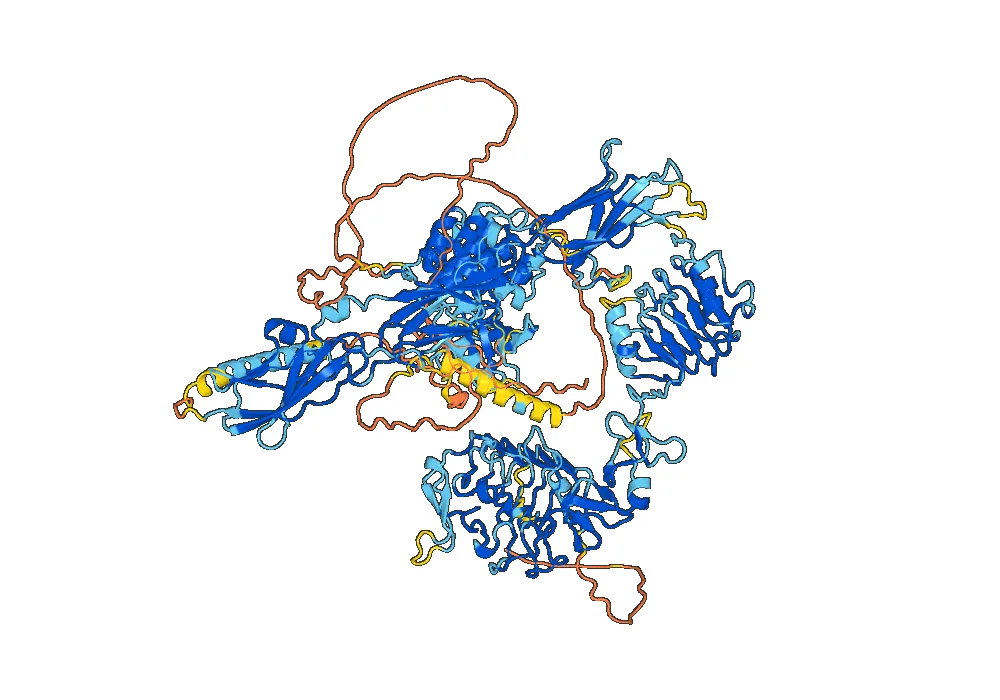
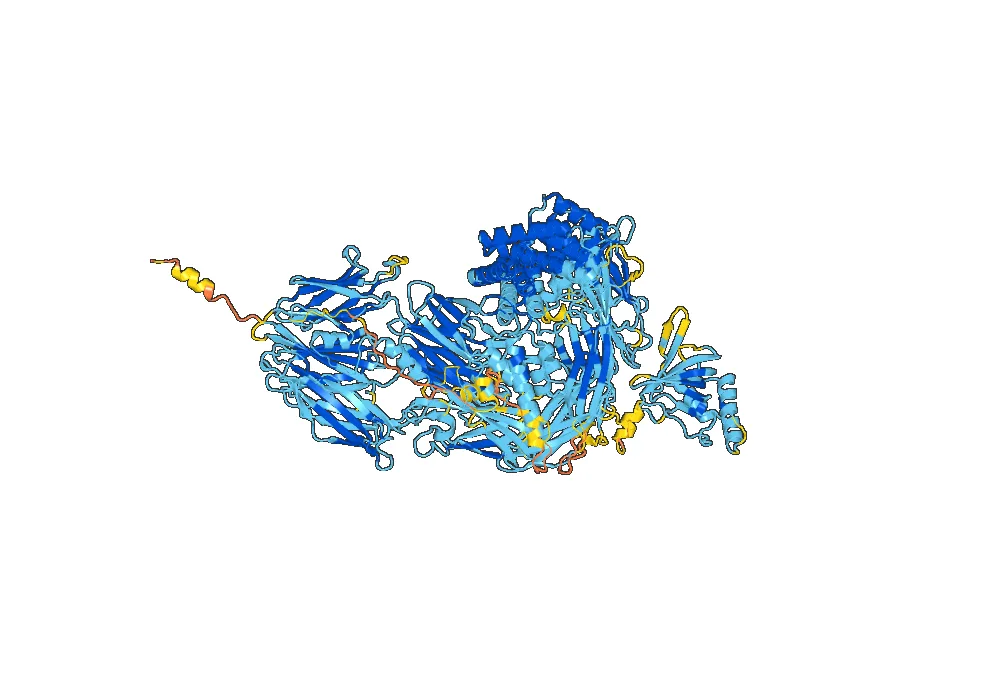
Teprotumumab is a fully human monoclonal antibody, meaning that it is derived from human cells and does not contain any animal or bacterial components. It is composed of two identical heavy chains and two identical light chains, which are connected by disulfide bonds. The antibody has a molecular weight of approximately 150 kDa and is made up of 1,331 amino acids.
The structure of Teprotumumab is important for its activity as an antibody. It has a specific binding site, called the antigen-binding site, which is located at the tip of each arm of the Y-shaped molecule. This site is responsible for recognizing and binding to its target antigen, which in the case of Teprotumumab is insulin-like growth factor 1 receptor (IGF-1R).
Activity of Teprotumumab
Teprotumumab works by binding to IGF-1R, which is a protein that is overexpressed in the tissues of patients with TED. IGF-1R is involved in the development of TED, as it promotes inflammation, fibrosis, and tissue expansion in the eye. By binding to IGF-1R, Teprotumumab blocks its activity and prevents these damaging processes from occurring.
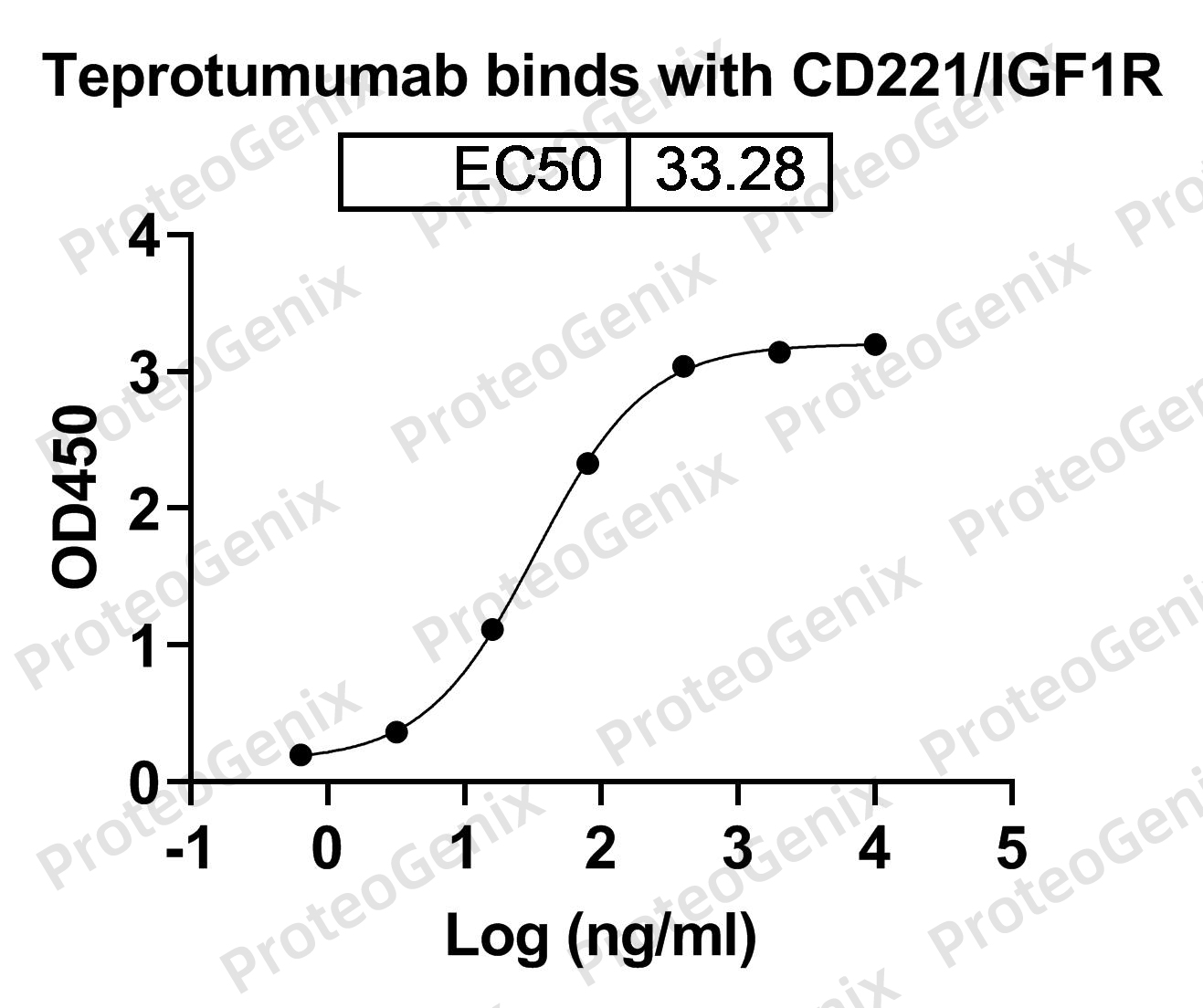
The activity of Teprotumumab can be measured using an ELISA (enzyme-linked immunosorbent assay) kit. This is a common laboratory technique that uses antibodies to detect and quantify the presence of a specific protein or antigen in a sample. In the case of Teprotumumab, the ELISA kit contains antibodies that are specific for IGF-1R. When a sample containing Teprotumumab is added to the kit, the antibody will bind to the IGF-1R present in the sample, allowing for its detection and measurement.
Application of Teprotumumab ELISA Kit
The Teprotumumab ELISA kit has several important applications in the development and use of this therapeutic antibody. Firstly, it can be used to measure the levels of Teprotumumab in patient samples, such as blood or tissue samples. This is important for monitoring the effectiveness of treatment and ensuring that patients are receiving the correct dose of the drug.
The ELISA kit can also be used to measure the levels of IGF-1R in patient samples. This can provide valuable information about the activity of the disease and the response to treatment. In addition, the ELISA kit can be used in research studies to investigate the role of IGF-1R in TED and to evaluate the efficacy of Teprotumumab in blocking its activity.
Overall, the Teprotumumab ELISA kit is an essential tool in the development and use of this promising therapeutic antibody for TED. It allows for the accurate measurement of Teprotumumab levels and provides valuable insights into the activity of the disease and the drug’s effectiveness. With the approval of Teprotumumab by the FDA, this ELISA kit will play a crucial role in improving the lives of patients with TED.
Conclusion
Teprotumumab is a monoclonal antibody that has shown promising results in the treatment of thyroid eye disease. Its structure, activity, and application can be described in terms of its specific binding

There are no reviews yet.