Introduction
Recombinant Mouse VSIG2 Protein, also known as V-set and immunoglobulin domain-containing protein 2, is a type I transmembrane protein that is encoded by the VSIG2 gene. This protein belongs to the immunoglobulin superfamily and is expressed in various tissues including the brain, heart, and lungs. Recombinant Mouse VSIG2 Protein is widely used in scientific research for its unique structure and diverse functions.
Structure
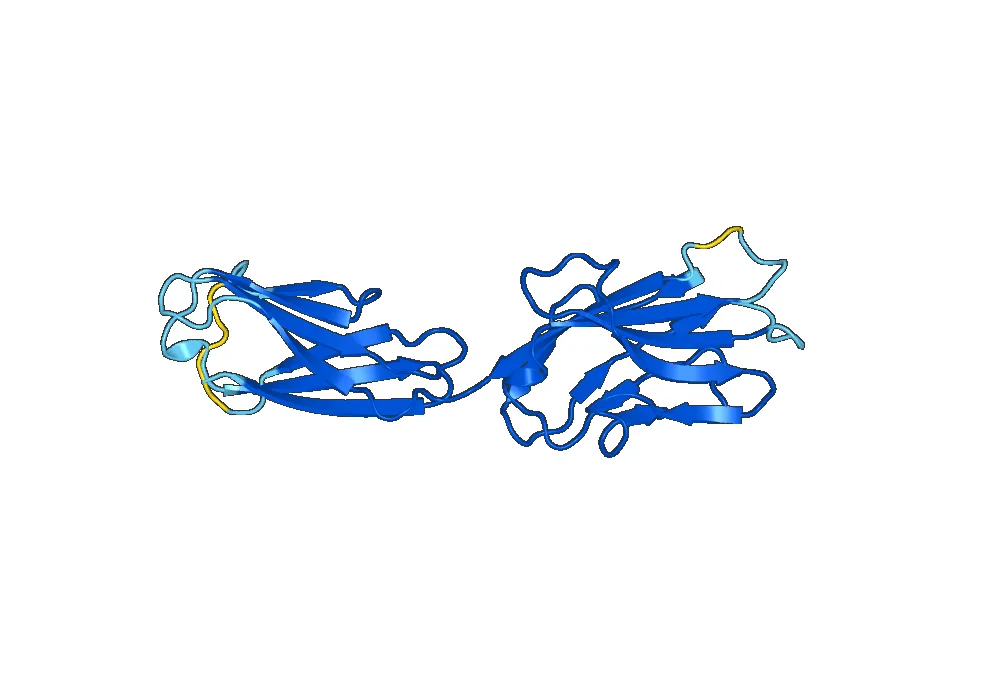
Recombinant Mouse VSIG2 Protein is composed of 2 extracellular immunoglobulin domains, a transmembrane domain, and a cytoplasmic tail. The extracellular domains contain a V-set domain and an immunoglobulin-like C2-type domain, both of which are involved in protein-protein interactions. The transmembrane domain anchors the protein to the cell membrane, while the cytoplasmic tail is responsible for intracellular signaling.
Activity
Recombinant Mouse VSIG2 Protein is a cell surface protein that plays a role in cell adhesion and immune regulation. It has been shown to interact with various proteins, including integrins and CD24, to mediate cell-cell interactions. Additionally, it has been found to modulate T-cell activation and cytokine production, suggesting its involvement in immune response regulation.
Application
Recombinant Mouse VSIG2 Protein has a wide range of applications in scientific research. Its unique structure and activity make it a valuable tool for studying cell adhesion, immune regulation, and other biological processes. Some specific applications include:
1. Recombinant protein production
Recombinant Mouse VSIG2 Protein can be produced in large quantities using genetic engineering techniques. This allows for the study of its structure and function in a controlled environment, without the need for large amounts of native protein.
2. Antigen for antibody production
Recombinant Mouse VSIG2 Protein can be used as an antigen to produce specific antibodies. These antibodies can then be used to study the expression and localization of the protein in different tissues and cell types.
3. Cell adhesion studies
Recombinant Mouse VSIG2 Protein is known to play a role in cell adhesion, making it a valuable tool for studying this process. Its interactions with other proteins can be investigated using various techniques, such as cell adhesion assays and co-immunoprecipitation.
4. Immune response modulation
Given its involvement in immune regulation, Recombinant Mouse VSIG2 Protein can be used to study the effects of this protein on T-cell activation and cytokine production. This can provide insights into potential therapeutic applications for immune-related diseases.
5. Biomarker discovery
Recombinant Mouse VSIG2 Protein has been found to be differentially expressed in various diseases, including cancer and autoimmune disorders. Therefore, it can be used as a potential biomarker for disease diagnosis and prognosis.
Conclusion
In summary, Recombinant Mouse VSIG2 Protein is a unique and versatile protein that has various applications in scientific research. Its structure, activity, and role in cell adhesion and immune regulation make it a valuable tool for studying various biological processes and diseases. With ongoing research, this protein may also hold potential for therapeutic applications in the future.

There are no reviews yet.