Introduction to Recombinant Human ARF1 Protein
Recombinant Human ARF1 Protein, also known as ADP-ribosylation factor 1, is a small GTPase protein that plays a crucial role in various cellular processes such as vesicular trafficking, cytoskeletal rearrangement, and signal transduction. This protein is encoded by the ARF1 gene and is a member of the ADP-ribosylation factor family.
Structure of Recombinant Human ARF1 Protein
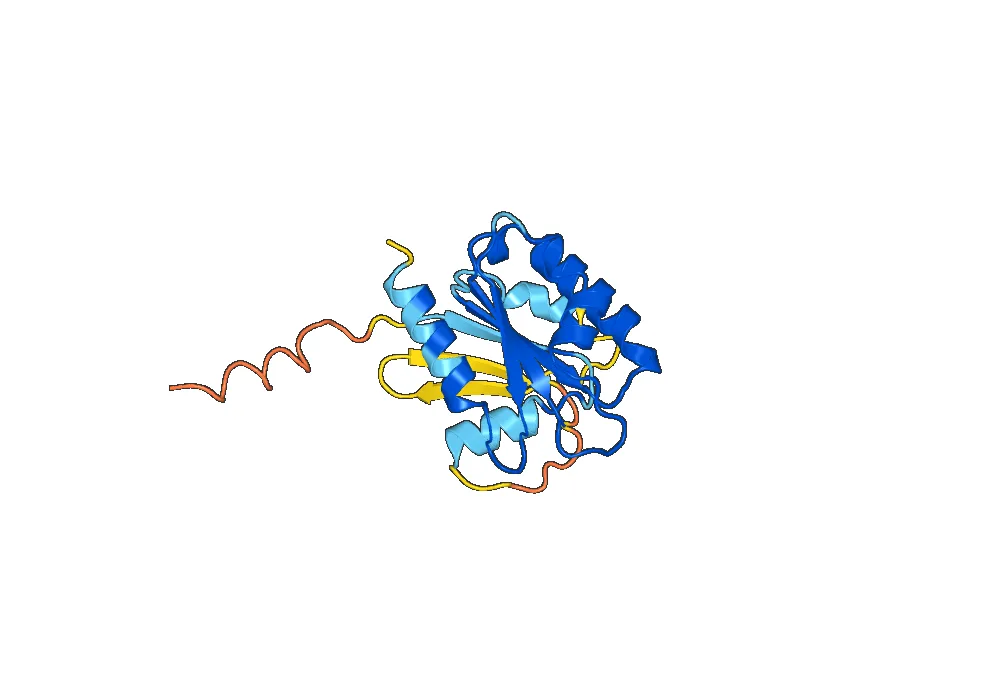
The structure of Recombinant Human ARF1 Protein is composed of 181 amino acids and has a molecular weight of approximately 21 kDa. It contains a central core domain that binds to guanine nucleotides and is flanked by N- and C-terminal regions. The N-terminal region is responsible for membrane binding, while the C-terminal region is involved in protein-protein interactions.
Recombinant Human ARF1 Protein also has a conserved glycine-rich loop, which is essential for GTP binding and hydrolysis. This loop is located between the N- and C-terminal regions and is highly conserved among all members of the ADP-ribosylation factor family.
Activity of Recombinant Human ARF1 Protein
The main activity of Recombinant Human ARF1 Protein is its role in regulating vesicular trafficking. It acts as a molecular switch, cycling between an inactive GDP-bound form and an active GTP-bound form. Upon activation, ARF1 binds to specific effector proteins, which then facilitate the formation of transport vesicles from the Golgi apparatus to the plasma membrane.
In addition to its role in vesicular trafficking, Recombinant Human ARF1 Protein also plays a role in cytoskeletal rearrangement. It can interact with actin and microtubule cytoskeletons, regulating their organization and dynamics. This activity is crucial for cell migration, division, and other cellular processes that require cytoskeletal remodeling.
Furthermore, Recombinant Human ARF1 Protein is involved in signal transduction pathways. It can activate phospholipase D, which then generates the second messenger phosphatidic acid, leading to the activation of downstream signaling cascades. This activity is essential for regulating cell growth, differentiation, and survival.
Applications of Recombinant Human ARF1 Protein
Due to its diverse activities, Recombinant Human ARF1 Protein has numerous applications in both basic research and biotechnology. One of its most significant applications is in the study of vesicular trafficking and membrane dynamics. Researchers use recombinant ARF1 protein to investigate the mechanisms of vesicle formation and fusion, as well as the role of ARF1 in these processes.
Recombinant Human ARF1 Protein is also used in drug discovery and development. As ARF1 is involved in signal transduction, it is a potential target for therapeutic intervention. Recombinant ARF1 protein is used in high-throughput screening assays to identify compounds that can modulate its activity, which may lead to the development of new drugs for various diseases.
In biotechnology, Recombinant Human ARF1 Protein is used as an antigen in the production of antibodies. As ARF1 is a highly conserved protein, recombinant ARF1 protein can be used to generate antibodies that can recognize ARF1 in different species. These antibodies are valuable tools for studying ARF1 expression and function in various organisms.
Conclusion
In summary, Recombinant Human ARF1 Protein is a crucial protein involved in vesicular trafficking, cytoskeletal rearrangement, and signal transduction. Its structure, activity, and applications make it a valuable tool for studying various cellular processes and for drug discovery and development. As our understanding of ARF1 continues to grow, so does the potential for its use in various scientific and biotechnological


There are no reviews yet.