Introduction
Nadecnemab Biosimilar, also known as Anti-GFRA3 mAb, is a research grade antibody that has shown promising results in the treatment of various diseases. In this article, we will discuss the structure, activity, and potential applications of this biosimilar in the field of medicine.
Structure of Nadecnemab Biosimilar
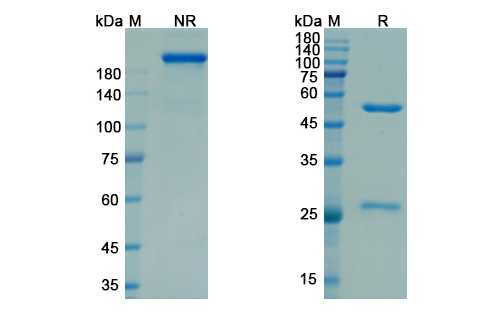
Nadecnemab Biosimilar is a monoclonal antibody (mAb) that is designed to target the GFRA3 protein. It is a recombinant antibody, meaning it is produced in a laboratory using genetic engineering techniques. The antibody is made up of two heavy chains and two light chains, which are connected by disulfide bonds. The heavy chains are responsible for the binding of the antibody to the target protein, while the light chains provide stability to the overall structure.
The antibody also contains a constant region, which is responsible for the effector functions of the antibody, and a variable region, which is responsible for the specificity of the antibody towards its target. The variable region of Nadecnemab Biosimilar is designed to bind specifically to the GFRA3 protein, making it a highly targeted therapeutic agent.
Activity of Nadecnemab Biosimilar
The main activity of Nadecnemab Biosimilar is the inhibition of the GFRA3 protein. This protein is a co-receptor for the GDNF family ligands, which play a crucial role in the development and survival of various neuronal cells. In certain diseases, such as Parkinson’s disease and amyotrophic lateral sclerosis (ALS), the GFRA3 protein is overexpressed, leading to excessive signaling and cell death.
By binding to the GFRA3 protein, Nadecnemab Biosimilar blocks the interaction between the protein and its ligands, thereby inhibiting the downstream signaling pathways. This leads to a decrease in cell death and can potentially slow down the progression of these diseases.
Potential Applications of Nadecnemab Biosimilar
Nadecnemab Biosimilar has shown promising results in preclinical studies for the treatment of various diseases, including Parkinson’s disease, ALS, and multiple system atrophy (MSA). It has also been studied as a potential therapy for certain types of cancer, such as lung cancer and glioblastoma.
In addition to its potential therapeutic applications, Nadecnemab Biosimilar can also be used as a research tool for studying the role of GFRA3 in different diseases. It can help researchers better understand the mechanisms of these diseases and develop new treatments.
Parkinson’s Disease
In Parkinson’s disease, the GFRA3 protein is overexpressed in the brain, leading to the degeneration of dopaminergic neurons. Studies have shown that Nadecnemab Biosimilar can effectively inhibit the GFRA3 protein and protect these neurons from cell death. This makes it a potential therapy for slowing down the progression of Parkinson’s disease.
Amyotrophic Lateral Sclerosis (ALS)
In ALS, the GFRA3 protein is overexpressed in the motor neurons, leading to their degeneration. Nadecnemab Biosimilar has been shown to protect these neurons from cell death, potentially slowing down the progression of the disease. It has also been found to improve motor function in animal models of ALS.
Multiple System Atrophy (MSA)
MSA is a rare neurodegenerative disease that affects the autonomic nervous system. Studies have shown that Nadecnemab Biosimilar can protect the neurons in this system from cell death, making it a potential therapy for MSA.
Cancer
Nadecnemab Biosimilar has also shown promising results in preclinical studies for the treatment of certain types of cancer. It has been found to inhibit the growth and metastasis of lung cancer and glioblastoma cells, making it a

There are no reviews yet.