Introduction
The Human TIGIT HEK293T Stable Cell Line is a powerful tool for studying the structure, activity, and potential therapeutic applications of the T cell immunoreceptor with Ig and ITIM domains (TIGIT) protein. TIGIT is a key regulator of immune responses, playing a critical role in maintaining immune homeostasis and preventing excessive inflammation. This stable cell line allows for the efficient and reliable expression of TIGIT in human embryonic kidney (HEK) 293T cells, making it an invaluable resource for researchers studying this important protein.
Structure of TIGIT
TIGIT is a type I transmembrane protein that belongs to the immunoglobulin superfamily. It is composed of an extracellular domain, a transmembrane domain, and a cytoplasmic tail. The extracellular domain contains an immunoglobulin variable (IgV) domain and an immunoglobulin constant (IgC) domain, both of which are involved in ligand binding. The cytoplasmic tail contains an immunoreceptor tyrosine-based inhibitory motif (ITIM) and an immunoreceptor tyrosine-based switch motif (ITSM), which are important for regulating TIGIT signaling.
Activity of TIGIT
TIGIT is primarily expressed on the surface of regulatory T cells and activated T cells, as well as on natural killer (NK) cells and some dendritic cell subsets. It acts as a co-inhibitory receptor, dampening immune responses by binding to its ligands, CD155 and CD112. This interaction results in the recruitment of the phosphatase SHP-1, which dephosphorylates key signaling molecules, leading to the inhibition of T cell activation and cytokine production. TIGIT also competes with the co-stimulatory receptor CD226 for binding to CD155, further regulating T cell activation. Additionally, TIGIT has been shown to promote the differentiation of regulatory T cells and enhance their suppressive function.
Application in Flow Cytometry
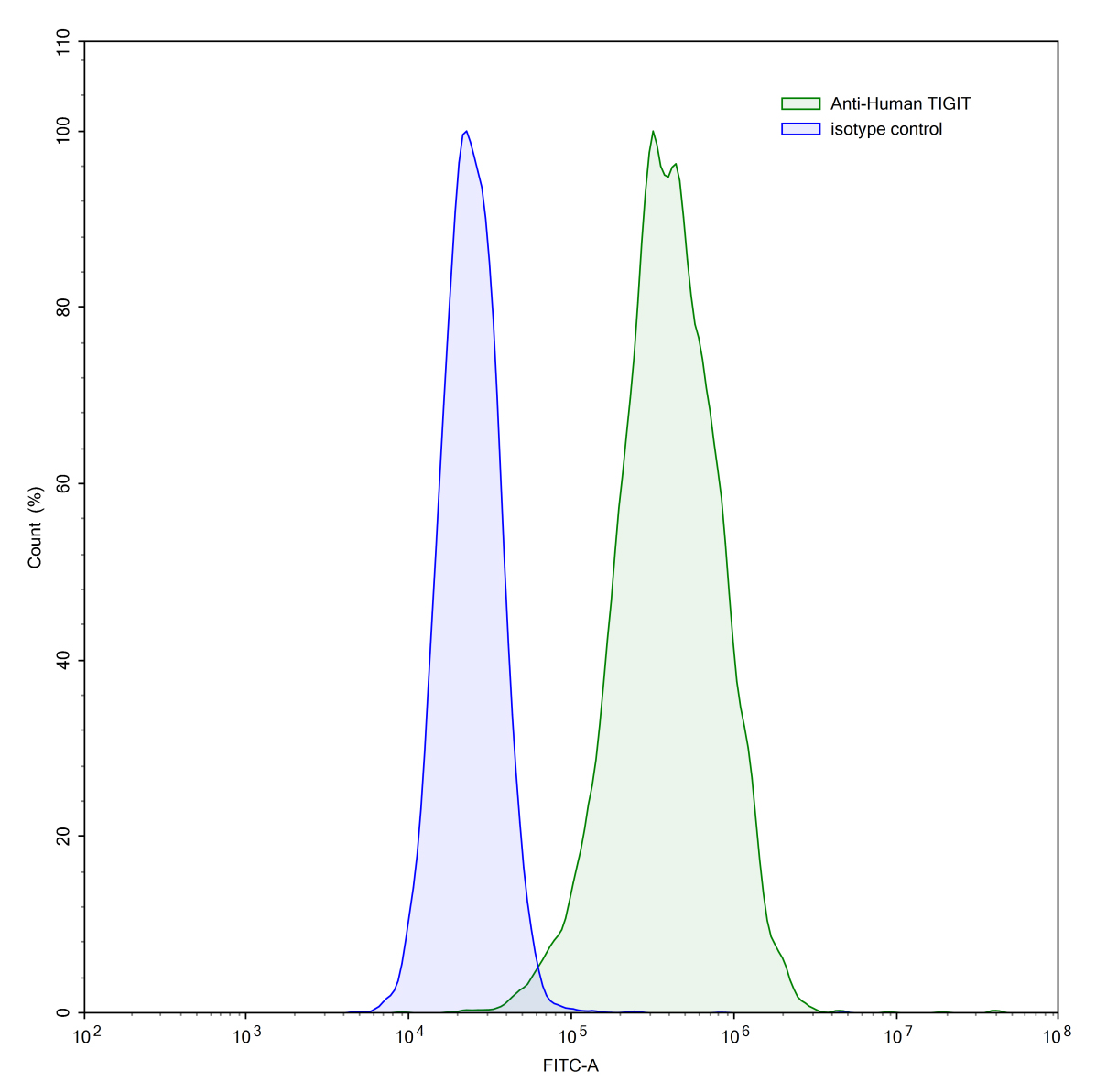
The Human TIGIT HEK293T Stable Cell Line is an ideal tool for flow cytometry-based studies of TIGIT. The stable expression of TIGIT in HEK293T cells allows for the production of large quantities of protein, ensuring consistent and reliable results. The use of flow cytometry allows for the analysis of TIGIT expression on different immune cell subsets, as well as the assessment of its binding to its ligands and its downstream signaling. This stable cell line can also be used in combination with other flow cytometry techniques, such as intracellular staining, to investigate the functional effects of TIGIT on T cell activation and differentiation.
Therapeutic Target
TIGIT has emerged as a promising therapeutic target for various immune-mediated diseases. It has been implicated in the pathogenesis of autoimmune diseases, such as multiple sclerosis and rheumatoid arthritis, as well as in cancer. In fact, TIGIT is highly expressed on tumor-infiltrating lymphocytes in many types of cancer, where it contributes to T cell exhaustion and immune evasion by the tumor. Blocking TIGIT with monoclonal antibodies has shown promising results in preclinical studies, and clinical trials are currently underway to evaluate its potential as a cancer immunotherapy.
Conclusion
The Human TIGIT HEK293T Stable Cell Line is a valuable tool for studying the structure, activity, and potential therapeutic applications of TIGIT. Its stable expression in HEK293T cells allows for the efficient production of TIGIT protein, making it an ideal resource for flow cytometry-based studies. The use of this stable cell line has the potential to advance our understanding of TIGIT and its role in immune regulation and disease, as well as to facilitate the development of novel therapies targeting this important protein.

There are no reviews yet.