Introduction
Pritumumab Biosimilar, also known as Anti-VIM mAb, is a monoclonal antibody (mAb) that has been developed as a biosimilar to the original Pritumumab antibody. It specifically targets Vimentin (VIM), a protein that is overexpressed in various types of cancers. In this article, we will discuss the structure, activity, and potential applications of Pritumumab Biosimilar as a research-grade antibody.
Structure of Pritumumab Biosimilar
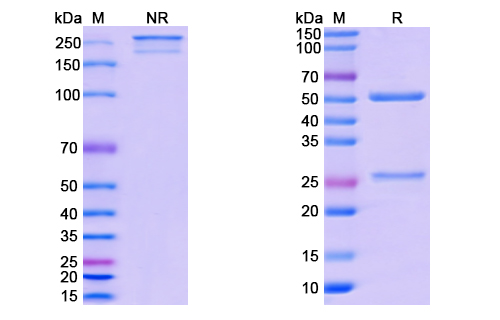
Pritumumab Biosimilar is a recombinant humanized IgG1 monoclonal antibody, with a molecular weight of approximately 150 kDa. It is composed of two heavy chains and two light chains, each containing a variable and constant region. The variable region of Pritumumab Biosimilar is designed to specifically bind to the extracellular domain of VIM, while the constant region is responsible for mediating effector functions.
Activity of Pritumumab Biosimilar
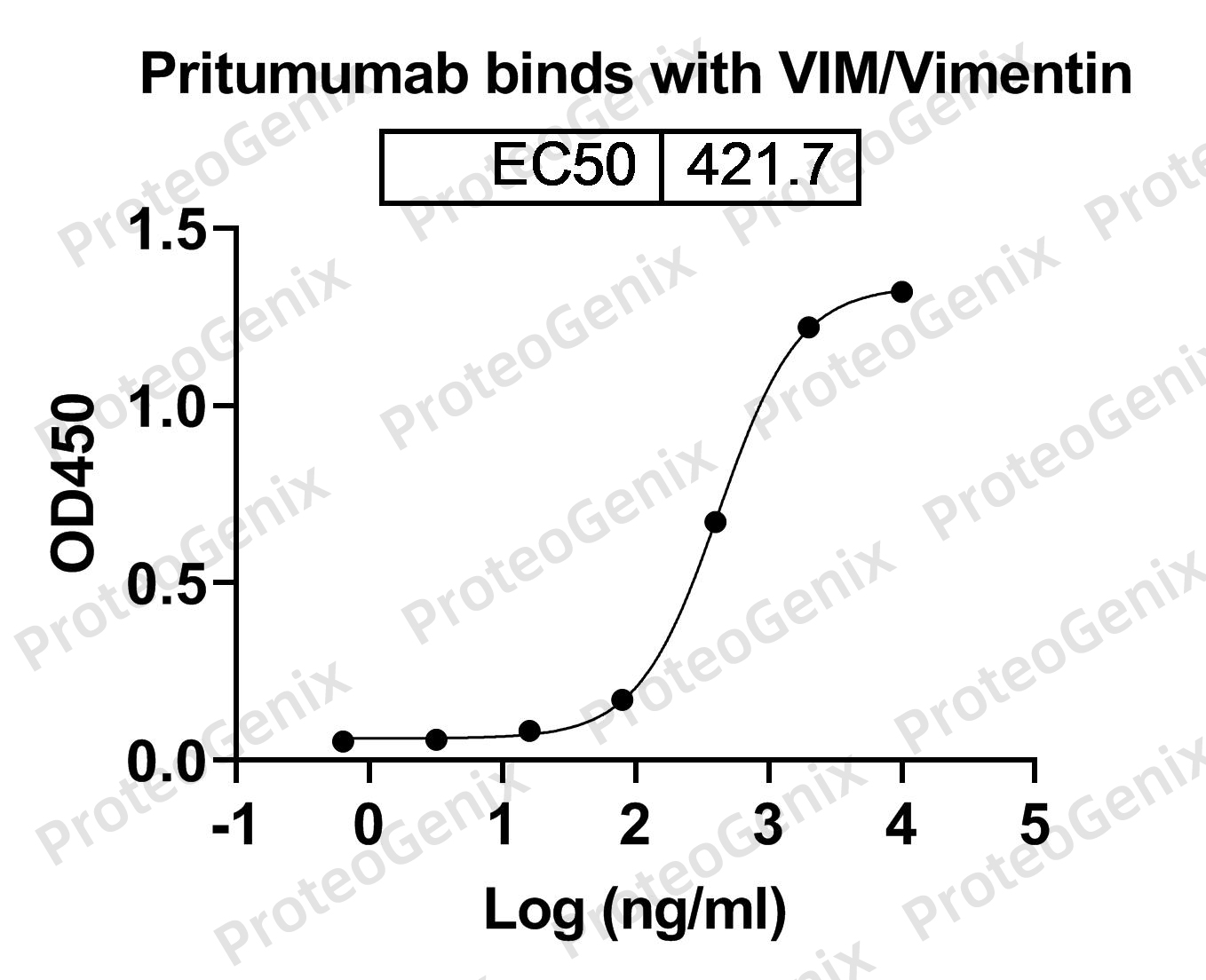
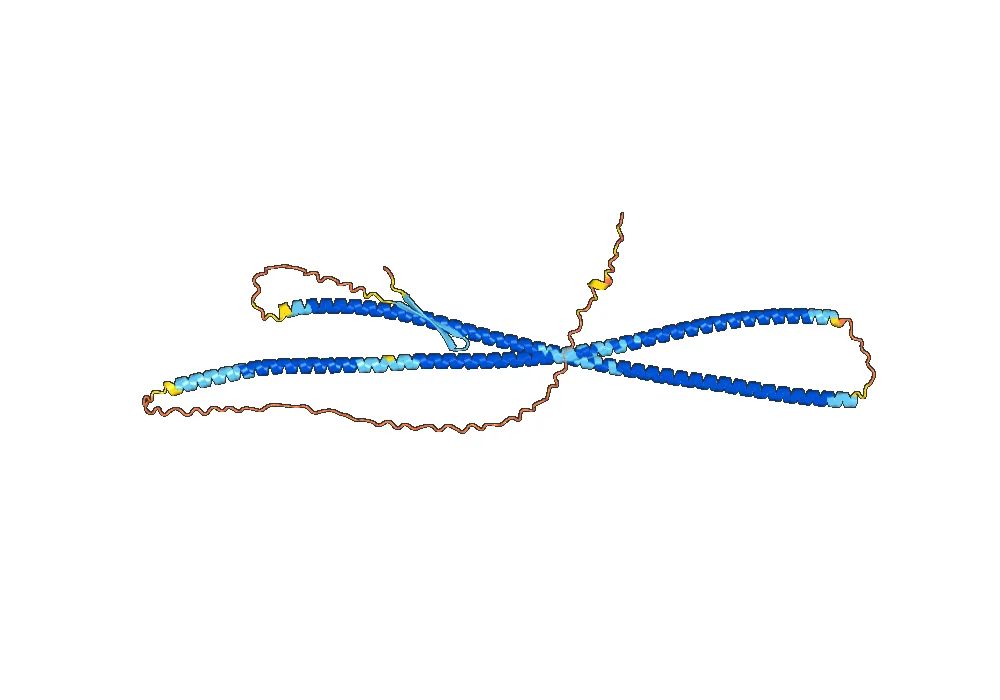
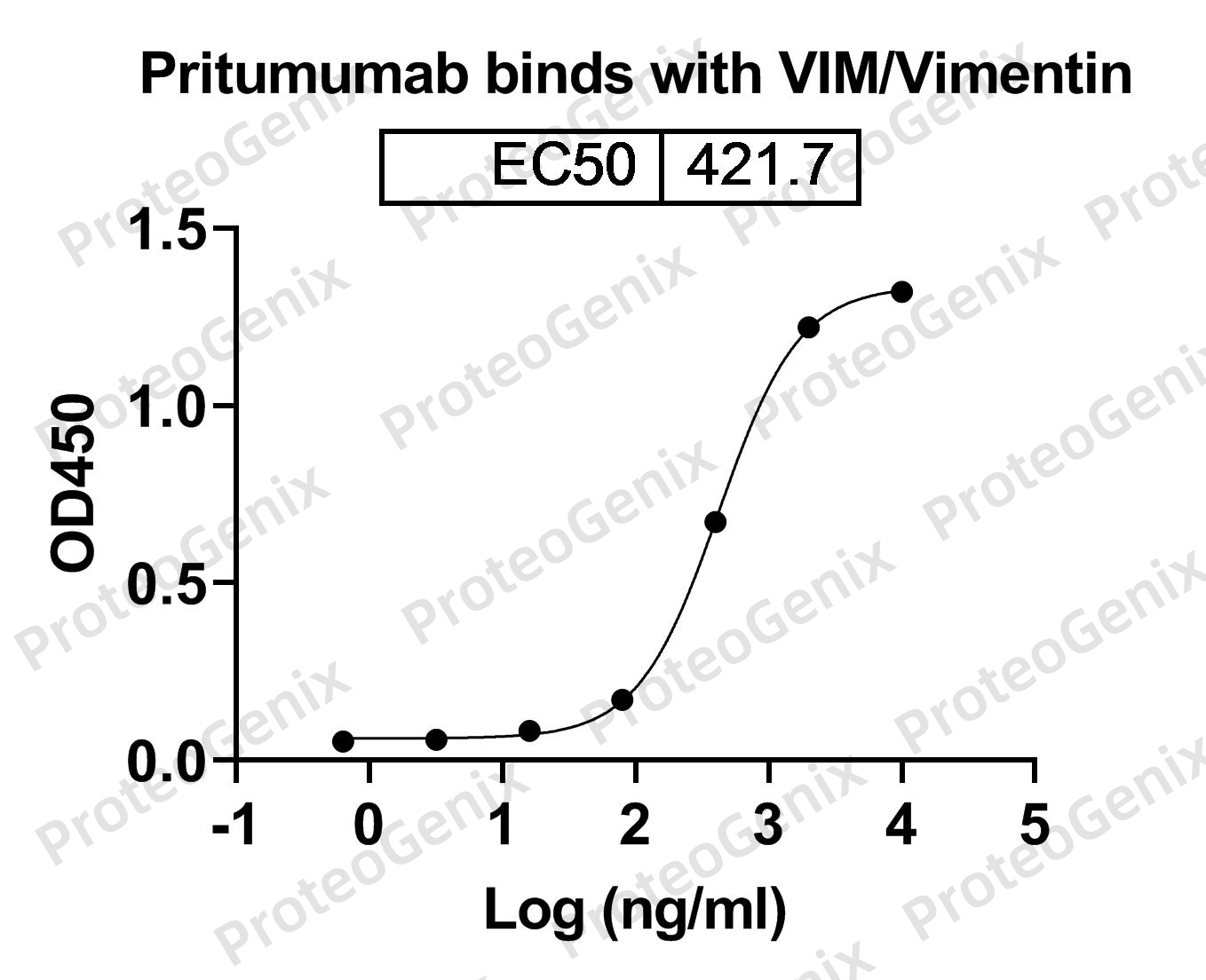
Pritumumab Biosimilar exerts its activity by binding to VIM, a type III intermediate filament protein that is highly expressed in mesenchymal cells. VIM is involved in various cellular processes such as cell migration, adhesion, and signaling. However, its overexpression has been linked to the development and progression of cancer.
By binding to VIM, Pritumumab Biosimilar inhibits its function and disrupts the signaling pathways involved in cancer growth and metastasis. This results in the inhibition of tumor cell proliferation, migration, and invasion. Pritumumab Biosimilar also induces antibody-dependent cellular cytotoxicity (ADCC) and complement-dependent cytotoxicity (CDC) against VIM-expressing cancer cells, further enhancing its anti-tumor activity.
Applications of Pritumumab Biosimilar
Pritumumab Biosimilar has shown promising results in preclinical studies as a potential therapeutic agent for various types of cancers. Its ability to specifically target VIM makes it a promising candidate for the treatment of VIM-expressing tumors, including lung, breast, colon, and pancreatic cancer.
In addition to its potential as a therapeutic agent, Pritumumab Biosimilar also has applications in research. It can be used as a research-grade antibody for studying the role of VIM in cancer development and progression. Pritumumab Biosimilar can also be used as a tool for detecting VIM expression in tumor tissues, aiding in the diagnosis and prognosis of cancer.
Conclusion
Pritumumab Biosimilar, a biosimilar of the original Pritumumab antibody, is a recombinant humanized IgG1 mAb that specifically targets VIM, a protein overexpressed in various types of cancers. Its structure, activity, and potential applications make it a promising candidate for both therapeutic and research purposes. Further clinical studies are needed to fully evaluate the efficacy and safety of Pritumumab Biosimilar as a therapeutic agent for cancer treatment.

There are no reviews yet.