Cart (0 Items)
Your cart is currently empty.
View ProductsIt looks like you are visiting from outside the EU. Switch to the US version to see local pricing in USD and local shipping.
Switch to US ($) Antibody-drug conjugates
 Thomas Meyer
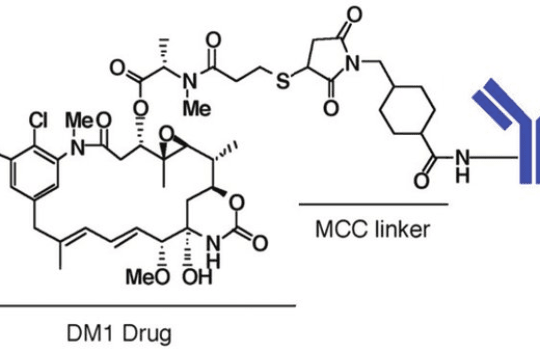
Antibody-drug conjugates (ADCs) are an emerging class of biopharmaceuticals prized for their target specificity and cytotoxic potency. ADCs consist of a payload (e.g., small drug, antibiotic, enzyme, etc.) attached to the surface of an antibody (e.g., monoclonal, antibody fragment, bispecific, etc.) via a labile or stable linker. The complex construct is designed to deliver cargoes, too toxic for systemic administration, to specific tissues or cell types.
In the past years, ADCs have found great success in the treatment of certain types of cancer. They act on these cells by making use of antibodies targeting surface cell receptors that are abundant, specific, and are efficiently recycled after cellular internalization. The major mechanism of action of ADCs involves the following steps:
Molecules can be internalized through several mechanisms by eukaryotic cells. The predominant mechanism is clathrin-dependent endocytosis. Clathrin not only selects which cargo proteins are internalized, but it also undergoes polymerization causing membrane displacement and the formation of the endosome.
Endosomes are complex compartments responsible for trafficking molecules via two distinct pathways: (i) cargo recycling that results in trafficking the receptor back to the membrane, and (ii) endosomal degradation, the favored pathway for the efficient trafficking of therapeutic ADCs.
Although most of the studies have focused on this mechanism of action, some ADCs are known to act through different mechanisms. The majority of ADCs in the clinic contain cleavable linkers designed to degrade in the presence of specific chemical signals (i.e., glutathione, acidic pH, etc.) or enzymes (i.e., lysosomal proteases). These molecules often leak to the tumor microenvironment, resulting in the extracellular degradation of the linker and subsequent early release of the payload.
This alternative mechanism has not been widely explored due to difficulties in assessing its occurrence in vivo. However, experts believe it to be widespread and potentially vital when targeting solid tumors, which are notoriously recalcitrant and impermeable to ADCs, and when targeting cancer cells that have lost the disease marker (e.g., due to the development of resistance by mutation of the target).
The ideal targets of ADCs are abundantly and almost exclusively expressed in cancer cells, undergo limited secretion to avoid binding the ADC in circulation, possess an efficient and quick internalization rate, and undergo the appropriate trafficking route. Enhancing this process can be challenging, but some strategies have been tested in naked antibodies with different degrees of success.
For instance, antibodies can be designed to bind strongly to the receptor at physiological pH (7.4) and dissociate quickly at pH 6 (lysosomal pH). This ensures that the antibody separates efficiently from the receptor within the endosome, facilitating the process of trafficking and intracellular degradation. Efficient dissociation within the endosome can reduce the likelihood of the ADC cycling back out of the cell attached to the receptor.
For this reason, the increased binding affinity of an antibody carrier towards its target may hinder the efficiency of the processes of internalization and intracellular trafficking. Moreover, studies have demonstrated that this effect is particularly important when targeting solid tumors. ADCs targeting high-density receptors with high affinity and fast internalization rates may contribute to the enhancement of the barrier effect and thus limit the diffusion and penetration of ADCs into the tumor mass. In other words, there is an optimal range of antibody affinity that must be optimized for each ADC and corresponding target to ensure suitable internalization and trafficking rates.
ADCs intertwine chemotherapy with immunotherapy, creating a synergistic relationship between the two components with multiple advantages:
Internalization and cellular trafficking are two vital properties known to contribute to the therapeutic potency of ADCs. These two properties are dictated by the nature of the receptor (abundance, specificity, efficient recycling) and antibody affinity. Affinity is particularly important to avoid the premature recirculation of the ADC out of the cell prior to degradation and payload release. For this reason, particular attention should be given to this property during early ADC development to guarantee an optimal therapeutic efficacy at later stages.
You could also be interested in:
Join our email list to receive exclusive content featuring the most interesting industry and research news, biologics development tips pieced together by experts, res, company news, and exclusive limited-offers. Join a community of 80,000 subscribers and save up to 30% on your first order.