Cart (0 Items)
Your cart is currently empty.
View ProductsIt looks like you are visiting from outside the EU. Switch to the US version to see local pricing in USD and local shipping.
Switch to US ($) Antibody production
 Philippe Funfrock
Cancer treatment has progressively shifted from non-specific chemotherapy toward targeted and immune-based therapies. Among these innovations, monoclonal antibodies have become one of the most important classes of anticancer biologics, thanks to their ability to selectively recognize tumor-associated targets or modulate immune responses.
Today, monoclonal antibody treatments for cancer include growth-factor targeting antibodies such as trastuzumab, cetuximab, bevacizumab, and ramucirumab, as well as immune checkpoint inhibitors such as ipilimumab, nivolumab, and pembrolizumab. More recently, antibody-based therapeutics have expanded into advanced formats, including bispecific antibodies and antibody-drug conjugates, opening new possibilities for more precise and potent oncology treatments.
Many therapeutic antibodies are discovered or optimized using technologies such as antibody phage display and advanced therapeutic antibody development services.
Cancer remains one of the world’s major health challenges. According to IARC/WHO data, around 20 million new cancer cases and 9.7 million cancer-related deaths were estimated worldwide in 2022. Lung, breast, colorectal, prostate, and stomach cancers remain among the most commonly diagnosed cancers globally.
Conventional chemotherapy has long been a cornerstone of cancer treatment, but its limited ability to distinguish between healthy and malignant cells often results in systemic toxicity and significant side effects. This has driven the development of more targeted therapeutic approaches.
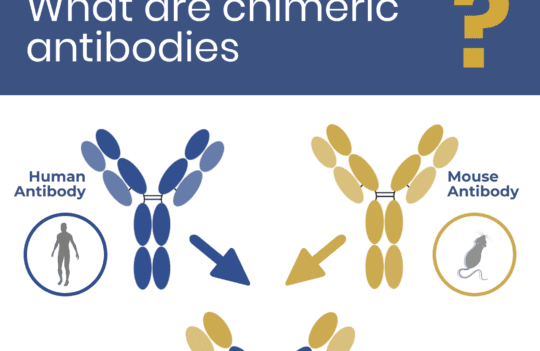
Soon after the development of hybridoma technology in 1975, researchers recognized the potential of monoclonal antibodies as cancer therapeutics. Rituximab, approved by the FDA in 1997, was the first monoclonal antibody used in oncology. This chimeric anti-CD20 antibody transformed the treatment of B-cell non-Hodgkin lymphoma and marked the beginning of antibody-based targeted cancer therapy.
Monoclonal antibodies can inhibit tumor growth by blocking receptors or ligands involved in oncogenic signaling. One of the most established examples is the HER family, particularly HER2 and EGFR, which are involved in the growth and survival of several epithelial tumors.
Trastuzumab, a humanized IgG1 antibody targeting HER2, was approved for HER2-positive breast cancer and remains a foundational example of targeted antibody therapy. Cetuximab, a chimeric anti-EGFR antibody, is another key treatment used in colorectal and head and neck cancers.
Anti-angiogenic antibodies also play an important role in oncology. Bevacizumab targets VEGF-A and is used across several cancer types, while ramucirumab targets VEGFR2 and is used in indications including gastric cancer.
More recently, the concept of growth-targeting antibodies has expanded beyond “naked” monoclonal antibodies. Antibody-drug conjugates such as trastuzumab deruxtecan combine target specificity with cytotoxic payload delivery. In 2024, trastuzumab deruxtecan received FDA accelerated approval for unresectable or metastatic HER2-positive solid tumors, reflecting the increasing importance of antibody-based precision oncology.
Learn more about
Cancer cells can evade immune surveillance by exploiting inhibitory pathways known as immune checkpoints. Monoclonal antibodies targeting these checkpoints have become a major class of cancer immunotherapies.
Ipilimumab targets CTLA-4, while nivolumab and pembrolizumab target PD-1. These immune checkpoint inhibitors have changed the treatment landscape in several cancers, including melanoma, lung cancer, renal cell carcinoma, and other solid tumors.
The field continues to evolve, not only through new indications and combinations, but also through improved formulations. For example, the FDA approved subcutaneous nivolumab and hyaluronidase-nvhy in 2024 for use across approved adult solid tumor nivolumab indications, illustrating how established antibody therapies continue to be optimized for clinical use.
Beyond checkpoint inhibition, next-generation antibody formats are gaining momentum. Bispecific antibodies can redirect immune cells toward cancer cells by binding two different targets, while engineered antibodies can be optimized for affinity, Fc function, developability, or format conversion.
Explore antibody optimization services
Discover custom recombinant antibody production

Want to learn from a real-life project? Discover how we generated hyper specific anti-pHLA antibodies for CAR-T Therapy
Read the case reportMonoclonal antibodies were among the first targeted biologics to transform cancer treatment. Today, they remain central to oncology, from growth-factor blockade and anti-angiogenic therapy to immune checkpoint inhibition and advanced antibody formats.
The field is now moving toward increasingly sophisticated antibody-based therapeutics, including bispecific antibodies, ADCs, Fc-engineered antibodies, and optimized recombinant formats. This evolution makes antibody discovery, engineering, characterization, and production more critical than ever.
With technologies such as phage display services, AI-assisted antibody optimization, recombinant antibody production, and integrated therapeutic antibody development, researchers can accelerate the identification and development of promising candidates for oncology research.
Join our email list to receive exclusive content featuring the most interesting industry and research news, biologics development tips pieced together by experts, res, company news, and exclusive limited-offers. Join a community of 80,000 subscribers and save up to 30% on your first order.