

Cart (0 Items)
Your cart is currently empty.
View ProductsIt looks like you are visiting from outside the EU. Switch to the US version to see local pricing in USD and local shipping.
Switch to US ($) Antibody production
 Thomas Meyer
The production of therapeutic antibodies is a complex, multi-step process that involves several critical stages to ensure the final product is safe, effective, and suitable for clinical use. Here is an overview of the key steps involved:
Recombinant antibody production is a complex process fraught with numerous challenges. Addressing these challenges effectively is crucial to ensure high-quality and consistent antibody production. This section outlines some of the key challenges and proposes solutions to overcome them.
Ensuring the long-term stability of gene expression is crucial for maintaining high productivity and consistent antibody quality over time.
Selecting the appropriate antibody expression system is crucial for achieving optimal activity and yield. A multi-system expression can tailor solutions to specific needs, utilizing between two to five different expression systems to find the best match for project requirements. This ensures high productivity and functional activity. This comprehensive approach optimizes each step of the production process, leading to more efficient and effective antibody production. Leveraging expertise in various expression systems delivers the best possible outcomes for research and therapeutic applications.
Optimizing media and culture conditions to maximize the yield and quality of recombinant antibodies is a complex process that requires extensive experimentation.
Once a cell line is selected, optimizing the growth conditions for batch and fed-batch cultures maximizes cell density and productivity. This involves fine-tuning factors such as nutrient supply, oxygen levels, and bioreactor parameters to achieve optimal performance. Optimized growth conditions ensure that the selected cell line consistently produces high yields of the desired antibody, maintaining quality and efficiency throughout the production process.
Employing high-throughput screening methods to rapidly test various media compositions and culture conditions. This approach allows for the efficient identification of optimal media formulations and environmental parameters, significantly reducing the time and resources required for experimentation.
Implementing advanced monitoring systems to continuously measure key culture parameters such as pH, temperature, and oxygen levels. Real-time data from these systems enable immediate adjustments to maintain optimal culture conditions, thereby maximizing yield and quality.
Custom cell line development is a pivotal strategy for addressing the complexities of scaling up antibody production. This process involves creating and optimizing cell lines specifically engineered to produce desired therapeutic antibodies at an industrial scale. By tailoring cell lines to meet specific production requirements, manufacturers can achieve enhanced productivity, stability, and overall efficiency.
Custom cell lines are engineered for genetic stability, minimizing the risk of genetic drift and mutations, thereby maintaining high productivity and quality throughout the production lifecycle. This genetic stability reduces variability and ensures consistent antibody characteristics. Additionally, these cell lines are optimized for phenotypic stability, ensuring they consistently exhibit desired traits such as high growth rates, efficient nutrient utilization, and robust antibody production. Phenotypic stability further contributes to predictable and reliable manufacturing processes, making custom cell lines a critical component in achieving consistent and high-quality antibody production.
Custom cell lines are also engineered for robustness, ensuring adaptability to various bioreactor conditions, which enhances flexibility in scaling up production and maintaining high performance across different scales and bioreactor types. This robustness minimizes production disruptions due to process variations. Additionally, the stability of custom cell lines ensures consistent antibody quality, crucial for therapeutic applications where batch-to-batch variation can affect efficacy and safety. Stable cell lines will also help in meeting stringent regulatory quality control standards, ensuring reliable and consistent production outcomes.
Ensuring monoclonality is essential for regulatory approval in antibody production. Regulatory bodies require detailed proof that a cell line is derived from a single cell, which is challenging to achieve with traditional methods.
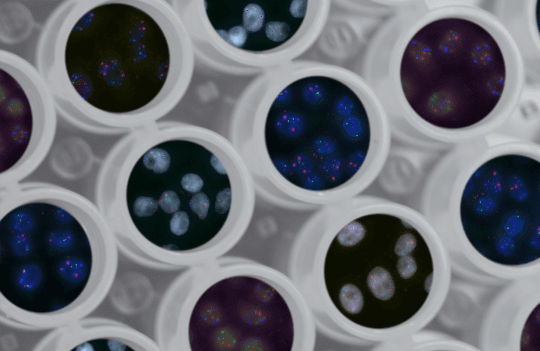
Stable cell line development with VIPS™ technology addresses these stringent regulatory requirements through an advanced approach. It offers image-based proof of clonality from day zero, ensuring that each cell line starts from a single, visually confirmed cell. This “double-lock” method provides the incontrovertible evidence needed for regulatory approval, meeting the highest standards and eliminating the uncertainties associated with traditional methods. The visual confirmation ensures that regulatory bodies receive clear, undeniable proof of monoclonality.
In addition to visual proof, VIPS™ technology generates detailed clonality reports that facilitate compliance with regulatory standards. These reports provide a reliable audit trail, essential for regulatory submissions and approvals in biopharmaceutical production. Comprehensive documentation ensures that all aspects of the cell line development process are thoroughly recorded and capable of withstanding regulatory scrutiny. This thorough and meticulous record-keeping supports the integrity and reliability of the production process, enhancing confidence in the product’s quality and safety.
By integrating VIPS™ technology, the regulatory compliance process becomes more streamlined and reliable, ensuring that all necessary documentation and proof of monoclonality are readily available to meet regulatory demands. This approach not only meets but often exceeds regulatory expectations, facilitating smoother and faster approval processes for biopharmaceutical products.
Maintaining the stability of cell lines to consistently produce high-quality antibodies over time is a critical challenge in biopharmaceutical production. Variability in production can lead to inconsistencies in the final product, affecting efficacy, safety, and regulatory compliance. To address this, comprehensive quality control (QC) and stability studies are essential.
To address the challenge of maintaining stability, comprehensive quality control and stability studies are implemented. These studies ensure that cell lines produce consistent, high-quality antibodies over time.
ProteoGenix offers a comprehensive suite of services designed to address the intricate challenges of antibody production and scale-up. By leveraging advanced technologies, proprietary cell lines, and a deep well of expertise, ProteoGenix ensures the efficient, cost-effective, and high-quality production of monoclonal antibodies tailored to your specific needs.
ProteoGenix’s custom cell line development services are designed to streamline the process of monoclonal antibody production from start to finish. Utilizing their state-of-the-art Verified In-Situ Plate Seeding (VIPS™) technology, they guarantee efficient single-cell seeding with image-based proof of clonality, significantly reducing development times by over 50%. This advanced technology not only accelerates timelines but also provides detailed clonality reports that meet stringent regulatory requirements.
ProteoGenix understands that every project is unique and requires a customized approach. They offer a range of proprietary, IP-free cell lines, including CHO, CHO-S, DG44, and HEK293, ensuring flexibility and freedom from licensing fees. This tailored approach extends to every aspect of the development process, from monoclonal isolation to productivity assessments, ensuring that your specific project needs are met with precision and expertise.
ProteoGenix employs cutting-edge technologies to ensure the highest efficiency and accuracy in antibody production. Their VIPS™ technology enables high-efficiency single-cell seeding, which is crucial for generating monoclonal cell lines. This automated process reduces manual labor and potential errors, ensuring reliable and fast cell line development.
ProteoGenix’s commitment to quality is reflected in their optimized production systems. They utilize high-performance expression vectors and tailored media formulations to maximize yield and stability. This ensures that the antibodies produced meet the highest standards of purity, efficacy, and safety. Their comprehensive QC analysis and stability studies further ensure the reliability and consistency of the produced antibodies.
ProteoGenix uses the VIPS™ technology accelerates custom cell line projects by over 50%, providing real-time, high-resolution imaging to confirm monoclonality. This state-of-the-art technology not only speeds up the development process but also ensures regulatory compliance with detailed clonality reports.
ProteoGenix conducts thorough developability studies to guarantee reliable results for custom cell line projects. This ensures that the selected cell lines produce high yields consistently, meeting both research and commercial production needs.
By streamlining workflows and optimizing production systems, ProteoGenix reduces the cost per gram of antibody produced. This enhanced efficiency translates into significant time and resource savings, making long-term antibody production economically viable.
ProteoGenix offers exclusive access to IP-free proprietary cell lines, including CHO, CHO-S, DG44, and HEK293. These cell lines are optimized for high productivity and are available without the complexities and costs associated with licensing.
With over 1500 proteins and 5000 antibodies developed, ProteoGenix’s team of highly skilled scientists brings extensive experience and deep knowledge to each project. Their expertise ensures the most effective methods and innovative solutions for antibody development.
ProteoGenix provides customized solutions to meet specific project needs, from clone selection to growth condition optimization and production scale. This flexibility ensures that the unique requirements of each project are met with precision.
Choosing ProteoGenix means leveraging our extensive expertise, innovative technologies, and commitment to quality, all of which contribute to better antibody production and successful project outcomes. Book a call with our experts today to discuss your project needs!
Join our email list to receive exclusive content featuring the most interesting industry and research news, biologics development tips pieced together by experts, res, company news, and exclusive limited-offers. Join a community of 80,000 subscribers and save up to 30% on your first order.